
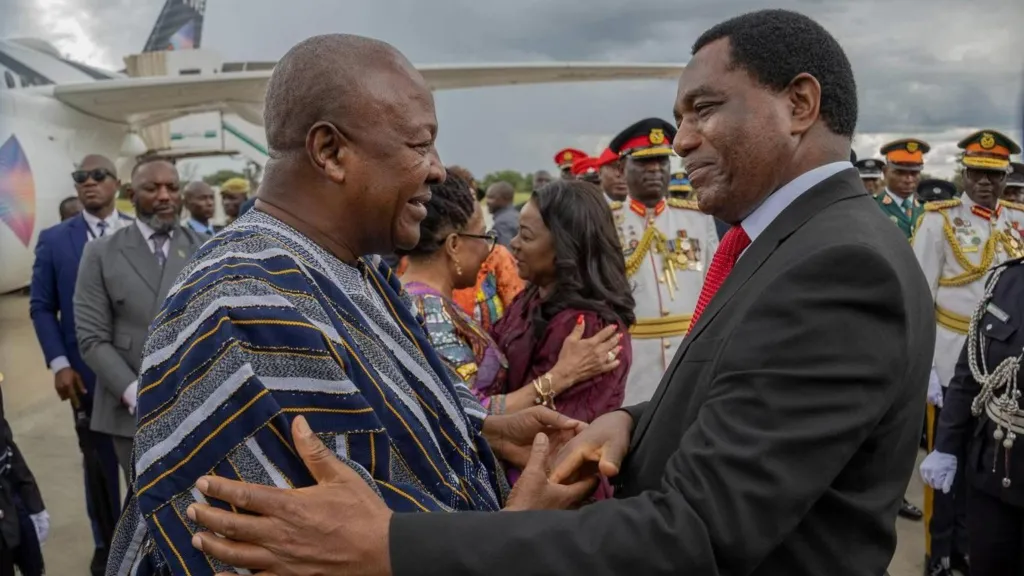
Zambia’s President Hakainde Hichilema has publicly defended the traditional Ghanaian outfit worn by Ghana’s president after it became the target of online mockery, saying he admires the attire and plans to order some for himself.
The comments followed a wave of social media reactions after Ghana’s President John Dramani Mahama arrived in Lusaka for a three day state visit wearing a fugu, a traditional outfit from northern Ghana. Some Zambian users online dismissed the garment as a “blouse”, sparking a lively cross border debate.
Speaking at the Ghana–Zambia Business Forum in Lusaka, President Hichilema said the online discussion had only increased his appreciation for the outfit. In a video shared on X, he said he would be “ordering more fugu from Ghana”, signalling support for African traditional dress and cultural exchange.
When President Mahama arrived in Zambia, he was dressed in the hand woven cotton garment, made from narrow strips of fabric stitched together in a structured style. President Hichilema, by contrast, welcomed him at the airport wearing a suit and tie, a difference that drew particular attention online.
Several Zambian social media users posted mocking comments, while others joined in light heartedly. The remarks quickly spread, prompting responses from Ghanaian officials who stressed the cultural importance of the attire.
Ghana’s foreign minister said the viral discussion reflected a growing interest among young people in reconnecting with African identity and heritage. He described the fugu as more than clothing, calling it a symbol of dignity and cultural pride.
In a video shared on social media, he reminded viewers that Ghana’s first leader wore the same attire when declaring independence in 1957, encouraging Africans to reclaim and celebrate their cultural roots.
A well known Ghanaian content creator also joined the debate, rejecting claims that the garment was a blouse and arguing that the president was deliberately promoting the local garment industry at home and abroad. He criticised what he described as ignorance fuelled by social media mockery.
The exchange has since shifted from ridicule to a broader conversation about African identity, traditional dress and cultural respect across the continent.