
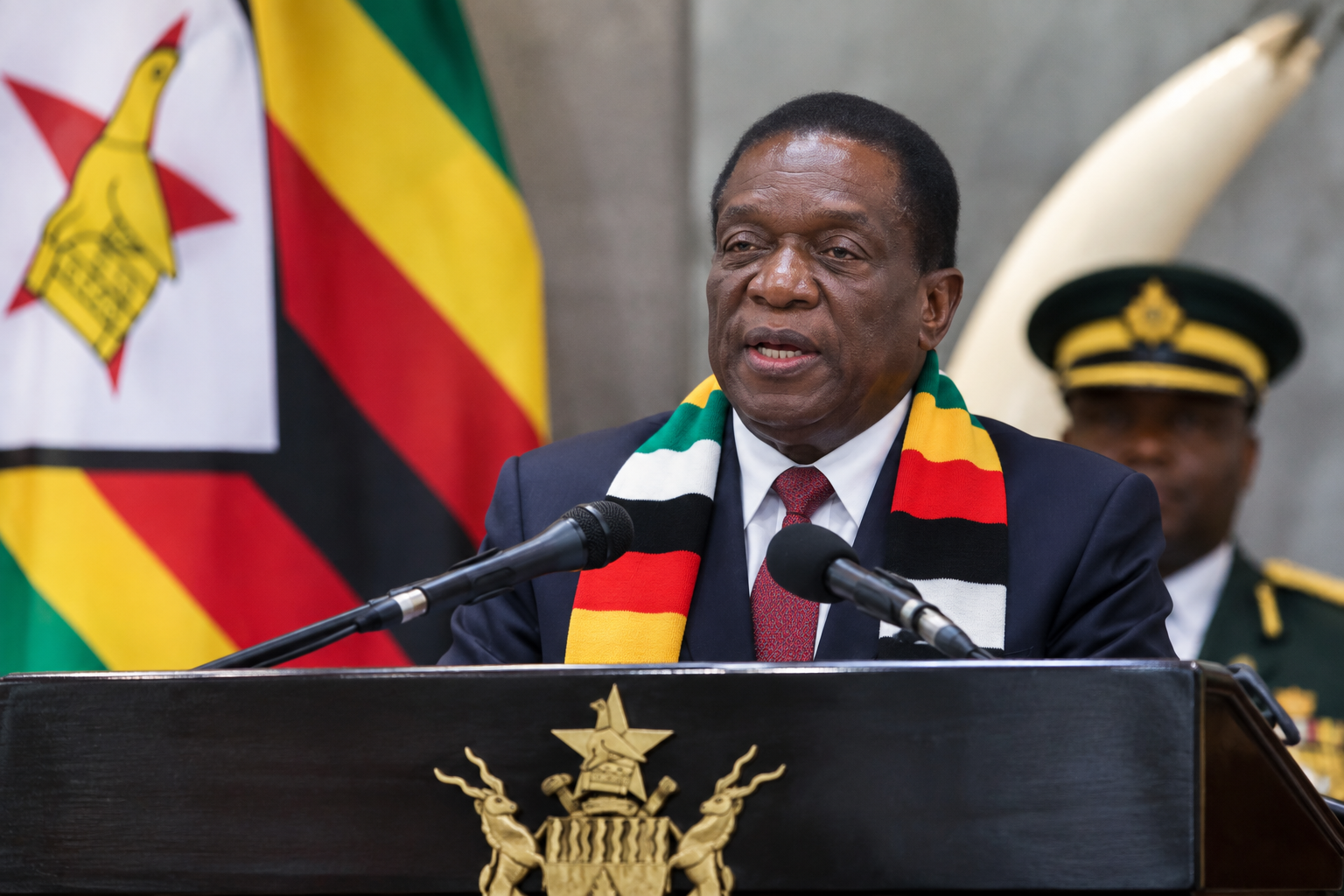
Zimbabwean President Emmerson Mnangagwa has highlighted stronger economic indicators while warning that below-normal rainfall could threaten the country’s next agricultural season.
Mnangagwa made the remarks during his State of the Nation Address as he officially opened the fourth session of Zimbabwe’s 10th Parliament.
Africanews reported that the president pointed to greater currency and exchange-rate stability, supported by strong foreign-currency inflows.
Zimbabwe economy records stronger growth
Mnangagwa said improvements in the financial sector had helped strengthen confidence in Zimbabwe’s economy.
Agriculture was a major contributor to growth in 2025.
The sector expanded by 27.9% and contributed 2.2 percentage points to Zimbabwe’s 8.3% GDP growth, according to figures presented during the address.
However, the president warned that weather conditions could create new challenges.
The 2026-2027 agricultural season could experience below-normal rainfall across the region, raising concerns about the impact of drought on farming.
Zimbabwe prepares for possible drought
The government has introduced a six-pillar resilience plan to reduce the potential effects of drought.
The plan includes expanding the country’s strategic grain reserve and promoting climate-smart farming.
It also covers integrated financing, support for livestock, early-warning systems and capacity building.
Agriculture remains particularly important to Zimbabwe because changing rainfall conditions can affect food production and rural livelihoods.
Mining remains central to economy
Mnangagwa also highlighted mining as an important part of Zimbabwe’s economic strategy.
The government is encouraging greater mineral exploration and more local processing of the country’s resources.
Mnangagwa pointed to Zimbabwe’s first locally produced lithium sulphate as an example of this strategy. He said additional processing plants are being developed.
The president also highlighted expansion in gold, platinum, iron and steel as part of efforts to strengthen Zimbabwe’s industrial base.
The government is seeking to build on recent economic growth while preparing for the potential impact of weaker rainfall during the coming agricultural season.