Author name: yasir

2 soldiers killed in clash between Nigerian army, militants

 Two soldiers were killed in a clash between the Nigerian Army and suspected members of the armed wing of the Indigenous People of Biafra (IPOB) in Imo State, authorities said Sunday.  Joseph Akubo, the spokesperson for the 34 Artillery Brigade of the Nigerian Army, said in a statement that the clash occurred in the Osina area.  He confirmed that two soldiers lost their lives in the confrontation while one soldier remains missing.  The Nigeran Civil War, also known as the Biafra War, took place from 1967-1970 between the federal government and the Biafran people, who sought to establish an independent state of Biafra in southeast Nigeria, claiming between 500,000 and 2 million lives.  The Republic of Biafra, proclaimed in 1967, was reabsorbed into Nigeria following the civil war.  IPOB, classified as a terrorist organization by the Nigerian government, continues to advocate for the establishment of an independent state.

2 soldiers killed in clash between Nigerian army, militants Read More »

Jimmy Carter, the longest lived U.S. President, dies at 100

Former President Jimmy Carter, the longest-living president in U.S. history, passed away Sunday at the age of 100. He died peacefully in his hometown of Plains, Georgia, surrounded by family, after receiving hospice care since February 18, 2023. Carter had faced numerous health challenges in recent years, including brain cancer and skin cancer. In a statement, his son, Chip Carter, described him as a hero who stood for peace, human rights, and unselfish love, adding that his father’s legacy was one of bringing people together through shared beliefs. Carter’s political rise was improbable—starting as a peanut farmer in Georgia, he became governor of the state before ascending to the presidency in 1976. His presidency, marked by challenges like the Iran hostage crisis, oil shortages, and inflation, was often seen as a tumultuous period. Despite these struggles, he achieved significant international successes, such as brokering the historic Camp David Accords between Egypt and Israel in 1978, negotiating the Panama Canal Treaty, and securing nuclear arms control with the Soviet Union through SALT II. After leaving office, Carter became known for his humanitarian work, founding the Carter Center and dedicating his life to advocating for peace, democracy, and human rights. He also worked with Habitat for Humanity, helping to build homes for those in need around the world. In 2002, Carter was awarded the Nobel Peace Prize for his tireless efforts in conflict resolution and promoting global human rights. Even into his 90s, he remained active in humanitarian causes and community service.

Jimmy Carter, the longest lived U.S. President, dies at 100 Read More »

UN special rapporteur criticizes proposed Israeli draft bill on prison guards

UN Special Rapporteur Francesca Albanese strongly criticized an Israeli draft bill aimed at recruiting volunteers as prison guards, warning that it could lead to increased abuses against Palestinian detainees. In a post Sunday on X, Albanese called the proposal “so sickening,” saying “Israel MUST BE STOPPED: starting with its politicians, its soldiers, its settlers, and its ideological fanatics.” “We must save the Palestinians from the depravity of the century,” she emphasized. The draft bill, introduced by Zvika Fogel, a member of parliament with the far-right Jewish Power party, was outlined in a tweet thread by Itay Epshtain, an expert on international humanitarian law. The bill aims to expand Israel’s prison guard force with volunteers holding full authority over detainees, citing a rise in incarcerations due to ongoing conflicts. Epshtain said the political motivation behind the bill is “to bring violent extremists into the Israeli Prison Service, where they can torment Palestinian detainees and prisoners.” He added that an explanatory note accompanying the legislation highlights the need for increased staffing to manage the growing number of incarcerated Palestinians. Albanese’s remarks reflect broader international concerns over the treatment of Palestinian prisoners under Israeli custody. Human rights groups have warned that the inclusion of volunteers in prison services could exacerbate existing abuses and lack of accountability. The bill is expected to be reviewed by Israel’s Ministerial Committee for Legislation. Albanese and other advocates have urged the global community to intervene and address what they view as a dangerous and unjust policy. Israel has killed more than 45,500 people in Gaza since a cross-border attack by the Palestinian group Hamas on Oct. 7, 2023 and reduced the enclave to rubble. In November, the International Criminal Court issued arrest warrants for Israeli Prime Minister Benjamin Netanyahu and his former Defense Minister Yoav Gallant for war crimes and crimes against humanity in Gaza. Israel also faces a genocide case at the International Court of Justice for its war on the enclave.

UN special rapporteur criticizes proposed Israeli draft bill on prison guards Read More »

Climate change adds 41 days of extreme heat in 2024

Newly published research indicates that climate change added an average of 41 days of dangerous heat in 2024, harming human health and ecosystems. The joint report by World Weather Attribution (WWA) and Climate Central warns that every country needs to prepare for rising climate risks to minimize deaths and damage in 2025 and beyond. The world experienced an average of 41 extra days of dangerous heat in 2024 due to human-caused warming, the study said, suggesting that a much faster transition away from fossil fuels is needed to avoid a future of relentless heat waves, drought, wildfires, storms and floods. The report noted that climate change intensified 26 of the 29 weather events studied by World Weather Attribution which killed at least 3,700 people and displaced millions. “Climate change had a stronger influence than El Nino on many extreme weather events,” it added. Friederike Otto, lead of WWA and senior lecturer in Climate Science at Imperial College London, said the impacts of fossil fuel warming “have never been clearer or more devastating” than in 2024, adding: “We are living in a dangerous new era.” He said extreme weather killed thousands of people, forced millions from their homes this year and caused unrelenting suffering, recalling that floods in Spain, hurricanes in the US, drought in the Amazon and floods across Africa are “just a few examples.” “We know exactly what we need to do to stop things from getting worse: stop burning fossil fuels,” said Otto. “The top resolution for 2025 must be transitioning away from fossil fuels, which will make the world a safer and more stable place.” – ‘Failed scorecard’ Citing projections that this year is set to be the hottest on record, the report also noted that the first six months saw record-breaking temperatures, extending a streak that started in 2023 to 13 months, with the world’s hottest day in history recorded on July 22. “If the world does not rapidly transition away from oil, gas and coal, the number of dangerous heat days will continue to increase each year and threaten public health,” warned the scientists. According to the study, a faster shift away from fossil fuels, improvements in early warning, real-time reporting of heat deaths and international finance to help developing countries become more resilient are the key resolutions for 2025 to both tackle climate change and protect people from extreme weather. “Another devastating year of extreme weather has shown that we are not well prepared for life at 1.3-1.5°C of warming,” said Julie Arrighi, director of programs at the Red Cross Red Crescent Climate Centre. “In 2025, it’s crucial that every country accelerate efforts to adapt to climate change,” she added. Ben Clarke, researcher at the Centre for Environmental Policy, Imperial College London, said this annual report reads like a “failed scorecard.” “The world is not cutting emissions and preparing for climate change quickly enough. The consequences are record-breaking extreme weather events that cause deaths, displacement, and loss of livelihoods.”

Climate change adds 41 days of extreme heat in 2024 Read More »

Cyclone Chido: Mayotte begins repatriations as aid needs grow

Days after Cyclone Chido hit Mayotte, transport links to the French overseas territory are gradually resuming, allowing some residents to be repatriated. Sea connections between Mayotte and the Comoros have reopened, enabling the return of around 500 undocumented Comorians. While commercial flights have yet to resume, French authorities have established an air route to Reunion Island for evacuations of French citizens. Since the cyclone struck, about 3,000 people have been evacuated from Mayotte, which is now facing shortages of essential supplies. Locals report widespread lack of water and electricity, with many living in makeshift shelters after their homes were destroyed by the storm. In response to the disaster, the European Commission is providing emergency aid to Mayotte and Mozambique. Several countries, including Belgium, Germany, and Italy, have also pledged shelter and essential supplies.

Cyclone Chido: Mayotte begins repatriations as aid needs grow Read More »

South Korean court holds first hearing on President Yoon’s impeachment

South Korea’s Constitutional Court on Friday held the first preparatory hearing of a trial on the validity of President Yoon Suk Yeol’s impeachment by parliament over his short-lived imposition of martial law. Yoon’s lawyers Bae Bo-yoon, Yun Gap-geun and Bae Jin-han appeared before the top court, according to the Seoul-based Yonhap News. The court will again hear the two sides on Jan. 3. Lawmakers voted to impeach Yoon, 63, on Dec. 14 over his failed bid to impose martial law in the country. He faces treason and insurrection among other charges. Representatives from the parliament also appeared before the court and sought the appearance of 15 witnesses in the case. The lawmakers are represented by former Constitutional Court Justice Kim Yi-su and former National Human Rights Commission Chairman Song Doo-hwan. Justices Lee Mi-son and Cheong Hyung-sik presided over the hearing. Shocking the nation with the announcement of martial law on Dec. 3, Yoon was forced to rescind the order within six hours after parliament passed a motion against it that night. The top court has six months, since Dec. 14, to decide whether to uphold or dismiss the impeachment, while Prime Minister Han Duck-soo officiates as president since Yoon remains suspended from his duties.

 Ahead of the first hearing by the top court, Yoon had refused to entertain notices from the Constitutional Court. But the court had said it will proceed with its trial beginning today. Yoon was impeached in a second parliamentary vote held on Dec. 14 when at least 12 lawmakers from his People Power Party joined the opposition bloc of 192 parliamentarians, led by the Democratic Party, to suspend the president. In the 300-seat parliament, at least 200 lawmakers should vote to suspend a sitting South Korean president. If the top court upholds the impeachment motion, Yoon will be removed from office and a fresh presidential election is due within two months from that date. Police were also searching the office of the Presidential Security Service for CCTV footage of the compound. Police were searching the place where Yoon allegedly met with senior police officials to discuss martial law plans. Separately, parliament is set to hold a separate vote to impeach Han, the acting president, after he refused to appoint three Constitutional Court judges. This will be the first time in South Korea’s history that a vote to impeach the acting president will be held.

South Korean court holds first hearing on President Yoon’s impeachment Read More »

5 journalists killed in Israeli airstrike near Gaza hospital

Five journalists from the Al-Quds Today channel were killed early Thursday when an Israeli airstrike struck their broadcasting van near al-Awda Hospital in Gaza’s Nuseirat refugee camp, according to Palestinian officials and media reports. The journalists were covering events at the hospital when the vehicle, marked with the word “PRESS” in large red letters, was hit. The victims have been identified as Fadi Hassouna, Ibrahim al-Sheikh Ali, Mohammed al-Ladah, Faisal Abu al-Qumsan and Ayman al-Jadi. Al Jazeera correspondent Anas al-Sharif reported that al-Jadi was waiting for his wife, who was in labor with their first child, outside the hospital at the time of the attack. Footage from the scene showed the van engulfed in flames as civil defense teams worked to recover the bodies and extinguish the fire. The Israeli military confirmed the strike, saying it targeted a vehicle carrying members of Islamic Jihad.  “Prior to the attack, many steps were taken to reduce the chance of harming civilians, including the use of precision weapons, aerial observations and additional intelligence information,” the military said in a post on X. The Committee to Protect Journalists (CPJ) condemned the deaths, calling for accountability. Israel has continued a genocidal war on Gaza that has killed nearly 45,400 people, most of them women and children, since a cross-border attack by the Palestinian group Hamas on Oct. 7, 2023. Last month, the International Criminal Court issued arrest warrants for Israeli Prime Minister Benjamin Netanyahu and his former Defense Minister Yoav Gallant for war crimes and crimes against humanity in Gaza. Israel is also facing a genocide case at the International Court of Justice for its actions in Gaza.

5 journalists killed in Israeli airstrike near Gaza hospital Read More »

Trump alleges Chinese military presence at Panama Canal

 US President-elect Donald Trump claimed Wednesday that “wonderful soldiers of China” are operating the Panama Canal “lovingly but illegally.” In a post on his Truth Social platform on Christmas Day, Trump alleged that the Chinese presence is aimed at ensuring that the US invests billions of dollars in repairs without reaping any benefits. “The United States puts in Billions of Dollars in ‘repair’ money and gets nothing in return,” he said. Trump also addressed Canadian Prime Minister Justin Trudeau, calling him “Governor Justin Trudeau of Canada” and suggesting that Canada could achieve significant tax cuts and “would be militarily protected like no other Country anywhere in the World” if it joined the US as its 51st state. Turning to domestic politics, he criticized “radical left lunatics” for allegedly obstructing the US court system and targeting political opponents, including himself.  “Their only chance of political survival is to get pardons from (incumbent President) Joe Biden,” he added.

Trump alleges Chinese military presence at Panama Canal Read More »

U.N. exposes failures and corruption in Nigeria’s oil spill cleanup

In 2021, as a satellite passed over the Niger Delta, it captured images of vast swathes of barren land. The site, located outside Port Harcourt, was part of a cleanup project listed by the United Nations Environment Programme (UNEP), aimed at restoring the area to its former state as green farmland. This was supposed to reverse the damage caused by decades of oil spills, which had transformed the Delta into a symbol of environmental degradation. However, instead of being rejuvenated, the land had become a desolate “moonscape,” deemed unusable for agriculture, according to U.N. documents. It wasn’t an isolated failure. A series of newly uncovered investigations, emails, letters to Nigerian ministers, and meeting minutes reveal a pattern of mismanagement and poor execution. Senior U.N. officials described the Nigerian cleanup agency, the Hydrocarbon Pollution Remediation Project (HYPREP), as a “total failure.” The agency’s selection of cleanup contractors came under heavy criticism in a U.N. review, which found that many of the firms hired lacked relevant expertise. The cleanup effort was further marred by shoddy practices: soil samples were sent to laboratories that lacked the necessary equipment to conduct the required tests, and auditors were physically obstructed from verifying whether work had actually been completed. The cleanup companies were often linked to powerful Nigerian politicians, a former Nigerian environment minister told the AP. U.N. officials shared similar concerns, pointing to the cozy relationship between political elites and contractors, which contributed to the project’s failures. The situation was supposed to be different. The Niger Delta has experienced thousands of oil spills since oil production began in the 1950s. Studies and reports have shown that local communities often use contaminated water for drinking, washing, and cooking, exacerbating health and environmental problems. Despite a 2011 U.N. survey that highlighted the severity of the pollution, spills continue to occur regularly. In November 2023, for example, the Ogboinbiri community in Bayelsa State suffered its fourth spill in just three months, devastating fields, streams, and fisheries. “We haven’t harvested anything,” said farmer Timipre Bridget. “There’s no way to survive.” Following the 2011 survey, oil companies, including Shell—the country’s largest private oil and gas firm—agreed to contribute $1 billion toward cleaning up the worst-affected area, Ogoniland. The U.N. was relegated to an advisory role, while the Nigerian government took charge of managing the funds. But an internal investigation by U.N. scientists last year revealed that cleanup efforts outside Port Harcourt had been abysmal. The site was left without topsoil, with nearly seven times the petroleum contamination allowed by Nigerian health standards. The company responsible for the cleanup had its contract terminated, according to Nenibarini Zabbey, the current director of HYPREP. However, Philip Shekwolo, who was in charge when the contract was awarded, rejected the allegations. He dismissed the U.N. documents as “baseless” and “cheap blackmail,” insisting that the cleanup had been a success. Yet U.N. officials had raised concerns about the process as early as 2021, when Shekwolo was acting chief of HYPREP. A U.N. review in January 2022 found that 21 out of 41 contractors approved for cleanup work had no relevant experience. Some of these companies were simply construction firms or general merchants, according to meeting minutes. U.N. Senior Project Advisor Iyenemi Kakulu described the situation as effectively handing contractors a “blank check,” while Hyprep’s own communications chief, Joseph Kpobari, acknowledged that incompetent firms were responsible for the poor cleanups. Yet, these same firms were awarded contracts for more polluted sites, according to U.N. documents. Zabbey defended HYPREP’s record, claiming that 16 out of 20 sites in the first stage of the project had been certified as clean by Nigerian regulators. He also insisted that the agency followed proper procedures when issuing contracts. However, two anonymous sources familiar with the cleanup efforts told the AP that when officials visited laboratories used by HYPREP, they found that these labs lacked the necessary equipment to perform the required tests. In a letter to its customers, a U.K. laboratory that frequently worked with HYPREP admitted that many of its tests in 2022 were flawed and unreliable. The U.K. laboratory accreditation service even confirmed that the lab had been suspended twice during that period. Zabbey, however, claimed that HYPREP now closely monitors contractors, ensuring that laboratories adhere to Nigerian and U.N. standards and are regularly inspected. In 2021, the U.N. raised further alarms about HYPREP’s financial management, warning that the agency’s spending was not being tracked. Internal auditors faced strong resistance and were “demonized for doing their job,” according to the U.N.’s assessment. HYPREP’s previous leadership had actively obstructed audits, even physically preventing auditors from verifying whether work had been completed. Zabbey responded by claiming that the audit team is now valued, and financial accounts are audited annually. However, he only provided one audit cover letter, which acknowledged “weaknesses” in HYPREP’s financial management. One Nigerian politician, Sharon Ikeazor, attempted to bring about change. A lawyer by training, Ikeazor served as environment minister in 2019 and quickly recognized the depth of the problem. “The companies had no competence whatsoever,” she said in a phone interview. In February 2022, she received a letter from senior U.N. official Muralee Thummarukudy, warning of “significant opportunities for malpractice” in the contract awarding process. This was unusually strong language in U.N. diplomatic circles. Ikeazor removed Shekwolo from his position as acting HYPREP chief the following month, citing concerns that he was too closely tied to political interests. Shekwolo’s connections to politicians, many of whom owned cleanup companies, were well known, Ikeazor said. She explained that the few competent firms in the sector were excluded from major contracts, while the politically connected companies dominated. Shekwolo’s former employer, Shell, and the U.N. had both warned her about his involvement in the cleanup effort. Ikeazor’s decision to review and investigate the contracts sent “shockwaves” through Nigeria’s political class. She was quickly removed from office, with Shekwolo reinstated just two months later. Shekwolo denied any undue political influence in his work, insisting that his removal had no explanation and was merely a result of personal dislike from Ikeazor. In 2023, the U.N. officially ended its involvement in the Nigerian oil spill cleanup, citing the completion of its five-year consultancy agreement. However, Ikeazor and two other sources familiar with the project believe that the real reason for the U.N.’s exit was frustration over rampant corruption. Zabbey contended that the U.N.’s departure was simply a matter of the organization shifting its focus and moving on from the project.

U.N. exposes failures and corruption in Nigeria’s oil spill cleanup Read More »

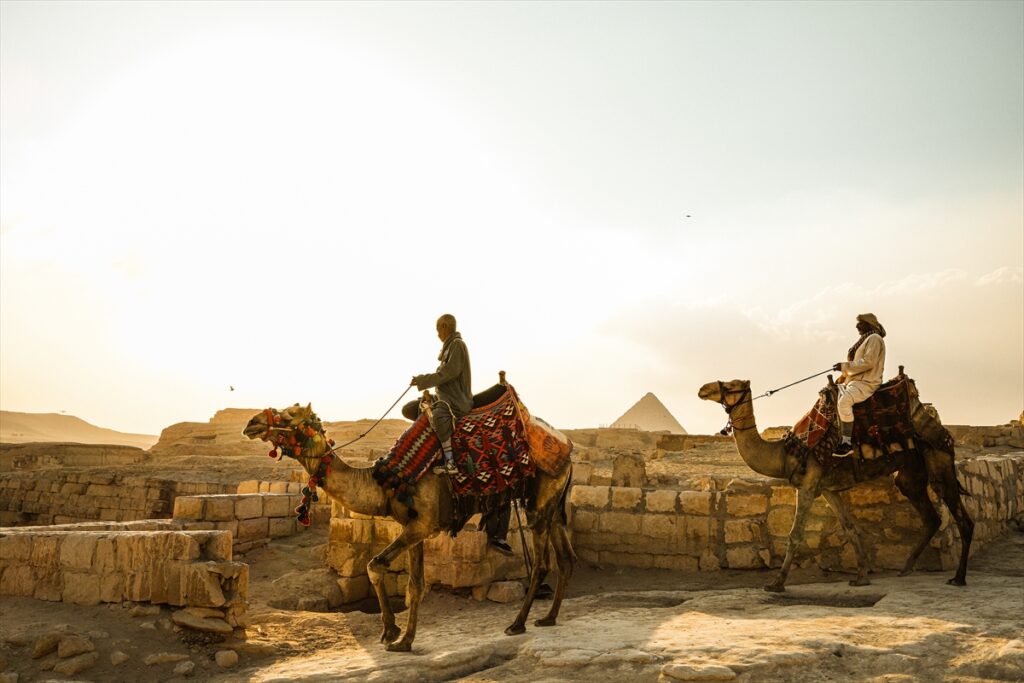
The Giza Pyramids welcome millions of visitors every year

Egypt, home to one of the Seven Wonders of the World, the Great Pyramid of Giza, attracts millions of tourists every year. The pyramids, named after the kings of the time, are located in Giza, southwest of Cairo. The largest pyramid, the Pyramid of Khufu (also known as the Great Pyramid), the middle one, the Pyramid of Khafre, and the smallest, the Pyramid of Menkaure, represent the tombs of a father, son, and grandson. Visitors often travel through the pyramid complex on camels. ocated in the city of Giza, southwest of the capital Cairo, the Giza complex contains three pyramids, the Pyramid of Cheops or the Great Pyramid, as well as the Pyramid of Khafre and the Pyramid of Mykerinos.  The Pyramid of Cheops, also known as the Great Pyramid or the Pyramid of Khufu, is the tomb of Pharaoh Khufu in Giza. It is the oldest and largest pyramid in Giza and the oldest of the Seven Wonders of the World, with a height of 140 meters. It is believed that around 100,000 people built the pyramid for 20 years. Each stone is two meters high, and some are five meters long. When visiting the complex, tourists are greeted by horse-drawn carriages and camels, and souvenirs are also sold nearby.

The Giza Pyramids welcome millions of visitors every year Read More »

Scroll to Top