Author name: yasir

G20 summit focuses on climate crisis, global conflicts

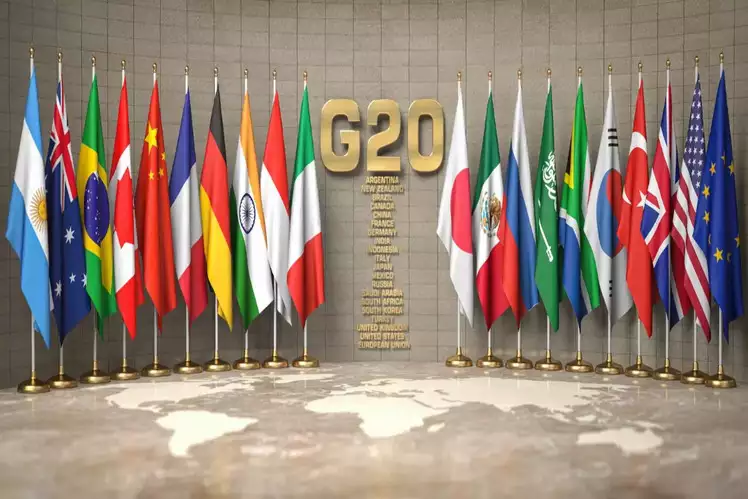
Climate Crisis and Global Conflicts Dominate G20 Summit Opening The climate crisis, along with the conflicts in Ukraine and the Middle East, took center stage on the first day of the G20 summit in Brazil on Monday. In a joint statement, leaders from the world’s major economies condemned the suffering in Gaza and Ukraine and emphasized the need for cooperation on poverty reduction, tax policy, and climate change. UN climate chief Simon Stiell had urged G20 leaders over the weekend to break the deadlock in climate finance negotiations ahead of COP29 in Azerbaijan. The summit aims to mobilize hundreds of billions of dollars for climate adaptation and mitigation in developing countries. The G20 statement called for a “rapid and substantial increase” in climate finance, but did not propose a specific solution for how much rich nations should contribute. The debate continues over whether to expand the contributor base to include wealthier developing nations like China and Middle Eastern countries. On Tuesday, leaders are set to discuss sustainable development and the transition to cleaner energy, while working to strengthen global efforts on climate change before a potential shift in US policy under a possible Trump presidency.

G20 summit focuses on climate crisis, global conflicts Read More »
PASTEF leading in Senegal’s general election race

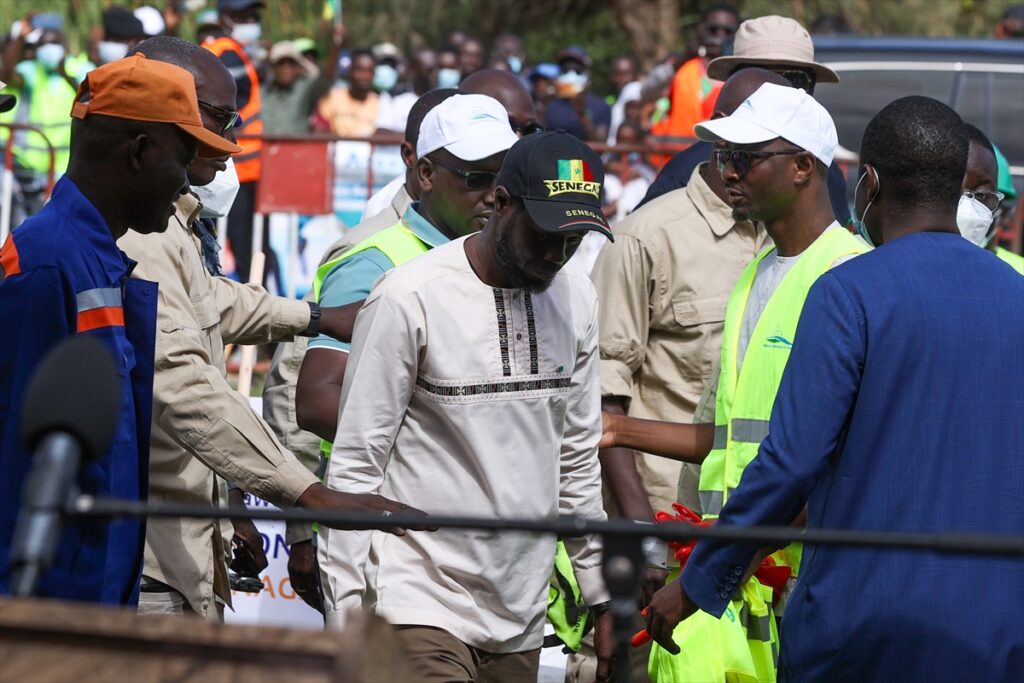
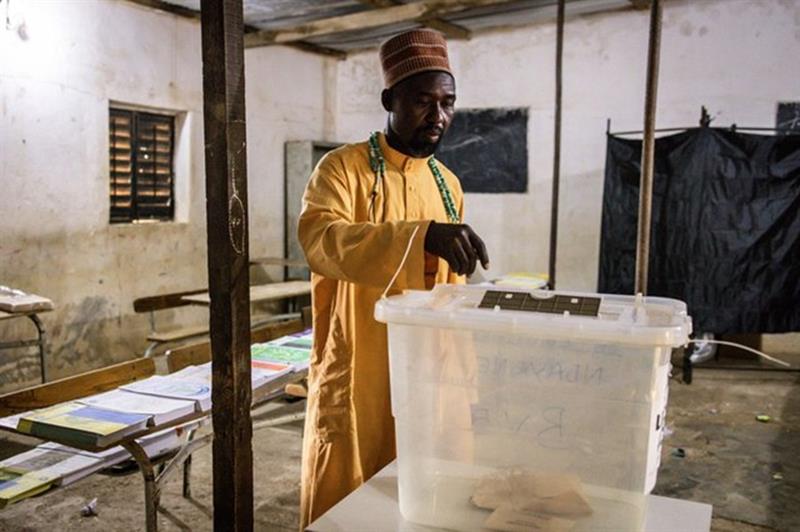
In yesterday’s general election in Senegal, unofficial results indicate that President Bassirou Diomaye Faye and Prime Minister Ousmane Sonko’s party, PASTEF, is leading the race. While vote counting continues, early figures show PASTEF has gained significant support across nearly all cities. Government spokesperson Amadou Moustapha Ndieck Sarre told local media that, based on initial results, “PASTEF has achieved a decisive victory.” Opposition coalition leader Barthelemy Dias, Mayor of Dakar, congratulated PASTEF on their success in a Facebook post. He leads the “Samm Sa Kaddu” coalition, which translates to “I keep my word” in Wolof. Amadou Ba, former presidential candidate and leader of the “Jamm ak Njarin” coalition (meaning “Peace and Prosperity” in Wolof), also praised PASTEF on X (formerly Twitter), declaring that Senegal was the real winner. Meanwhile, the “Takku Wallu” coalition, led by former President Macky Sall, alleged widespread electoral irregularities and accused Interior Minister Jean Baptiste Tine of misconduct. 83 Seats Needed for Majority Senegal, with about 7.3 million eligible voters, is electing 165 members of parliament from 41 party and coalition lists. A party or coalition needs at least 83 seats to secure a majority. While official results are still pending, it is expected that PASTEF will easily reach the majority needed to control the National Assembly. The last general election in Senegal took place in July 2022, under the leadership of former President Sall. The National Assembly has faced tensions, particularly over Prime Minister Sonko’s vocal opposition to Sall. In September, President Faye dissolved the parliament and called for early elections, which are now scheduled for April 2024.

PASTEF leading in Senegal’s general election race Read More »

UN: G20 nations to lead global efforts for peace, climate action

 UN Secretary-General Antonio Guterres urged the G20 group of developed economies to lead global efforts to promote peace, advance climate action, and ensure equitable access to emerging technologies among other challenges. “I have come to Rio with a simple message: G20 leaders must lead. G20 countries – by definition – have tremendous economic clout.
 “They wield massive diplomatic leverage. They must use it to tackle key global problems,” Guterres said Sunday in the Brazilian city of Rio de Janeiro ahead of the G20 Leaders’ Summit, according to UN News. Stressing the urgency for nations to accelerate efforts in addressing critical shared challenges, he called for intensified efforts to achieve peace in Gaza, Lebanon, Ukraine, and Sudan. “Everywhere, peace requires actions grounded in the values of the UN Charter, the rule of law, and the principles of sovereignty, political independence and the territorial integrity of States,” Guterres said. Addressing financial issues, the UN secretary-general drew attention to the challenges faced by vulnerable countries, which are grappling with significant obstacles beyond their control. He criticized the current international financial system as “outdated, ineffective, and unfair,” noting that it fails to provide these nations with adequate support. Guterres stressed the need for ambitious reforms under the Pact for the Future to make the global financial system more inclusive and reflective of today’s economy.
 Key measures include increasing developing countries’ representation in financial institutions, boosting Multilateral Development Banks’ lending capacity, fostering inclusive tax cooperation, and pursuing innovative financing. He urged the G20 to take the lead in implementing these changes.
 Guterres expressed concern about the pace of the negotiations at COP29, urging G20 nations to agree on ambitious climate finance goals to support developing countries.
 Stressing the necessity for leadership and trust-building to drive high-ambition climate plans, he called on the G20 as major economies and emitters to lead by example. G20 nations account for 80% of global emissions and “must lead with national climate plans that follow the guidance they agreed to last year – 1.5 degrees aligned, whole of economy and all greenhouse gases,” he said.
 Noting that solutions are still possible despite the challenges, Guterres said: “We need to seize every opportunity to lead transformative action for a safer, more peaceful and sustainable world.” Leaders of the G20 group of largest economies will meet in Rio de Janeiro on Monday and Tuesday for their annual summit in Rio de Janeiro.

UN: G20 nations to lead global efforts for peace, climate action Read More »

Gabon approves new constitution in referendum

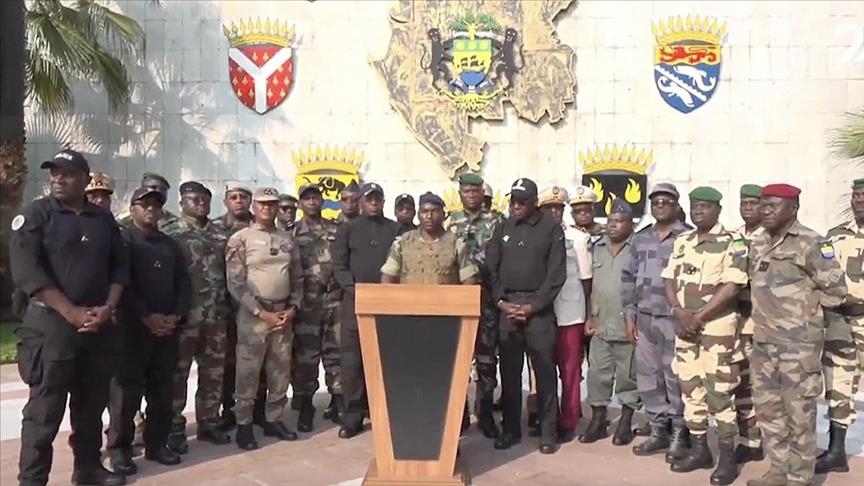
Gabon’s military rulers announced that the new constitution has been overwhelmingly approved in a referendum, with provisional results showing 91.8% of voters in favor, and a turnout of 53.5%. The vote, held under the leadership of interim President Brice Oligui Nguema, is seen as a key step in Gabon’s transition to democratic rule, which is scheduled for 2025. The military junta came to power in a coup last August, overthrowing President Ali Bongo, whose family had ruled the oil-rich country for nearly six decades, leaving behind an economy plagued by stagnation and widespread poverty. The proposed constitution includes a two-term presidential limit (seven years each), abolishes the prime minister role, prevents dynastic succession, and establishes that presidential candidates must be born in Gabon to at least one Gabonese parent and have a Gabonese spouse. While the draft is seen as a major shift toward reform, it does not bar Nguema from running for president, which has raised concerns among some observers. The final results will be confirmed by the Constitutional Court.

Gabon approves new constitution in referendum Read More »

Senegal holds early general election

Polls have opened in Senegal’s parliamentary elections as President Bassirou Diomaye Faye aims for a resounding majority to see through the promises of ambitious reforms that swept him to power eight months ago. More than seven million of the country’s 17 million people are eligible to vote on Sunday to pick members of the 165-seat National Assembly for a five-year term. Polls opened at 8am (08:00 GMT) and will close at 6pm (18:00 GMT). Faye won the March election on a platform of economic transformation, social justice, and anti-corruption, inspiring hopes among the country’s largely youthful population struggling with high inflation and unemployment. In September, he dissolved the National Assembly. After Sonko, his outspoken mentor, was barred from running for president due to defamation charges, Faye appointed him as prime minister. The two leaders vowed to pursue a left-wing pan-African agenda, aiming to diversify Senegal’s political and economic partnerships, reassess hydrocarbon and fishing contracts, and reclaim the country’s sovereignty, which they claimed had been compromised by foreign interests.

Senegal holds early general election Read More »

At least 72 Palestinians killed in Israeli airstrikes on northern Gaza

At least 72 Palestinians were killed in Israeli airstrikes in the northern Gaza town of Beit Lahia on Sunday, according to local authorities. Gaza’s government media office said Israeli warplanes targeted several residential buildings and homes in the town in the morning. “The occupation army was aware that dozens of displaced civilians were inside these buildings, and that the majority of them were children and women who had been displaced from their neighborhoods,” it added in a statement. A medical source earlier told Anadolu that Israeli fighter jets hit a five-story building in the Beit Lahia Project area on Sunday, killing about 50 people and leaving several others trapped under the rubble. Witnesses said that over 70 displaced civilians had sheltered inside the targeted building. An Israeli strike targeted another house in the area, killing 15 people and injuring several others, another medical source said. Two more Palestinians were killed when Israeli warplanes struck another residence in Beit Lahia, the source added. Since Oct. 5, Israel has launched a large-scale ground operation in northern Gaza to allegedly prevent Palestinian resistance group Hamas from regrouping. Palestinians, however, accuse Israel of seeking to occupy the area and forcibly displace its residents. Since then, no humanitarian aid, including food, medicine, and fuel, was allowed into the area, leaving most of the population there on the verge of imminent famine. More than 2,000 people have since been killed, according to Palestinian health authorities. The onslaught was the latest episode in a brutal Israeli war on the Gaza Strip since October last year, despite a UN Security Council resolution demanding an immediate cease-fire. Nearly 43,800 people have since been killed in Gaza, mostly women and children, and over 103,600 others injured, according to Palestinian health authorities. Israel faces a genocide case at the International Court of Justice for its deadly war on Gaza.

At least 72 Palestinians killed in Israeli airstrikes on northern Gaza Read More »

Gabon votes on new constitution in key referendum

Voters in Gabon’s capital, Libreville, gathered outside polling stations on Saturday, November 16, to cast their votes in a historic referendum on the country’s proposed new constitution. Nearly one million people in the oil-rich nation were expected to take part in the vote. The final draft of the new constitution was made public less than a month ago, marking a significant milestone in the country’s transition following the overthrow of former President Ali Bongo by General Oligui Nguema last year. Nguema, who is now leading the country’s transitional government, expressed satisfaction with the process, highlighting the presence of international observers and emphasizing the transparency and inclusiveness of the referendum. “It shows to friendly nations how we were able to organize this referendum process in our country,” Nguema said, adding that it was a positive and crucial step forward in ensuring the transition’s success. One of the key changes in the draft constitution is the imposition of a seven-year presidential term limit, renewable only once, replacing the current system, which allowed for unlimited five-year terms. The new constitution also includes provisions preventing family members from succeeding the president and abolishes the position of prime minister. To pass, the draft constitution requires more than 50% of the vote. Should the “Yes” vote prevail, presidential elections are scheduled for August 2025. “I would like the Yes vote to win so that the long-awaited change in our nation can finally take place,” said Koundji, a voter at the polling station. However, some voters have raised concerns about certain provisions, particularly the power granted to the head of state to dissolve the National Assembly and issues around eligibility rules. The controversy surrounding these points has added a layer of complexity to the referendum. Brice Oligui Nguema, the head of the transition government, is expected to be eligible to run for president under the new constitution, which is also generating some debate among the electorate.

Gabon votes on new constitution in key referendum Read More »

Thousands march in Niamey, reject foreign interference

Thousands of Nigeriens took to the streets of Niamey on Saturday (Nov. 16) to show support for the ruling CNSP junta and protest foreign attempts to destabilize the country. The demonstration was organized by a coalition of civil society groups after authorities claimed to have arrested a French ‘spy’. Many protesters also expressed solidarity with Burkina Faso and Mali, Niger’s allies in the Alliance of Sahel States (AES). Some speakers, like Mohamed, condemned foreign interference, citing recent destabilization attempts in Mali and Burkina Faso. “We are with our military and security forces,” he declared. The protest, which was attended by CNSP officials, including President’s Chief of Staff Colonel Ibro Amadou Bacharou, as well as student and youth unions, was fueled by accusations that France sought to overthrow the regime that deposed former President Mohamed Bazoum. Protesters also rejected France’s withdrawal of troops and expressed determination to defend their sovereignty. Civil society leader Abdourahamane emphasized the rising awareness among Africans, asserting that the continent can no longer be manipulated by external powers. “Today, Africans master the tool of information,” he said. While the protesters celebrated their defiance, they also called for economic and military development. “In the next ten years, the CNSP must build the weapons and tanks to defend us,” organizer Mohamed Elkebir Souleymane said, as the crowd enthusiastically agreed. The demonstration comes just ahead of an international conference in Niamey to support the AES states.

Thousands march in Niamey, reject foreign interference Read More »

COP29 data reveals most polluting cities

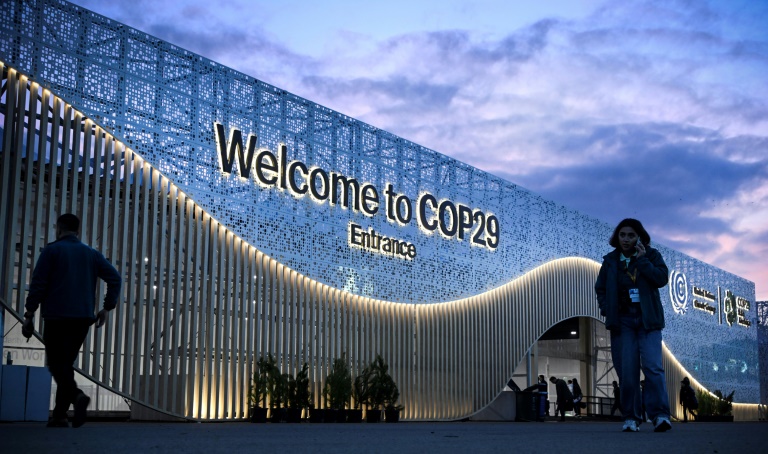
With pollution on the rise, which cities release the most emissions? Data revelaed at COP29 that Asia and the United States release the most heat-trapping gas that feeds climate change. Shanghai’s 256 million metric tons of greenhouse gases led all cities and exceeded those from Colombia and Norway. New York City’s 160 million metric tons and Houston’s 150 million metric tons is in the top 50 of countrywide emissions whilst Seoul in South Korea, ranks fifth among cities to be the most polluting. China, India, Iran, Indonesia and Russia had the biggest increases in emissions from 2022 to 2023, while Venezuela, Japan, Germany, the United Kingdom and the United States had the biggest decreases in pollution. The data set – maintained by scientists and analysts from various groups – also looked at traditional pollutants such as carbon monoxide, volatile organic compounds, ammonia, sulphur dioxide and other chemicals associated with dirty air. With these alarmings figures, nations at the UN climate talks in Baku, are trying to set new targets to cut such emissions and figure out how much rich nations will pay to help the world with that task. A report by an independent panel of experts at the summit said countries need to invest more than $6 trillion per year by 2030 or risk having to pay more in the future.

COP29 data reveals most polluting cities Read More »

South Africa acts after 22 children die from food poisoning

 South Africa’s President Cyril Ramaphosa ordered the removal Friday of hazardous pesticides off the streets and shops as one of the measures to curb food poisoning which recently killed 22 children. “Since the beginning of September 2024, there have been a total of 890 reported incidents of food-borne illnesses across all provinces,’’ Ramaphosa said in a televised address to the nation to address the recent deaths of children caused by food poisoning which has caused concern across the nation. Ramaphosa said several people have become severely ill and even died after eating contaminated food that could have been purchased from spaza shops — small informal shops — and street vendors. South Africa recorded a major poisoning incident in Naledi, Soweto township near Johannesburg last month, where six children died after buying snacks at spaza shops. The youngest was just 6 years old. Ramaphosa said after scientific tests were conducted it was established that the deaths of the six children could be directly attributed to a highly hazardous chemical used as a pesticide known as Terbufos. Terbufos, registered in South Africa for agricultural use, is said to have serious health effects, even at low levels of exposure. Ramaphosa said although Terbufos is not allowed to be sold for general household use it is being informally sold as a so-called “street pesticide” for domestic use in townships and informal settlements to control rats. He said samples from 84 spaza shops in the Naledi area of Soweto showed three shops had evidence of Terbufos. It was also found that in some spaza shops pesticides and detergents were being stored next to food items. Ramaphosa said the spaza shops that have been implicated in the deaths of the children will be closed immediately. He also ordered all spaza shops and other food handling facilities to be registered within the municipalities in which they operate within 21 days and they should meet all health standards and requirements or they will be closed.

South Africa acts after 22 children die from food poisoning Read More »

Scroll to Top