Author name: yasir

Thousands celebrate Meskel Festival in Addis Ababa

Ethiopian Orthodox Christians Celebrate Meskel Festival in Addis Ababa Thousands of Ethiopian Orthodox Christians gathered at Meskel Square in Addis Ababa on Thursday (Sep. 26) to celebrate the religious festival of Meskel, which honors the cross on which Jesus was crucified and its recovery by Saint Helena, mother of Emperor Constantine. The festival, recognized as a UNESCO Intangible Cultural Heritage of Humanity, features bonfires burned across the country. In a grand ceremony, the patriarch of the Ethiopian Orthodox Tewahedo Church lit a large bonfire, surrounded by thousands of faithful in white garments. Celebrations will continue until Friday (Sep. 27), a national holiday marked by church services and family gatherings. People throughout Ethiopia are lighting bonfires made from logs, dry leaves, and grass in public squares and near churches as part of the festivities. Amidst this celebration, Ethiopia faces ongoing tensions, including disputes over access to the sea via Somaliland and conflicts with Egypt regarding the Nile River dam, alongside insurgencies in the Amhara region.

Thousands celebrate Meskel Festival in Addis Ababa Read More »

HRW: Rwandan army and M23 rebels target civilians in Congo

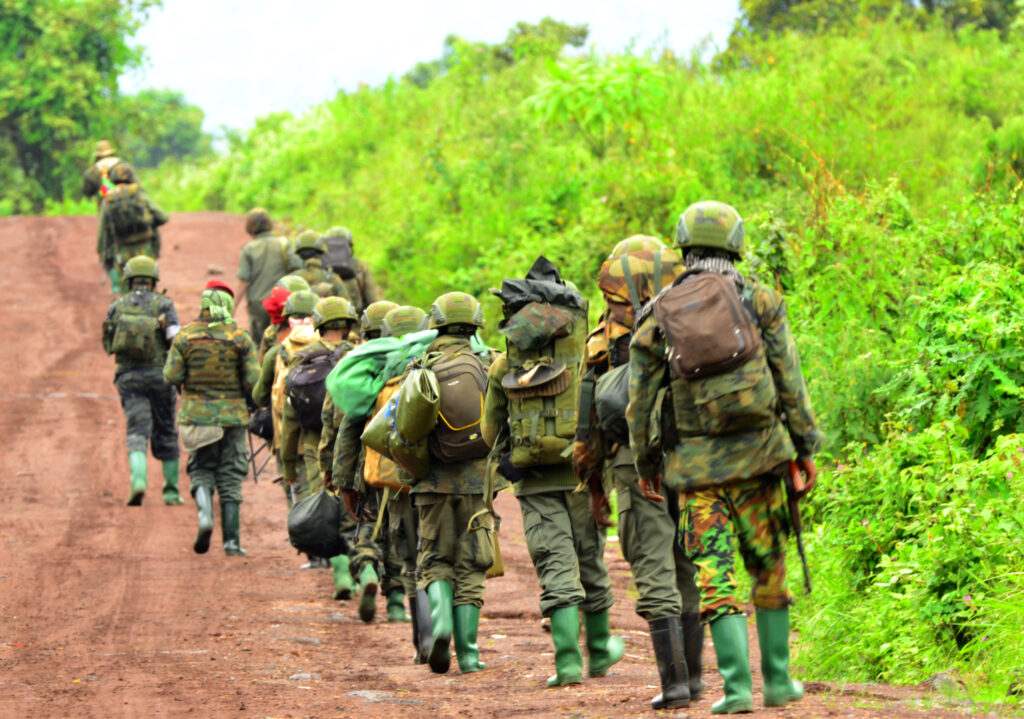
Human Rights Watch has accused the Rwandan army and the M23 rebel group of attacking civilians in eastern Democratic Republic of Congo. In a report released on Thursday, the organization stated that throughout 2024, both entities have indiscriminately shelled displacement camps and densely populated areas near Goma, the capital of North Kivu province. The United Nations has indicated that the Rwandan army and M23 are operating together in Congo, a claim that Kigali denies. Human Rights Watch documented five attacks since January 2024, where Rwandan and M23 artillery struck displacement camps and population centers. The group also criticized the Congolese army and its allies for positioning artillery near these camps, putting civilians at risk, and called for stronger measures to protect them. The ongoing violence has displaced over half a million people, who now reside in camps around Goma.

HRW: Rwandan army and M23 rebels target civilians in Congo Read More »

Lamola: South Africa’s Policy Centers on Human Rights

South Africa’s foreign policy will be guided by human rights and the peaceful resolution of conflicts, its top diplomat Ronald Lamola told his US counterpart Antony Blinken. Calling for stronger bilateral relations with the US, Foreign Minister Lamola told Secretary of State Blinken on Thursday that South Africa is celebrating 30 years of democracy as well as “shared values” with the US. South Africa is a “constitutional democracy, (with) free and fair elections, and we have just emerged from them with about 10 political parties that have agreed to form a government of national unity with the priority to resolve the triple challenges of South Africa: unemployment, inequality, and poverty,” said Lamola. It was Lamola’s first face-to-face meeting with his US counterpart since being appointed in July. They met on the sidelines of the 79 UN General Assembly in New York, according to a US State Department readout of the meeting. “And our foreign policy will continue to be guided by human rights, constitutional principles, the national interest, solidarity and peaceful resolution of conflicts,” Lamola told Blinken ahead of their closed-door talk. The meeting came amid reports that Israeli diplomats are lobbying US lawmakers to pressure South Africa into dropping its genocide case against Tel Aviv at the International Court of Justice (ICJ). After Lamola’s appointment, Blinken called him to offer congratulations, and they also discussed Russia’s war on Ukraine as well as Israel’s war on Gaza. South Africa last December took Israel to the ICJ over its indiscriminate bombardment of the Gaza Strip, which has resulted in the deaths of more than 41,500 people since last October. In his opening remarks, Blinken said his meeting with Lamola was to take stock of the “extraordinary and important partnership between South Africa and the United States, a partnership that works on a bilateral basis, a regional basis, and indeed a global basis. After their meeting, Lamola said he and Blinken had a “constructive engagement.” “Our relationship is dynamic and constantly evolving,” he added.

Lamola: South Africa’s Policy Centers on Human Rights Read More »

2M people remain displaced after devastating floods in Nigeria

About two million people are still displaced days after devastating floods struck Nigeria’s northeast Maiduguri city, an official said on Friday.  Babagana Zulum, governor of northeastern Borno State, said victims of the Sept.10-11 massive floods are still in displaced persons camps established by the government in the wake of the disaster. “Most of our people are still displaced and many infrastructure damaged by the flood,” Zulum told officials at a Nigerian bank, which donated N1 billion (about $600 million) to help rehabilitate infrastructure destroyed by the floods and resettle victims. Zulum promised all the donations into the relief basket account would be used for affected persons and not diverted by officials. Thousands of people have been taking refuge in open places, religious centers, and 32 displaced persons camps, including public schools, since the severe floods killed at least 40 people. Local authorities have commenced distribution of money, food, and nonfood items to displaced persons in camps and a few people taking refuge in safer areas. Bulana Abiso, head of the coalition for civil society organizations, told Anadolu that economic activities are yet to return to the city days after the incident. Abiso said most victims are still in shock and struggling to overcome the trauma of their losses and displacement caused by the disaster. Institutions and individuals, including Africa’s richest man Aliko Dangote, donated money to support victims.

2M people remain displaced after devastating floods in Nigeria Read More »

UN ‘alarmed’ by Israel’s heavy airstrike on Beirut

The UN on Friday expressed “great alarm” over the developments in Lebanon’s Beirut following latest heavy Israeli bombardment.  “We are watching the developments unfolding in Beirut with great alarm,” UN spokesman Stephane Dujarric told reporters during a news conference after Israeli army on Friday evening carried out a heavy and unprecedented airstrike on Beirut’s southern suburb area, claiming to have attacked the main headquarters of Lebanese group Hezbollah. He expressed the UN’s deep concern about “the sharp escalation of hostilities across the Blue Line with strikes in Lebanon.” Emphasizing that the latest developments place both Lebanese and Israeli civilians at risk, Dujarric said they also threaten regional security and stability. “I can tell you that our peacekeeping mission here, better known as UN Interim Force in Lebanon (UNIFIL), continues to engage actively with the parties to help de-escalate tensions along the Blue Line and avoid further misunderstandings,” he added. Dujarric reiterated the UN’s support for diplomatic efforts for ending violence, restore stability and prevent further humanitarian suffering in the region. He also renewed calls for an immediate de-escalation, return to cessation of hostilities and urged for full implementation of the UN Security Council resolution 1701. UN Security Council Resolution 1701, adopted on August 11, 2006, calls for a complete cessation of hostilities between Lebanon and Israel and establishes a zone free of armed personnel and weapons, except for the Lebanese army and UNIFIL forces, between the Blue Line (the border between Lebanon and Israel) and the Litani River in southern Lebanon. “Despite the extremely difficult situation, the peacekeeping missions, military and civilian peacekeepers, remain committed to their mission and continue to adapt in order to deliver on the mission’s mandate amidst a very hostile situation,” he added. In response to a reporter’s question on the cause of “great alarm” for UN regarding Lebanon, Dujarric said: “Anyone who looks at the pictures and smoke billowing from a densely populated area should be alarmed to say the least.” Dujarric also announced Acting Under-Secretary-General for Humanitarian Affairs Joyce Msuya’s allocation of $10 million from UN “Central Emergency Response Fund for the humanitarian response in Lebanon.” “This is in addition to $10 million released earlier this week from the Lebanese humanitarian fund,” he said, adding that the UN will continue to closely monitor the humanitarian situation and further support the Lebanese government, which is leading in the aid response. Israel has pounded Lebanon since Monday morning, killing over 700 people and injuring nearly 2,200 others, according to figures released by the Lebanese Health Ministry. The ministry also said that the death toll in Lebanon since last October is 1,540, in addition to more than 77,000 displaced from southern and eastern parts of the country. Hezbollah and Israel have been engaged in cross-border warfare since the start of Israel’s war on Gaza, which has killed more than 41,500 people, mostly women and children, following a cross-border attack by Hamas last Oct. 7. The international community has warned against the strikes on Lebanon, as they raise the specter of turning the Gaza conflict into a regional war.

UN ‘alarmed’ by Israel’s heavy airstrike on Beirut Read More »

African countries, partners pledge $800M for Africa’s mpox response

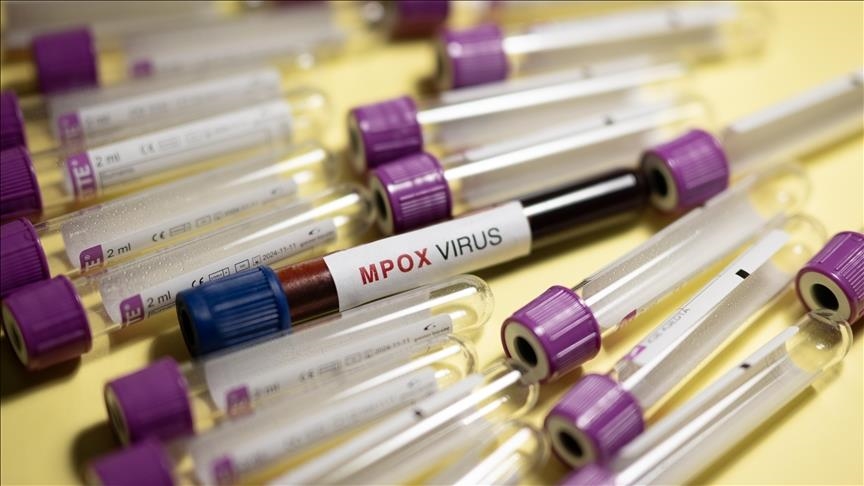
African countries and partners have pledged more than $800 million towards the continent’s mpox response amid surging infection, the director-general of the Africa Centres for Disease Control and Prevention (Africa CDC) announced Thursday. Jean Kaseya said $314 million was pledged to a new mpox fund created at a meeting of African heads of state earlier this week, of which $129 million is from the pandemic fund to support 10 countries impacted by mpox, while about $145 million from the Coalition for Epidemic Preparedness Innovations (CEPI). “Today we have around $814 million,” he said. Money from the pandemic fund will support 10 countries impacted by mpox: the Democratic Republic of Congo, Burundi, Rwanda, Uganda, Kenya, Sudan, Djibouti, Ethiopia, Somalia, and South Sudan. “Our team is working with the pandemic fund team on the way to allocate these resources in the 10 countries approved for support,” Kaseya said at a virtual news conference. The funding, created at a meeting of African heads of state earlier this week, is expected to bolster country and regional capacity in critical areas, including disease surveillance, diagnostics, laboratory networks and health workforce while addressing the immediate challenges posed by mpox. The continental preparedness and response plan for Africa has a budget of about $600 million. Kaseya said the US has also committed to provide $500 million to support the continental response plan and 1 million vaccine doses. He said Africa has secured 4.4 million vaccine doses against 10 million doses needed to control the disease spread. A total of 2,910 new cases of mpox, mostly in central and eastern Africa, were recorded last week and 16 new deaths, according to the latest data from Africa CDC. More than 32,000 confirmed cases in 2024 have been recorded on the continent with 840 deaths. Compared to the same period last year, Kaseya said there has been more than a 194% increase in cases in 15 African nations. Mpox cases are steadily increasing across all affected countries, Kaseya said, citing contact tracing and low testing capacity among the challenges. The testing rate on the continent stands at 49.5%, whereby many cases cannot be confirmed. Kaseya said this week Africa CDC would deliver available vaccines from the EU to some affected countries such as Rwanda, the Central African Republic, South Africa, Burundi and Cameroon. Congo, the most affected country in the region, will begin vaccinations in the first week of October. “Our objective is to stop this outbreak in the next six months and we need full support from member states and our partners,” he said.

African countries, partners pledge $800M for Africa’s mpox response Read More »

Senegal’s Faye criticizes security council’s inaction on Sahel cri...

Bassirou Diomaye Diakhar Faye of Senegal condemned the UN Security Council for its inaction regarding the deaths and instability in the Sahel during his address to the United Nations General Assembly on September 25. “We cannot accept the Sahel becoming a battleground for foreign rivalries, which only worsen regional destabilization,” Faye stated. He emphasized, “Peace and security in Africa are tied to global peace. The Security Council must fully assume its role as a guarantor of international stability.” He referenced recent comments from Ukrainian officials regarding their involvement in attacks by separatist rebels in northeastern Mali, which drew criticism from Malian authorities. As jihadi threats grow, many Western governments have withdrawn their forces from the Sahel following military coups in Mali, Burkina Faso, and Niger. In his ten-minute speech, Faye also called for a ceasefire in Gaza and an end to unfair economic practices that hinder the Global South’s prosperity, highlighting issues like illegal trade and tax evasion. The 44-year-old leader urged for better African representation in multilateral institutions and called on developed nations to enhance their efforts in financing a fair transition to combat the climate crisis. “We must protect our planet without compromising the development rights of vulnerable nations,” he stated. Faye also criticized the unilateral imposition of civilizational norms that undermine global stability and peace.

Senegal’s Faye criticizes security council’s inaction on Sahel cri... Read More »

Morocco intercepts 49 irregular migrants off Tarfaya coast

The Moroccan military said on Thursday that the navy had intercepted 49 irregular migrants off the coast of Tarfaya in the southern Sahara region of the Atlantic Ocean. According to a statement posted on Facebook by the Royal Moroccan Armed Forces, a navy unit intercepted 49 irregular migrants from Sub-Saharan African countries on a rubber boat near Tarfaya port. The irregular migrants were given medical care before being transported to Tarfaya Port and handed over to the Royal Gendarmerie “for further administrative procedures,” the statement said. On January 23, the Interior Ministry reported halting 75,184 irregular migration attempts, a 6% increase over 2022, and dismantling over 419 human trafficking networks, a 44% rise from the previous year. Migration attempts from Sub-Saharan Africa to Europe are increasing due to ongoing conflicts, insecurity, and economic difficulties in the migrants’ home countries.

Morocco intercepts 49 irregular migrants off Tarfaya coast Read More »

Turkish foreign minister meets Ethiopian and Somali Counterparts

Turkish Foreign Minister Hakan Fidan met separately with Ethiopian Foreign Minister Taye Atske Selassie and Somali Foreign Minister Ahmed Muallim Fiqi in New York. According to a post on the Ministry’s X account, Fidan discussed various issues with his Ethiopian and Somali counterparts at the Turkish House in New York. The post noted that the Ministry is actively seeking a balanced, feasible, and mutually beneficial solution to the tensions between the two countries, based on the Ankara Process. Ethiopia-Somalia Dispute Ethiopia is the largest landlocked country in the world by population. Following Eritrea’s de facto separation from Ethiopia in 1991 and its legal independence in 1993, Ethiopia lost its access to the sea. Consequently, it has kept the issue of access to the Red Sea on the agenda for economic reasons and signed a Memorandum of Understanding with Somaliland on January 1. This memorandum, which included a pledge to recognize Somaliland, drew significant backlash from Somalia and the international community. Somaliland President Musa Bihi Abdi stated that with the completion of the agreement, Ethiopia would recognize them as “independent.” In response to Ethiopia’s agreement with Somaliland, the Somali government withdrew its ambassador from Ethiopia. The Arab League and the African Union condemned the agreement, stating it opens the door to military base construction and port development in the Red Sea. Ethiopian and Somali foreign ministers had previously met in Nairobi on March 9-10 to seek solutions to the crisis between their countries, but no results were achieved from the indirect negotiations. The parties had convened twice in Ankara under Turkish mediation as part of the negotiations known as the “Ankara Process.”

Turkish foreign minister meets Ethiopian and Somali Counterparts Read More »

Kenya reports deaths, missing, and arrests in protests

The Kenyan government, for the first time, has officially acknowledged the fatalities and disappearances linked to anti-government protests that have swept the country in recent months. Interior Minister Kithure Kindiki told the National Assembly Committee on Thursday that 42 people were killed, 132 missing, and 1,208 others arrested during the protests. Protests erupted across Kenya in June and July over tax increases in the Finance Bill 2024, killing at least 50 people, according to the Kenya Human Rights Commission (KHRC) and other officials. President William Ruto’s administration faced intense scrutiny for how it handled the protests, which also caused widespread property damage. “There were 42 cases of people who lost their lives during the Gen-Z demonstrations, a total of 1,208 people were arrested countrywide during the demonstrations, and most of the cases are still pending before court for various charges,” Kindiki told the committee, emphasizing the government’s commitment to holding those responsible for violence accountable, regardless of affiliation. He added that 132 people have gone missing, as reported by police stations across the country. “Myself and the president himself, have made it clear that this administration does not condone abductions or extrajudicial killings or enforced disappearances,” according to him. On extrajudicial killings of protesters, the interior minister was quick to defend authorities who shot at them, saying some cases were justified, citing the case in which thousands of protesters stormed and torched a section of parliament building in Nairobi. “If police never used lethal force during the invasion of parliament, we would never have a Kenya like we have today,” he added. The protests in Kenya, which began in June, were sparked by public dissatisfaction with rising living costs and Ruto’s controversial tax policies. Protests in the major towns of Nairobi, Kisumu, and Mombasa were some of the most intense, with citizens taking to the streets to demand economic reforms, which later evolved into protests calling for Ruto’s resignation. The government’s admission comes amid mounting pressure from civil society organizations and human rights groups, who have been calling for transparency on the number of casualties and missing persons during the protests. In July 2024, the president made a dramatic move by dissolving almost his entire Cabinet in response to widespread protests against his administration’s proposed tax increases. Following this, Ruto removed all Cabinet Secretaries except Prime Cabinet Secretary Musalia Mudavadi, citing the need for a “broad-based government” to restore trust and improve governance. This reshuffle also coincided with a meeting between Ruto and the then-opposition leader Raila Odinga, which fueled speculation about a potential power-sharing arrangement. The protests, sparked by tax increases in the Finance Bill 2024, swept across Kenya in June and July, leading to the deaths of at least 50 people, according to the Kenya Human Rights Commission (KHRC) and other authorities

Kenya reports deaths, missing, and arrests in protests Read More »

Scroll to Top