Author name: yasir

Israeli army orders evacuation in central Gaza Strip

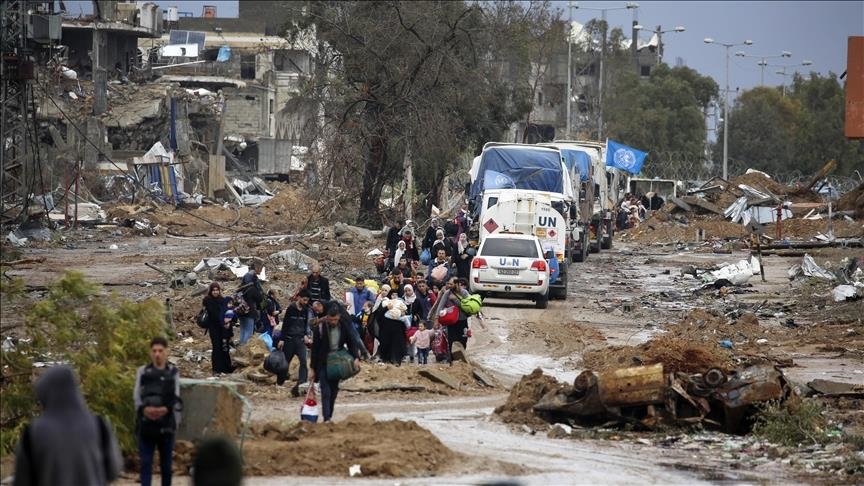
The Israeli army issued fresh evacuation orders on Saturday for residents in several areas of the central Gaza Strip. Israeli army spokesman Avichay Adraee announced that residents of Blocks 2232-2240 in the Maghazi area and the neighborhoods of Salah El-Din, El-Farouk and El-Amal in central Gaza Strip are required to evacuate. The army claims that these areas are “dangerous combat zones” due to alleged “Hamas operations.” On Friday, the Israeli army issued new evacuation orders for residents in several areas of central and southern Gaza Strip, which have been previously designated as “humanitarian safe zones.” Previously, some of these areas, such as Al-Mawasi, had been designated as “humanitarian safe zones” for displaced Palestinians amid the ongoing Israeli offensive on Gaza. According to the international humanitarian organization Oxfam, over 1.7 million displaced Palestinians are currently residing in the Al-Mawasi area and its surroundings, which constitutes less than one-fifth of Gaza’s territory. On Tuesday, the UN Agency for Palestinian Refugees (UNRWA) reported that approximately 84% of Gaza’s territory has been under evacuation orders since Oct. 7. Israel’s continued onslaught on Gaza has drawn international condemnation for violating a UN Security Council resolution demanding an immediate cease-fire. The ongoing war has resulted in over 40,000 Palestinian deaths and has left vast areas of Gaza in ruins, exacerbated by a severe blockade of food, clean water, and medicine. Israel is accused of genocide at the International Court of Justice (ICJ), which ordered it to immediately halt its military operation in the southern city of Rafah, where more than 1 million Palestinians had sought refuge from the war before it was invaded on May 6.

Israeli army orders evacuation in central Gaza Strip Read More »

Death toll in Kampala landslide rises to 34

In Uganda, the death toll from the landfill collapse in Kampala has risen to 34, with many homes and residents in the Kiteezi neighborhood buried under a massive pile of waste following heavy rains. The landslide occurred on Saturday, August 9, and rescue operations are ongoing, with 35 people still missing. The collapse is thought to have been triggered by the intense rainfall. The Kiteezi landfill, situated on a steep slope in a poor part of the city, has long been a hazardous area. Women and children often scavenge plastic waste there for income, and some homes are built nearby. Kampala authorities have been considering closing the landfill and moving waste disposal to a larger site outside the city, but the plan has not been implemented since 2016. President Yoweri Museveni has ordered an investigation into the incident.

Death toll in Kampala landslide rises to 34 Read More »

Mpox crisis escalates in Goma with rising cases and new variant

Goma, long plagued by conflict in the Democratic Republic of the Congo, is now at the center of a severe mpox outbreak, formerly known as monkeypox. The Nyiragongo General Hospital, located on the outskirts of Goma, is seeing a surge in mpox cases. The current variant is particularly concerning, with increased severity compared to earlier strains. Patient Nyota Mukobelwa recounted her experience after being transported to the hospital by a Doctors Without Borders vehicle. She initially experienced headaches, fever, muscle pain, and groin discomfort, which were followed by lesions, leading her to suspect an infection. Doctors and nurses report that most patients are children. Dr. Pierre Olivier Ngadjole from MEDAIR DRC, which operates the mpox treatment site, noted that 75% of the patients are children under ten, with 70% coming from internally displaced persons (IDP) camps. Nurse Trésor Basubi expressed concern over the rising number of admissions. The ongoing conflict around Goma has led to an influx of displaced people seeking refuge in the city’s camps. In 2022, mpox outbreaks were reported in over 70 countries, prompting the World Health Organization to declare a global emergency. While vaccines and treatments helped control the outbreaks in wealthy nations, access remained limited in Africa. This year, a new, potentially more infectious form of mpox has been identified in a mining town about 270 kilometers south of Goma. At least 13 African countries, including Burundi, Kenya, Rwanda, and Uganda, have reported new cases, often linked to the outbreak in Congo. Furaha Elisabeth visited the clinic for her child’s treatment, expressing her fear and anxiety after seeing distressing images of the disease. “I am scared and so worried,” she said.

Mpox crisis escalates in Goma with rising cases and new variant Read More »

French authorities in New Caledonia extend curfew until Aug. 26

French authorities in New Caledonia extended a curfew until Aug. 26 as the death toll from recent riots rose to 11. The High Commissioner of New Caledonia said in a statement that it has eased restrictions on the sale of alcohol, allowing take-away purchases under strict limits from Aug. 19 to Sept. 8. However, the delivery of alcohol remains banned and a curfew from 10 p.m. to 5 a.m. is in place until Aug. 26. Restrictions on firearms and the transportation of fuel in portable containers have also been extended until Aug. 26, with exemptions for municipal services and certain professionals. The statement also said there have been a total of 2,459 arrests across the territory to date, with 1,331 occurring in police jurisdictions and 1,128 in gendarmerie zones. The High Commissioner condemned an arson attempt at a church in Poindimie and attacks on motorists in Poya. The Pacific archipelago has been engulfed in unrest since mid-May, triggered by a proposed bill to review electoral rules. The changes would have allowed French nationals who have lived on the island for at least 10 years to vote in local elections. But local residents, particularly the indigenous Kanak population, feared that the changes would dilute their voting power. In response to the escalating violence, France declared a state of emergency and deployed additional forces to assist local authorities in restoring order. On June 12, French President Emmanuel Macron suspended the controversial electoral reform plan.

French authorities in New Caledonia extend curfew until Aug. 26 Read More »

Algerian boxer Imane Khelif speaks out on gender identity issue

Algerian Olympic boxing champion Imane Khelif has spoken out for the first time since winning gold in the women’s 66-kilogram category at the Paris Games, addressing the scrutiny and misinformation she endured. Khelif revealed the emotional impact of false allegations questioning her gender, which began after her Italian opponent, Angela Carini, withdrew from their match. Despite the International Olympic Committee’s support and condemnation of the false claims, high-profile figures like Donald Trump, J.K. Rowling, and Elon Musk contributed to the controversy with critical remarks. “It hurt me deeply and caused immense fear,” Khelif told Algerian news channel El Bilad. “I can’t describe how scary it was. Thankfully, people in Algeria and the Arab world know me for my femininity, courage, and determination.” Khelif expressed frustration over the politicization of sports and condemned the unfounded accusations as an insult to her, her family, and Algeria. “They have no right to label me as transgender. This is an offense to my family, to Algeria, and to the Arab world,” she said. In response to the harassment, Khelif’s lawyer, Nabil Boudi, has filed a complaint with the Paris prosecutor’s office, leading to an investigation into the online hate campaign. Charges under consideration include cyber harassment, public insults based on gender, and incitement to discrimination. Khelif remains resolute in her demand for justice and respect. “I will accept an apology if offered, but to those who don’t apologize, I say: I am a female and will remain so, and my honor comes before everything,” she affirmed.

Algerian boxer Imane Khelif speaks out on gender identity issue Read More »

South Africa’s unemployment rate climbs, over 8 million jobless

South Africa’s unemplyment rate increased by 0.6 percentage points from 32.9% in Q1 2024 to 33.5% in Q2 2024, the government’s statistics office reported Tuesday. Africa’s most industrialized economy has struggled to create jobs in recent years due to a long recession and most recently the Covid-19 pandemic.  About 8.4 million people were out of work, up from 5.2 million in 2014. The number of employed persons fell by 92,000 to 16.7 million in Q2 2024. The sectors which saw the most job decreases include trade, agriculture and construction.  Only manufacturing, social services and utilities added jobs.  The figures are the first to be released since the May elections which brought in a coalition government which put reviving the ailing economy top of its agenda.  Unemployment was a key political issue in the vote, likely contributing to the loss of an absolute majority by the African National Congress (ANC).  The statistics affice said that the most significant decrease in employment was observed in the Western Cape, Mpumalanga and KwaZulu-Natal provinces.

South Africa’s unemployment rate climbs, over 8 million jobless Read More »

Tanzania’s president sacks health minister in mini-Cabinet reshuffle

Tanzanian President Samia Suluhu Hassan removed long-serving Health Minister Ummy Mwalimu in a mini-Cabinet reshuffle Wednesday, a move seen as part of broader efforts to realign her government ahead of general elections next year. According to a statement issued by Chief Secretary Moses Kusiluka, the president has appointed Jenista Mhagama as the new minister of health. Mhagama previously served as the minister of state in the Prime Minister’s Office responsible for Policy, Parliament and Coordination. Mwalimu, who held the health portfolio for a long time, has not been reassigned with any other duty. In the same reshuffle, President Hassan appointed renowned law professor Palamagamba Kabudi as the Minister of Constitution and Legal Affairs, a portfolio previously held by Pindi Chana. Chana, in turn, has been appointed as the Minister of Natural Resources and Tourism, the docket she had held previously. The president also promoted William Lukuvi to the position of Minister of State in the Prime Minister’s Office, tasked with overseeing policy, parliament and coordination. The reshuffle, which includes key changes in the Attorney General’s Office, where a senior aviation expert, Hamza Johari, has been appointed attorney general, replacing Eliezer Feleshi, who has been appointed as a judge of the Court of Appeal, signals President Hassan’s ongoing efforts to consolidate her administration and strengthen governance as the country navigates through its development challenges.

Tanzania’s president sacks health minister in mini-Cabinet reshuffle Read More »

Monkeypox cases surge in Goma as WHO declares global emergency

In Goma, Democratic Republic of Congo, health teams are working tirelessly to identify monkeypox cases as the number of infections in the city continues to rise daily. On Wednesday, the World Health Organization declared the mpox outbreaks in Congo and across Africa a global emergency. Confirmed cases have now been reported in children and adults across more than a dozen countries, with a new, more virulent strain of the virus emerging. Earlier this week, the Africa Centers for Disease Control and Prevention labeled the mpox outbreaks a public health emergency, citing over 500 deaths and calling for international assistance to curb the virus’s spread. “Since Friday (August 9), we have confirmed nine cases of monkeypox. We first isolate individuals with suspicious lesions and then collect samples,” said Dr. Rachel Maguru, General Practitioner at Goma Provincial Hospital and Head of the Multi-Epidemic Center. Dr. Maguru expressed concern that individuals with symptoms might avoid visiting the hospital to escape isolation, which could lead to further infections spreading within communities. Recent reports have highlighted the emergence of a more lethal form of mpox in a Congolese mining town, which has a mortality rate of up to 10% and may spread more easily. This new variant is more difficult to detect as it causes milder symptoms and lesions primarily on the genitals, making it easier for people to unknowingly transmit the virus. “We are seeing a rising number of cases, with a mortality rate higher than acceptable. New countries are now reporting cases that hadn’t in recent years, with several of them identifying the variant of mpox currently spreading in the DRC,” stated Prof. Salim Abdool Karim, chair of the Emergency Consultative Group for the Africa Centers for Disease Control and Prevention.

Monkeypox cases surge in Goma as WHO declares global emergency Read More »

Climate crisis activists halt traffic at major German airports

 Climate crisis activists disrupted air traffic at Germany’s major airports on Thursday morning by gluing themselves to the tarmac. Activists from the Last Generation group gained access to the tarmacs of Berlin, Cologne-Bonn, Nuremberg and Stuttgart airports, forcing authorities to temporarily suspend flight operations for several hours for safety reasons. The group shared photos and videos of the action on X, showing several activists in orange safety vests sitting on the tarmac with banners saying “Oil kills” and “Sign the treaty.” The protests were part of the global “Oil kills” campaign. “Together with allied protest movements, including in the US and Canada, the Last Generation is calling for the signing of a fossil fuel phase-out treaty,” the group said in a statement. “The German government should commit to international negotiations with the aim of signing an intergovernmental treaty to phase out fossil fuels by 2030,” the statement said.

Climate crisis activists halt traffic at major German airports Read More »

Warming sea waters in South Africa threaten fish migration

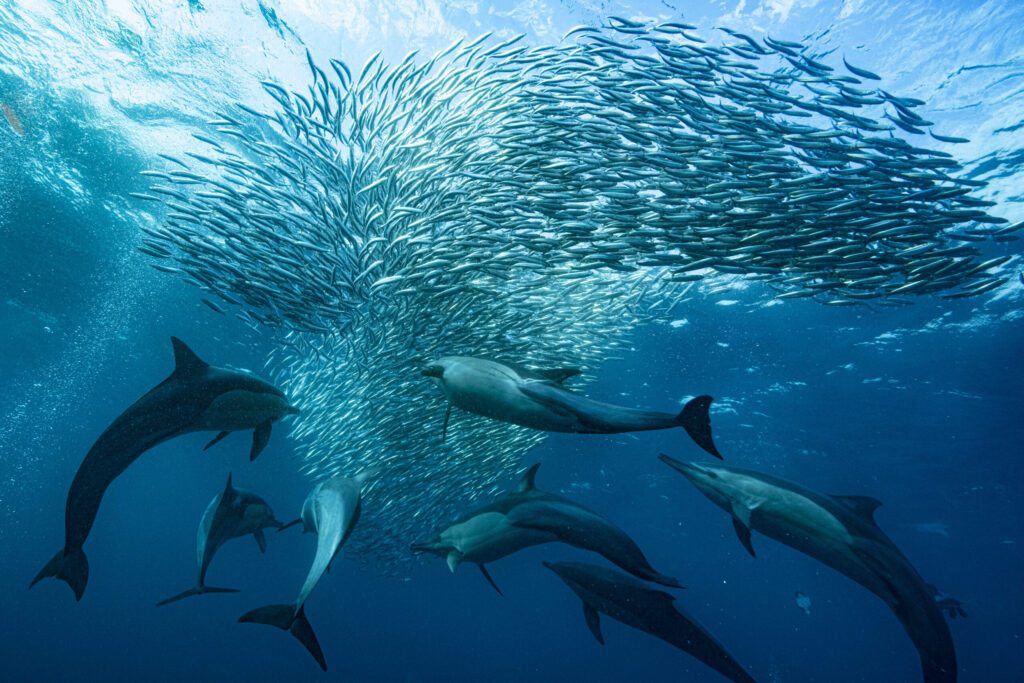
Experts warn that the number of fish participating in South Africa’s sardine migration, the largest animal movement in the world by biomass, may decline due to warming sea temperatures driven by the climate crisis. Known as the “KwaZulu-Natal Sardine Run,” this massive, one-way migration spans 1,500 kilometers from temperate regions to the Indian Ocean and involves billions of sardines. According to an article titled “The Mass Migration of Sardines in Southeast Africa: An Ecological Trap,” prepared by academics from various South African universities and research centers, the migration occurs along the Agulhas Current—a swift ocean current also supporting various predatory birds and marine life. This migration is crucial for local economies as it provides significant commercial income. Professor Lorien Pichegru from Nelson Mandela University’s Coastal and Marine Research Institute highlighted that the migration remains mysterious in many aspects. He described the Sardine Run as the largest animal movement in the world by biomass, underscoring its importance for numerous predators, particularly seabirds. Pichegru explained, “Cape gannets, for example, time their breeding cycles to coincide with the sardine run, ensuring that their young hatch during a period of abundant and easily accessible food. Many animals synchronize their life cycles with the sardine run.” He also noted that sardines do not thrive in warm waters and that climate change is adversely affecting them. “Sardines are declining in Africa due to climate change and overfishing pressures. Their 2-3 year lifespan means their survival depends on the successful development of their eggs and larvae, which is directly impacted by sea temperatures. Higher temperatures make it harder for larvae to grow and mature, leading to a potential decline in sardine numbers. This could halt the sardine run in the coming years, affecting many animals, including sharks, and further endangering the already threatened Cape gannet. Fishermen dependent on these fish for their livelihood would also be impacted, disrupting the entire food chain.” Pichegru further pointed out that ongoing oil and gas exploration in the region affects the habitat, with seabed excavation creating significant noise pollution that harms marine life. Concerns about potential oil spills were also raised. “The Agulhas Current, one of the fastest currents globally, could spread the effects of a potential spill over a large area,” Pichegru warned. The 1 Ocean Foundation, established under the French National Center for Scientific Research (CNRS) and supported by UNESCO, is documenting this migration with scientists, artists, and activists through their project “The Great Migration of Life.” Alexis Rosenfeld, an underwater photographer and co-founder of the foundation, stated that their project aims to “make the invisible visible” and emphasize the importance of biodiversity. The project name reflects its significance. Rosenfeld explained that their motivation stemmed from concerns over natural gas and oil exploration off South Africa’s coast. Rather than directly opposing the projects, they chose to illustrate the potential consequences through their film. Rosenfeld said, “We believe in the power of positive narratives. By showcasing the endangered ecosystem and the great migration of life, we aim to highlight its beauty, which is a more impactful approach than direct confrontation.” He also noted that climate change is a significant factor affecting their project. “Climate change has a substantial impact on ocean currents, influencing migrations. While the sardine migration typically happens every year, we observed it less frequently in recent years and now see it restricted. This is a direct result of climate change.” Rosenfeld concluded by emphasizing the migration’s scale: “Sometimes, you can’t see in front of you because the view is filled with animals. You might find yourself surrounded by millions of sardines, dozens of swimming birds, and 20-30 dolphins, making you forget where you are and what you’re doing.”

Warming sea waters in South Africa threaten fish migration Read More »

Scroll to Top