Author name: yasir

Photo Gallery: Daily Life in Tanzania

Daily Life in Tanzania Daily life in Tanzania reflects the country’s cultural diversity and geographical differences. Here are some key points about daily life in Tanzania: Nature and Activities: Tanzania is renowned for its natural beauty. Outdoor activities such as safaris, mountain climbing (especially Mount Kilimanjaro), and beach activities are popular among both locals and tourists. Cultural Diversity: Tanzania is a rich mosaic of various ethnic groups. This diversity is evident in everything from food to music and clothing. Cuisine: Tanzanian cuisine typically includes maize, rice, sweet potatoes, bananas, and various meats and seafood. In the northern regions, especially Zanzibar, spices and seafood are prominent. Daily Life: In cities, people usually rise early and spend their days working, studying, or engaging in other activities. In rural areas, life tends to be more traditional and agriculture-based. Farming, particularly maize and coffee production, is a primary livelihood for many. Transportation: In cities and rural areas, public transportation options include buses, shared minivans, and motorcycle taxis (boda-boda). These are common for city commuting. Education and Health: Education and healthcare services are more developed in cities, while rural areas may have limited access. Education is provided through both public and private schools. Healthcare services are offered by public hospitals and private clinics. Social Life: Tanzanians are social and hospitable. Family events, community celebrations, and religious ceremonies are integral parts of daily life. Religious festivals, particularly among Christians and Muslims, are widely celebrated. Markets: In cities and villages, markets are popular places to buy fresh fruits, vegetables, food items, and other goods. Markets also serve as important social hubs. Clothing: Clothing styles vary depending on the region and culture. In cities, modern and Western-style clothing is common, while traditional attire is more prevalent in rural areas. Climate and Lifestyle: Due to the tropical climate, daily life is often adjusted to warm and humid conditions. The dry and rainy seasons significantly influence lifestyle.

Photo Gallery: Daily Life in Tanzania Read More »
UN chief: Humanitarian situation in Gaza ‘total disaster

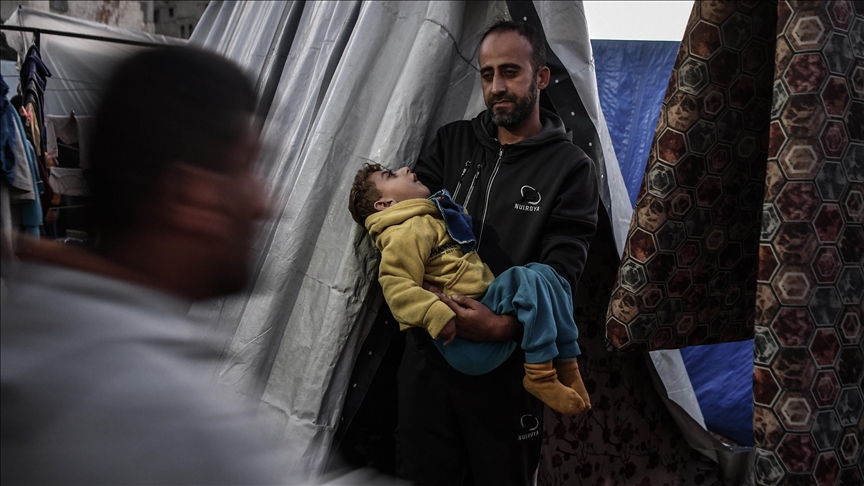
 UN Secretary-General Antonio Guterres warned Thursday about the humanitarian situation in the Gaza Strip while reiterating a two-state solution between Israel and Palestine. “The humanitarian situation in Gaza is a total disaster,” Guterres said as he listed two reasons. “First, a military campaign that has the highest level of killing and destruction that I remember in any other military campaign since I am Secretary General, anywhere in the world,” he said. “The second reason is because the level of humanitarian aid is totally out of proportion with the needs.” His remarks came one day after Israeli Prime Minister Benjamin Netanyahu addressed a joint session of the US Congress, where he claimed that the war in Gaza has “one of the lowest ratios of combatants to non-combatant casualties in the history of urban warfare.” Turning to Netanyahu’s claims about Gaza, Guterres said: “There was nothing said yesterday that is new. So, there is nothing that was said that deserves comments, and obviously, we absolutely must keep the two-state solution as the only possible long-term solution for peace in the region, independently of whatever is said by whoever, wherever.” Asked by Anadolu about his evaluations of Netanyahu’s claims about the number of casualties in Gaza, Guterres said: “My answer is simple: to whom people believe in relation to that, I am very at ease in relation to this question.” Guterres said he has not reached out to Netanyahu while he is in the US to discuss attacks on UN convoys in Gaza. “I have not reached out to the Prime Minister, but our people have been reaching out, both to Israeli authorities and also to other countries, exactly in order to make sure that this kind of regrettable incidents are not repeated,” he added. Netanyahu has faced a wave of protests since arriving Monday in Washington. Thousands took to the streets to protest his address to Congress and his policies in Gaza. They are also demanding a cease-fire in the besieged enclave. Nearly 39,200 Palestinians have since been killed, mostly women and children, and over 90,400 injured, according to local health authorities. Over nine months into the Israeli onslaught, vast tracts of Gaza lie in ruins amid a crippling blockade of food, clean water and medicine. Israel is accused of genocide at the International Court of Justice, which ordered Tel Aviv to immediately halt its military operation in the southern city of Rafah, where more than 1 million Palestinians had sought refuge from the war before it was invaded on May 6.

UN chief: Humanitarian situation in Gaza ‘total disaster Read More »

The UN is sending a short mission to aid in CAR’s local election

Preparations are underway in the Central African Republic for local elections in October, the first in over 36 years. MINUSCA, the UN peacekeeping mission, is playing a crucial role in this process. According to spokesperson Florence Marchal, MINUSCA will support the review of the electoral register by deploying 104 tonnes of equipment and transporting 384 people. The mission is also providing $1.3 million for electoral roll revision and advocating for additional resources and the participation of women and youth. In addition to logistical support, MINUSCA’s involvement includes political efforts to ensure an inclusive and peaceful electoral process. The mission is collaborating with national forces to develop an election security plan and aims to register around 800,000 new voters from a total of 2 million, updating the roll since its last revision in 2020. This effort aligns with the 2019 Political Agreement for Peace and Reconciliation, which seeks to decentralize the peace process.

The UN is sending a short mission to aid in CAR’s local election Read More »

Namibia imposes visa on 33 countries, including USA and UK

The South African country of Namibia has introduced visa requirements for citizens of 33 countries, including the USA, UK, and EU member states. Namibia’s Deputy Minister of Home Affairs, Lucia Witbooi, announced that from April 1, 2025, citizens of 33 countries—including the USA, Germany, the UK, France, Italy, Canada, Austria, Ireland, Australia, Japan, the Netherlands, Brazil, and Azerbaijan—will need a visa to enter Namibia. Witbooi explained that the visa requirement was being implemented because many countries that Namibia had granted visa-free access to for 33 years had not reciprocated, though the reasons for this were unclear. The decision has been met with backlash from representatives of Namibia’s tourism sector, which is a major source of income for the country. Namibia, known for its natural attractions like the Namib Desert and Etosha National Park, is predominantly visited by tourists from Western countries. Currently, Turkey and Namibia also have reciprocal visa requirements. With the new regulation, the visa application fee will increase from $65 to $86, based on the current exchange rate of the Namibian dollar.

Namibia imposes visa on 33 countries, including USA and UK Read More »

WHO calls for urgent action to reduce alcohol consumption in Europe

Lorem ipsum dolor sit amet, consectetur adipiscing elit, sed do eiusmod tempor incididunt ut labore et dolore magna aliqua. Ut enim ad minim veniam, quis nostrud exercitation ullamco laboris nisi ut aliquip ex ea commodo consequat. Duis aute irure dolor in reprehenderit in voluptate velit esse cillum dolore eu fugiat nulla pariatur. Excepteur sint occaecat cupidatat non proident, sunt in culpa qui officia  The World Health Organization (WHO) has issued an urgent call to action to halt the rising trend of alcohol consumption in Europe, which is among the highest in the world. The WHO published a report on alcohol consumption in Europe, revealing that it leads to almost 800,000 deaths annually, making it one of the leading causes of death in the region. Every day, 2,200 people in Europe die from alcohol-related causes, accounting for nearly 9% of all deaths in the region. Alcohol consumption significantly impacts domestic violence, accidents and mental health issues. Despite this, many people are unaware of the dangers associated with alcohol use. Despite the health risks, Europeans top the global list with an average annual alcohol consumption of 9.2 liters. According to the latest WHO data, men drink about four times more than women. In Europe, two out of three adults consume alcohol, and one in 10 adults is considered an alcoholic. Doctors say that alcohol consumption can lead to cardiovascular diseases, cancer and liver cirrhosis. But there has been no reduction in alcohol consumption in European Union countries for over a decade. The report also notes that countries like Russia, Ukraine and Türkiye have achieved the WHO’s alcohol reduction targets by increasing taxes on alcohol and reducing its accessibility. mollit anim id est laborum.

WHO calls for urgent action to reduce alcohol consumption in Europe Read More »

South Africa: DA wants ANC punished for Ramaphosa speech

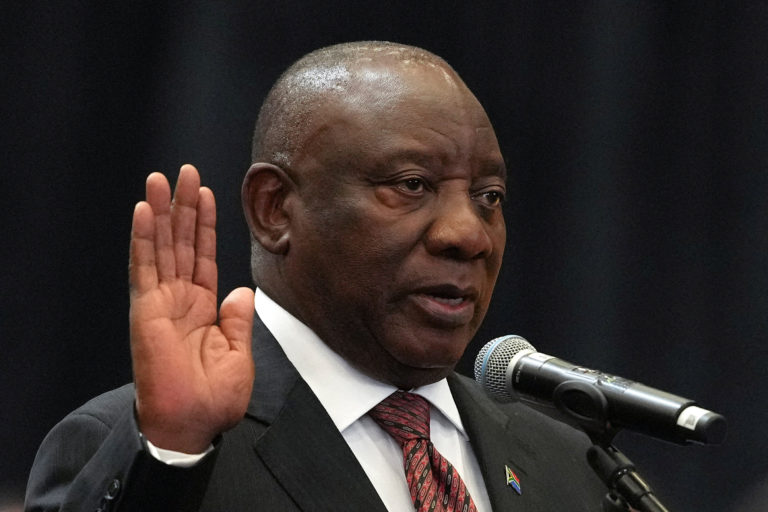
South Africa’s Democratic Alliance took the African National Congress, the party it co-governs the country with, to court Thursday over a preelection speech in May given by President Cyril Ramaphosa. It’s an early sign of friction between the new coalition partners. The court papers were submitted to the Electoral Court by the DA in May before it entered into a coalition with the ANC, but it decided to still go ahead with the case. The DA asked the court to deduct 1% of the vote received by the ANC in the May 29 national election and fine Ramaphosa, the ANC leader, $10,900 and his party $5,450, over what it argues was a presidential address that was used for election campaigning and amounted to an abuse of office. The ANC responded Thursday by calling the DA’s legal action “frivolous and unwarranted” and said the president was following the constitution when he made the speech. Ramaphosa gave the speech three days before the election in his capacity as head of state, but used parts of it to highlight what he said were ANC successes during its 30-year rule as South Africa’s governing party. The DA said that election rules don’t allow him to engage in party politics and campaign for the ANC when he speaks as the president. The ANC lost its long-held majority in the historic election when it received just 40% of the vote. That forced it to create a coalition government for the first time to run Africa’s most industrialized country. The DA — the second biggest party with 21% of the vote — is one of seven parties represented in Ramaphosa’s Cabinet despite previously being the ANC’s fiercest critic. The coalition, referred to as a “government of national unity,” created a new political landscape for South Africa after the ANC had governed since the end of the apartheid system of white minority rule in 1994. The election was the first time in South Africa’s young democracy that more people voted for other parties, stripping the organization once led by Nelson Mandela of its dominance. The left-leaning ANC and the centrist DA are the key parties in the coalition but them working together was seen as unlikely given their stark ideological differences and history of opposition to each other. They have largely managed to project a sense of unity over the last month since the coalition was agreed.

South Africa: DA wants ANC punished for Ramaphosa speech Read More »

Head of Zambia’s Independent Broadcasting Authority found dead

The head of Zambia’s Independent Broadcasting Authority (IBA), who had gone missing the day before, was discovered dead on Wednesday with two bullet wounds in the head and back. The government has ordered police to conduct a prompt investigation into the death of Guntila Muleya, for whom the family started searching on Tuesday after he failed to return to his home. “The government has asked the police to quickly and thoroughly investigate the circumstances surrounding this unfortunate death,” Thabo Kawana, the permanent secretary in the Ministry of Information and Media, told reporters in the capital Lusaka. Muleya’s family became concerned on Tuesday night, around 9:00 p.m. local time, when he did not return home, and they began looking for him, Kawana said. “His body was discovered later today (Wednesday) in the Njolwe area with two gunshot wounds,” he said. Separately, Zambia police spokesman Rae Hamoonga said at around 10:30 a.m. local time, police received a phone call from a concerned member of the public in the Njolwe area on Lusaka’s outskirts, who reported that during the night of Tuesday at around 20:00 hours, he saw a jeep with its doors open and then heard two gunshots. “This morning (Wednesday) at approximately 10:00 a.m., on his way to work, he (the caller) discovered the body of a deceased on the ground with two bullet wounds on the back and head. “A closer examination revealed a deep bullet wound in the forehead. Two bullet cartridges were recovered at the scene,” Hamoonga explained. He said a murder case has been registered, and that investigations are currently underway.

Head of Zambia’s Independent Broadcasting Authority found dead Read More »

UN: 733 million people globally faced hunger in 2023

Around 733 million people faced hunger in 2023, according to the latest State of Food Security and Nutrition in the World (SOFI) report published on Wednesday by five United Nations specialised agencies. Hunger affected one out of every eleven people in the world and one out of five in Africa, with the number rising on that continent. The report highlights that access to adequate food remains elusive for billions with around 2.33 billion people globally faced moderate or severe food insecurity in 2023. It add that this number that has not changed significantly since the sharp upturn in 2020, amid the Covid-19 pandemic. David Laborde, the Food and Agriculture Organization’s director of agri-food economics, says solving the problem is a political choice, and also depends on “how much money we are ready to put on the table”. “Today we produce enough food on this planet to feed everyone. So if we want to solve the position by 2030, it’s technically feasible,” he says. While there has been some progress in specific areas, hunger in places like Sudan and the Gaza Strip has been dramatically worsened by ongoing conflicts. And the report predicts that if current trends continue, about 582 million people will be “chronically undernourished by 2030″, half of them in Africa. Laborde said chronic hunger was a crisis impacting people not only right now, because its impact would still be felt in the future. “Pregnant women, kids that face malnutrition problem today, will pay the price all of their life. So by not solving the problem today, we are basically impoverishing these countries in the future,” he says. The report says food insecurity and malnutrition are worsening due to a combination of factors, including persisting food price inflation that continues to erode economic gains for many people in many countries. And major drivers like conflict, climate change, and economic downturns are becoming more frequent and severe. These issues, along with underlying factors such as unaffordable healthy diets, unhealthy food environments and persistent inequality, are now coinciding simultaneously, amplifying their individual effects. Achieving the Sustainable Development Goal of Zero Hunger, it says, requires a multi-faceted approach and targeted interventions. This includes transforming and strengthening agrifood systems, addressing inequalities, and ensuring affordable and accessible healthy diets for all. The UN agencies are calling for increased and more cost-effective financing, with a clear and standardised definition of financing for food security and nutrition.

UN: 733 million people globally faced hunger in 2023 Read More »

New Home Secretary condemns failed Rwanda migrant scheme

The UK’s new Home Secretary denounced a failed proposal by former Prime Minister Rishi Sunak to relocate migrants to Rwanda, labeling it a “shocking waste of taxpayer money” amounting to £700 million ($904 million). Keir Starmer, who took office this month following Sunak, promptly terminated the controversial plan. Sunak’s effort, dubbed “stopping the boats,” aimed to curb asylum-seekers crossing the English Channel from France but faced legal challenges and criticism from human rights groups. Home Secretary Yvette Cooper highlighted costs including £290 million paid to Rwanda, expenses for unused charter flights, the detention and subsequent release of hundreds of individuals, and funding for more than a thousand civil servants involved in the initiative. She informed lawmakers that the previous administration had allocated over £10 billion of taxpayers’ money to the project without parliamentary approval. The Rwandan government stated it bore no responsibility to reimburse the disputed funds. The Home Secretary underscored ongoing concerns about dangerous small boat crossings, expected to persist through the summer. She stressed the necessity for enhanced measures against human trafficking but did not provide specifics. Official figures disclosed that nearly 1,500 migrants arrived in the UK via small boats across the English Channel in a single week. Tragically, two individuals lost their lives during rescue operations off the northern French coast. Sunak’s strategy aimed to address the rising global trend of migrants, peaking at 46,000 in 2022, undertaking perilous journeys across the English Channel. The government argued these migrants should not be classified as genuine refugees since they did not seek asylum in the first safe country they reached. In 2022, the UK reached an agreement with Rwanda to transfer migrants who arrived as stowaways or by boat to the East African nation for asylum processing. Critics, including human rights groups, criticized the plan as impractical and unethical, particularly due to the geographical distance involved. Despite legal challenges in UK courts, no deportation flights to Rwanda were conducted. Only four individuals voluntarily relocated to Rwanda, as confirmed by Cooper. In November, the UK Supreme Court ruled the policy illegal, stating Rwanda was not a safe third country for migrant transfers. The justices unanimously agreed that sending claimants to Rwanda could expose them to the risk of mistreatment and potential deportation to their countries of origin.

New Home Secretary condemns failed Rwanda migrant scheme Read More »

300 members of Boko Haram on trial in Nigeria

 The mass trial of 300 captured members of the Boko Haram terrorist group has begun in Nigeria. Michael Abu, Director of Strategic Communications and Head of the National Counter-Terrorism Center, shared updates on the judicial process Wednesday. Abu confirmed that the trial adheres to international criminal justice standards and is being overseen by the Federal High Court of Nigeria. He highlighted that five judges are presiding over the trial to ensure swift justice for the 300 defendants. The Nigerian government previously announced plans to prosecute 5,000 Boko Haram members captured in the country’s northeastern region. The terrorists are being tried in groups at the federal court. Since 2009, Boko Haram has been responsible for mass terror attacks in Nigeria, resulting in over 20,000 deaths. The group has extended its attacks to neighboring countries Cameroon, Chad and Niger since 2015, leading to at least 2,000 more deaths in the Lake Chad Basin area. Hundreds of thousands of Nigerians are displaced annually due to terror attacks and ongoing conflicts.

300 members of Boko Haram on trial in Nigeria Read More »

Scroll to Top