Author name: yasir

Uganda police out in force ahead of anti-graft rally

Police were out in force on the empty streets of the Ugandan capital Kampala on Tuesday ahead of a planned anti-corruption rally that has been banned by the authorities. President Yoweri Museveni, who has ruled the East African country with an iron fist for almost four decades, had warned the demonstrators at the weekend they were “playing with fire.” Three opposition lawmakers were remanded in custody late Monday, police said, after opposition leader Bobi Wine said his National Unity Platform (NUP) headquarters was “under siege” by police and army officers. The call to action over corruption has been organized online, drawing inspiration from the mostly Gen-Z led anti-government protests in neighboring Kenya that have roiled the country for a month. “We are the youths and heart of our country and we are not letting down our country,” leading Ugandan protester Shamim Nambasa told AFP on Monday. Posters shared online ahead of the rallies urged demonstrators to “march on parliament.” But police spokesman Kituuma Rusoke said the authorities will “not allow a demonstration that will risk peace and security of the country.” In the capital, AFP journalists said there were roadblocks on mostly quiet streets, especially near Kampala’s business district, heavily manned by officers in anti-riot gear with some wearing camouflage uniforms. A heavy police presence also remained in place around the NUP headquarters, an AFP journalist said. On Monday three lawmakers with the opposition group were detained by police on “various offenses and remanded to prison,” according to the police spokesperson who did not give further details on the charges.  Wine, whose real name is Robert Kyagulanyi, had made calls on Monday to support the rallies. “We want a country where we all belong not for the few in power,” he said. A NUP spokesperson confirmed three legislators, named as Francis Zaake, Charles Tebandeke and Hassan Kirumira, along with seven others connected to the party, had been detained. Tuesday’s march has been organized on social media by young Ugandans with the hashtag #StopCorruption. Graft is a major issue in Uganda, with several major scandals involving public officials, and the country is ranked a lowly 141 out of 180 countries on Transparency International’s corruption index.

Uganda police out in force ahead of anti-graft rally Read More »

Niger: IMF approves $71 million disbursement

Niger will receive new loans from the IMF to implement reforms aimed at reducing risks to future balance of payments stability and addressing long-standing balance of payments challenges. The IMF’s Executive Board concluded the Fourth and Fifth Reviews of Niger’s economic program supported by the Extended Credit Facility (ECF) and the First Review under the Resilience and Sustainability Facility (RSF) on Wednesday. This milestone enabled immediate disbursements of SDR 19.74 million (approximately US$ 26 million) under the ECF, bringing total disbursements to SDR 157.92 million (about US$ 210 million), and SDR 34.216 million (about US$ 45 million) under the RSF. Niger’s ECF was approved in December 2021 and supplemented by the RSF in July 2023. Both arrangements were extended by six months until December 2025 to provide adequate time for implementing critical reforms and supporting fiscal consolidation efforts. While program implementation was generally on track by late June 2023, it was disrupted by a political crisis in the country, resulting in the accumulation of arrears in external and domestic debt service payments.

Niger: IMF approves $71 million disbursement Read More »

Nigeria probes alleged import of contaminated fuel

On Monday, Nigerian lawmakers launched an inquiry into allegations of polluted fuel imports, aiming to address conflicts involving Aliko Dangote’s oil refinery and regulatory authorities. Chairman Ikenga Ugochinyere disclosed that the legislative committee is investigating claims of unregulated licensing and the absence of international standard laboratories linked to the contaminated products in Abuja. Aliko Dangote, President/CEO of Dangote Industries Limited, defended his position, expressing regret over the challenges faced but stressing the necessity to persevere through ongoing projects. The committee urged the parties in Nigeria’s petroleum sector to reduce tensions that have been heightened in recent weeks by allegations from the regulator that Dangote was trying to monopolize the market and that his refinery’s products are of poor quality. Dangote claimed that the mafia in the oil industry is more dangerous than the mafia involved in drugs.  He emphasized that while you may have some knowledge of your opponents in the drug trade, the oil mafia operates in secrecy both internally and externally.  He expressed his certainty that they may even have insiders aiding them in their operations.  Dangote also lamented the fact that Nigeria has been struggling with fuel queues since 1972, calling it a national shame. The largest refinery in Africa, located in Lagos, has a capacity of 650,000 barrels per day.  Despite being hailed as a game-changer by officials, the $19 billion facility has faced a slow start since opening over a year ago.  Due to challenges in sourcing crude oil locally, the refinery has had to rely on imports from other countries, highlighting Nigeria’s struggles with oil theft and corruption. The refinery’s senior executive has also alleged that international oil companies in Nigeria are scheming to cause the refinery to fail.  Devakumar Edwin, a vice-president of Dangote Industries, claimed that the companies are either intentionally demanding an exorbitant premium or stating that crude is not available. Farouk Ahmed, the chief executive of the regulatory agency, expressed concerns about Dangote’s request to suspend or stop the importation of petroleum products, citing potential market monopoly.  However, Dangote refuted these claims and welcomed lawmakers to inspect the plant where its products were tested.  He also clarified that he did not receive any incentives from the Nigerian government for the refinery and announced the cancellation of plans to invest in the steel industry.  The origin of the dispute between Nigerian authorities and Dangote, whose companies dominate various markets, remains unclear.  This conflict emerged after President Bola Tinubu succeeded Muhammadu Buhari, a close ally of Dangote, following last year’s presidential election.  Analysts warn that such disputes could deter foreign investments and destabilize Nigeria’s economy.  Nigerian economist Bismarck Rewane criticized allegations of low-quality products from the refinery, deeming them baseless without evidence or consumer complaints, suggesting deeper underlying issues.

Nigeria probes alleged import of contaminated fuel Read More »

Mali’s ‘king of kora’ Toumani Diabate dies at 58

Mali’s celebrated “king of kora,” Toumani Diabate, passed away on Friday at the age of 58 following a brief illness, according to an announcement from his family on social media. Diabate, a renowned master of the kora—a traditional West African stringed instrument—died at a private clinic in Bamako, the capital of Mali. Born in 1965 into a family of griots, Diabate was deeply rooted in Mali’s rich cultural heritage, serving as a guardian of the nation’s oral histories and traditions. Throughout his career, Diabate was celebrated for his extraordinary skill and innovative approach to the kora. His ability to seamlessly blend traditional Malian music with contemporary influences earned him acclaim both in Africa and internationally.  The news of his passing has led to a wave of tributes from across the West African music scene. Fellow musicians and admirers have praised Diabate for his profound impact on the music world. His contributions were recognized for bridging the gap between ancestral traditions and modern music, making a lasting imprint on Mali’s cultural landscape.

Mali’s ‘king of kora’ Toumani Diabate dies at 58 Read More »

ECOWAS allocated $14M for humanitarian aid

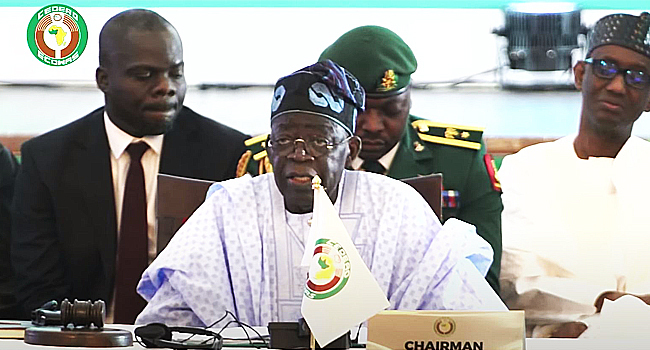
The Economic Community of West African States (ECOWAS) has reported allocating $14 million over one year to support humanitarian efforts in the region and combat terrorism. According to a statement by Ajuri Ngelale, Special Advisor to Nigerian President Bola Ahmed Tinubu, Tinubu attended the “African Union 6th Mid-Year Coordination Meeting” held in Accra, Ghana’s capital. President Tinubu, who is also the ECOWAS Chair, mentioned during the meeting that ECOWAS has allocated $14 million to support humanitarian efforts and counterterrorism in the region. He also noted that ECOWAS is exploring other financing options for its $2.6 billion Contingency Force. Tinubu highlighted that ECOWAS faces various challenges such as terrorism, food insecurity, and climate change, and mentioned that the organization will continue dialogue with Burkina Faso, Mali, and Niger, who have decided to leave ECOWAS, and will convene an “Extraordinary Special Summit” on the future of the Community. Tinubu did not announce the summit date but indicated that leaders would discuss ongoing negotiations with Niger, Mali, and Burkina Faso regarding their decision to leave ECOWAS. Burkina Faso, Mali, and Niger, who decided to leave ECOWAS and formed the Alliance of Sahel States (AES), held their first summit in Niamey, Niger’s capital, on July 6th. During the summit, they signed a joint declaration to establish the “Confederation of Sahel States,” comprising the three countries, and elected Malian President Assimi Goita as the AES Chair for a one-year term.

ECOWAS allocated $14M for humanitarian aid Read More »

Harris endorsement doesn’t seal Democratic nomination. What’s next...

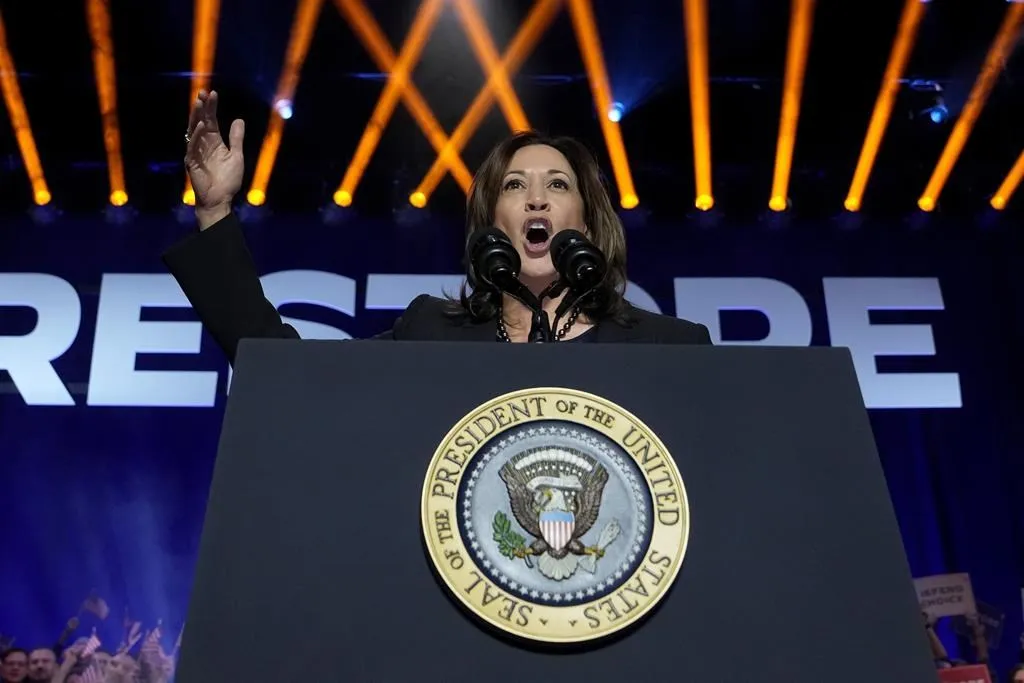
When US President Joe Biden abruptly announced Sunday afternoon that he would be ending his bid to secure a second term in office, many were caught flat-footed. That included not only many voters around the nation, but White House staffers, senior Democrats and the Democratic National Committee, all of whom are now in what Biden’s former boss, ex-President Barack Obama, described as “uncharted waters.” Biden had long been unwavering in his determination to challenge Republican presidential nominee and former President Donald Trump in November despite mounting Democratic calls for him to step aside after he badly flubbed a high-stakes debate with Trump in June. The performance heightened already significant concerns about Biden’s mental acumen and his ability to defeat Trump at the ballot box as many Democrats consider this year’s election a make-or-break contest for the soul of American democracy. Even as the chorus grew, Biden’s insistence that he would be the party’s nominee was echoed by many in his inner circle who continued to insist in the days and even minutes running up to his surprise announcement that Biden would be the party’s nominee. Andy Bates, a senior spokesperson in the president’s press shop, denied a report Friday that Biden’s family was discussing a potential end to the re-election campaign. “Wrong. Keep the faith,” Bates said on X in response to the NBC News article. That sentiment continued to be run publicly by many senior Democrats and the Biden campaign, which just 45 minutes before the president posted a note to X announcing that he would be stepping aside solicited campaign donations from Democrats. – Endorsement of Kamala Harris does not cement her role as Democratic nominee In announcing his decision to end his re-election bid, Biden threw his weight behind Vice President Kamala Harris, offering her his “full support and endorsement” ahead of next month’s nominating convention. That does not make her the Democratic nominee, however. The party’s blessing will only come with the support of the majority of Democratic delegates during the Aug. 19-22 Democratic National Convention (DNC), and it is unclear who will be competing for the nomination outside of Harris, much less when and how candidates will seek to garner delegates’ support. Committee Chair Jaime Harrison has maintained that there is no automatic successor to Biden, emphasizing that the party would pursue what he described as an “orderly process” to select a nominee. “The work that we must do now, while unprecedented, is clear. In the coming days, the Party will undertake a transparent and orderly process to move forward as a united Democratic Party with a candidate who can defeat Donald Trump in November. This process will be governed by established rules and procedures of the Party. Our delegates are prepared to take seriously their responsibility in swiftly delivering a candidate to the American people,” Harrison said in a statement. “In short order, the American people will hear from the Democratic Party on next steps and the path forward for the nomination process,” he added. Those “next steps” remain a mystery to many, not least of which are senior DNC officials, who are all in the same boat with just four weeks until the convention begins. While it is possible that individual delegates will cast their ballots in Chicago during what would be known as an open convention, the prospect has been raised that the decision could be made well before that during a previously floated virtual roll call to meet Ohio’s ballot eligibility requirements. The party had planned as recently as Friday to nominate Biden virtually at some point between Aug. 1-7 in order to ensure that the Democratic nominee met a key deadline and was on Ohio’s ballot. It is unclear if Democrats will attempt to choose their nominee via a virtual vote to ensure they conform to a deadline whose standing is now unclear for several reasons, or if the matter will be deferred for an open convention that is not slated to begin until more than a week and a half later. A convention is considered “open” when no candidate has the majority of the delegates’ support. That has not happened in decades. All of the delegates that Biden secured during the Democratic primary are now free to throw their support behind a candidate of their choosing. While the president may have sought to influence many with his endorsement of Harris, they are not obligated to support her. A later open convention would allow prospective candidates a bit more time to court delegates ahead of the convention. Amid the uncertainty, all eyes are slated to be fixed on this week’s expected meeting of the DNC’s rules committee. – Democrats face wild field for potential nominee with just 4 weeks until convention California Gov. Gavin Newsom, thought to be one of the leading Democrats for the nomination, dismissed any speculation that he would compete for the role, announcing his endorsement of Harris on Sunday night. “With our democracy at stake and our future on the line, no one is better to prosecute the case against Donald Trump’s dark vision and guide our country in a healthier direction than America’s Vice President, @KamalaHarris,” Newsom wrote on X. Other top-tier potential candidates have kept their cards close to their chest, not indicating one way or another how they will proceed. That includes billionaire Illinois Gov. JB Pritzker, Michigan Gov. Gretchen Whitmer, Pennsylvania Gov. Josh Shapiro, West Virginia Sen. Joe Manchin, and California Representative Ro Khanna. Whoever wins the nomination will need the support of the majority of the Democrats’ roughly 3,900 pledged delegates. An additional group of about 700 superdelegates do not participate in a first roll call vote. They can take part in later rounds of balloting if no candidate secures a majority on the first vote. A lack of a clear nominee after a first-round vote would set up what would be known as a brokered convention, allowing the superdelegates to take part in successive balloting until one candidate emerges with a clear majority.

Harris endorsement doesn’t seal Democratic nomination. What’s next... Read More »

UNESCO to evaluate heritage conservation in Morocco’s capital

Morocco’s capital, Rabat, is one of 124 World Heritage sites to be assessed for the state of its conservation at the UNESCO committee’s annual meeting in India. With architecture dating back to 1184, the city is one of the most ancient in the world, and its numerous monuments depict the many different periods of Moroccan history. Mosques dating back nearly a thousand years blend into the new urban town built under the French Protectorate in the early 1900s. “Morocco, as one of the most ancient countries in the world, by virtue of its strategic location, has been home to a group of civilisations from the prehistoric period to the present day,” said Mohammed El Krombi, curator of historical monuments at the Culture Ministry in Rabat. He said having World Heritage status is both an honour and a responsibility. “It requires us to take care of these historical monuments because UNESCO, together with the Ministry of Culture and local partners, is trying to support this heritage and make it known,” he said. “When people visit Morocco, they tend to go to just Fez or Marrakesh. The royal vision now is that Rabat is not only the administrative capital but also the cultural capital, the city of lights. These are the things that will help attract tourists.” Tourism plays a pivotal role in enhancing Rabat’s historical heritage, and restoration projects use traditional methods and materials to preserve the original design. With its quiet alleyways, high blue and white walls and ornate doorways, the Kasbah of the Udayas if a firm favourite with visitors. The real birthplace of the city, its origins date back to the 12th century. “The Kasbah of the Udayas is the city of Mahdia. It is the first nucleus of the Almohad city of Rabat al-Fath. It is the historical city that extends on both banks and not only on the left bank,” said Rabat historian and archaeologist, Mohamed Es-semmar. Chakir Cheraibi, a Moroccan tourist from Canada, said the area has always been a major attration. “Even for us, it makes us discover Rabat, the children too. We teach them about the history of Morocco through these places and these monuments,” he said. What started out as a humble military outpost nearly 1,000 years ago to defend the area, has been expanded over time into a citadel. Today, this mostly residential neighbourhood, is home to several important historical monuments, including the Andalusian Gardens, the Bab Udaya gate, and the Old Mosque. UNESCO’s World Heritage Committee holds its 46th session from 21 to 31 July in New Delhi.

UNESCO to evaluate heritage conservation in Morocco’s capital Read More »

Russia says it downed 75 drones launched by Ukraine overnight

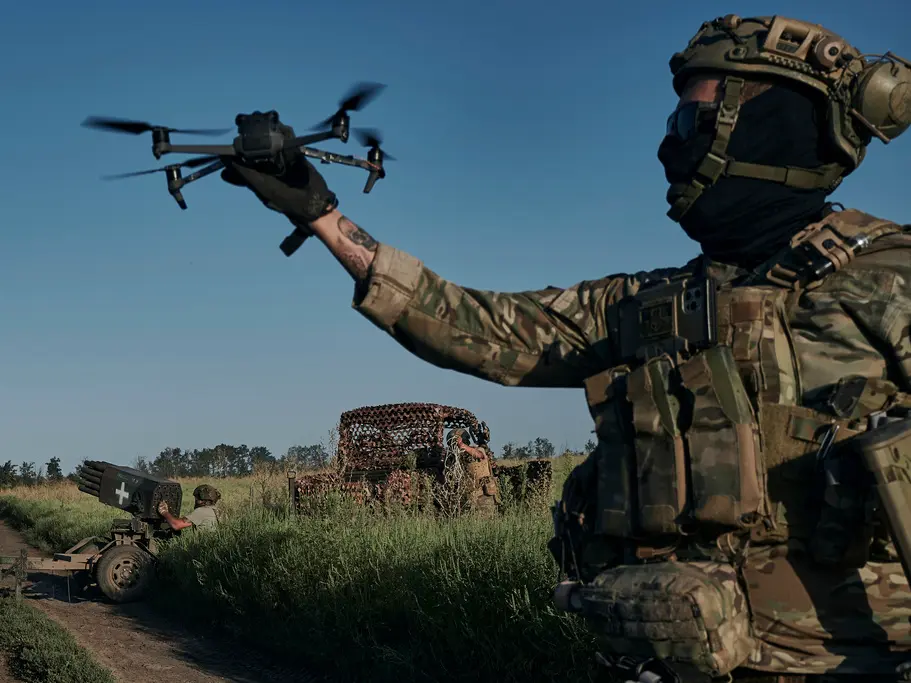
 Russia said early Monday that it downed a total of 75 drones launched by Ukraine in an attack on the country’s territory overnight. A statement by the Russian Defense Ministry said the country’s air defense systems intercepted and downed 47 drones over the Rostov region, which borders Ukraine’s eastern Donetsk and Luhansk regions. The statement further said 17 drones were shot down over the Black Sea and the Sea of Azov, while a drone was downed over the Belgorod, Voronezh, and Smolensk regions, respectively. Eight drones were also downed over the Krasnodar region that borders the Rostov region to the north and the Crimean Peninsula to the west, which Moscow illegally annexed in 2014. Rostov Governor Vasily Golubev said in a statement on Telegram that there were no casualties in his region due to the drone attack, indicating dry vegetation caught fire in several areas which have since been extinguished. Elsewhere, Krasnodar’s regional administration reported on Telegram that an oil refinery in the town of Tuapse was damaged due to falling debris from the downed drones. The seaside town is located about 116 kilometers (72 miles) northwest of the Russian port city of Sochi. Meanwhile, local authorities in Belgorod, Voronezh, and Smolensk have not reported any casualties or damages in the respective regions. Ukrainian authorities have not yet commented on the claims, though Kyiv has previously voiced that such attacks are in response to similar attacks against its energy infrastructure by Moscow.

Russia says it downed 75 drones launched by Ukraine overnight Read More »

African Union addresses integration issues at Ghana conference

The African Union convened in Ghana on Sunday to address issues related to African integration and to establish a unified stance before engaging with the G20 and UN. Mauritania’s President and current African Union Chair, Mohamed Cheikh Ghazouani, urged for the acceleration of the African integration process. He stressed the importance of expediting economic integration to support the continent and fulfill the aspirations of African citizens. Discussions during the meeting centered on financing mechanisms for African Union projects, particularly the funding of the organization itself, which heavily relies on contributions from non-African partners. African Union Commission Chairperson, Moussa Faki Mahamat, highlighted the necessity for member countries to present a united front in upcoming engagements with international partners. He emphasized the importance of speaking with one voice at major global forums, including the G20, where the African Union now holds membership. With ongoing regional instability in West Africa, ECOWAS nations Mali, Niger, and Burkina Faso risk losing their memberships due to military coups that ousted democratically elected leaders in these countries. These nations have been under threat from terrorist organizations affiliated with al-Qaeda and the Islamic State for years.

African Union addresses integration issues at Ghana conference Read More »

40 migrants dead after boat catches fire off Haiti

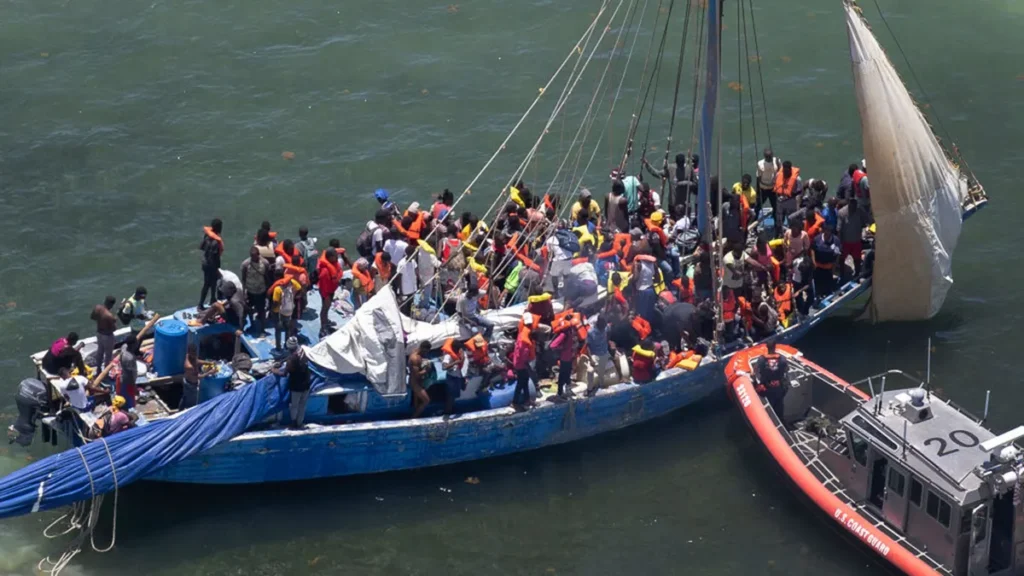
 At least 40 Haitian migrants died and several others were injured after a boat they were traveling in caught fire off Cap Haitien, in the northern coast of Haiti, the UN International Organization for Migration (IOM) said Friday. “IOM deeply laments the death of at least 40 migrants after a boat caught fire off the coast of Cap Haitien, Haiti. We extend our heartfelt condolences to the migrants’ families and are working to assist the survivors of this tragedy,” the IOM said in a press release. The boat that caught fire with more than 80 Haitians left the port of Labadee on Wednesday en route to the Turks and Caicos Islands. Forty-one migrants who were rescued by the Haitian Coast Guard are currently receiving medical care. Eleven were hospitalized for treatment, including burns.  The fire apparently started when two drums of gasoline ignited, Civil Protection official Jean Henry-Petit said. The captain of the boat died in the tragic accident.  “This devastating event highlights the risks faced by children, women, and men migrating through irregular routes, demonstrating the crucial need for safe and legal pathways for migration.” said Gregoire Goodstein, IOM’s chief of mission in the country.  Haiti has been grappling with a wave of violence by gangs that are terrorizing the population with killings, kidnappings, rapes and attacks. Violent gangs control up to 80 per cent of the country´s capital of Port-au-Prince. The UN estimates that about 580,000 people have been forced to flee their homes since March due to the latest surge of violence .  “For the vast majority of Haitians, regular migration is an extremely challenging journey to consider, let alone pursue, leaving many seeing irregular migration as their only option, a particularly life-threatening one in most instances,” said the IOM. Countries in the region, including the United States, the Bahamas, the Turks and Caicos Islands, and Jamaica, have reported a growing number of boats coming from Haiti. The IOM says that more than 86,000 migrants have been forcibly returned to Haiti by neighboring countries this year. The Haitian police have said they are searching for the people responsible for organizing the clandestine trips.

40 migrants dead after boat catches fire off Haiti Read More »

Scroll to Top