
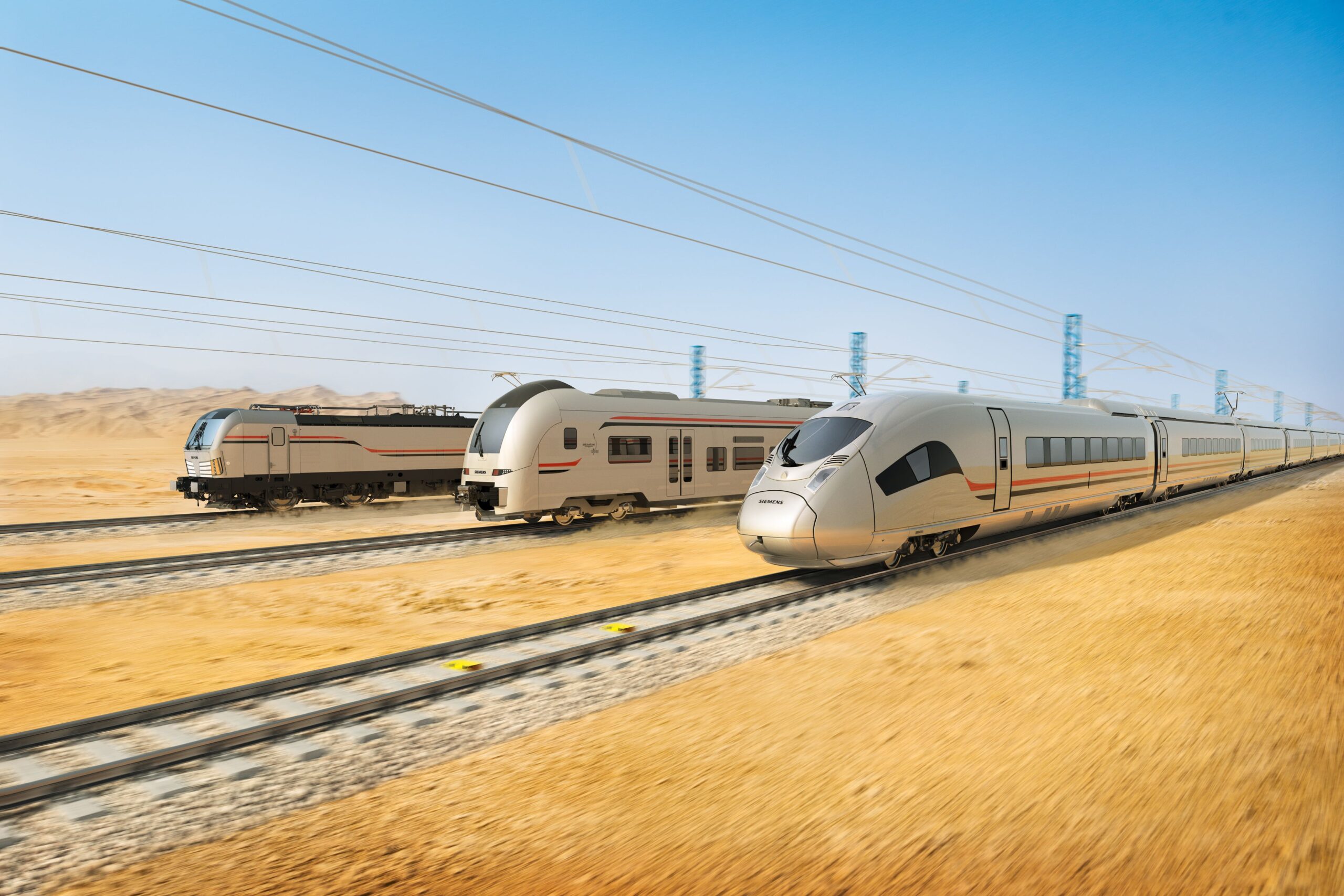
Workers have begun laying tracks in the desert east of Cairo for Egypt’s first high-speed train, connecting the Red Sea and Mediterranean. The Green Line, hailed by Transport Minister Kamel al-Wazir as a “new Suez Canal on rails,” is scheduled for completion in 2026.
The 660-kilometre route will transport passengers and cargo in as little as three hours, revolutionising travel across the vast country. Egypt signed a $4.5 billion contract in 2021 with a consortium including German company Siemens to construct the line.
The Green Line is the first of three high-speed tracks planned, forming a network expected to carry 1.5 million passengers daily. Egypt’s existing railways, used by roughly a million commuters, suffered nearly 200 accidents last year due to infrastructure issues.
The line will traverse the north, from Ain Sokhna on the Red Sea to Marsa Matrouh on the Mediterranean coast. It will pass through two Cairo satellite cities: the New Administrative Capital and 6th of October City, home to Egypt’s dry port.
Authorities project the revamped network will transport 15 million tonnes of cargo annually, around 3 percent of Suez Canal traffic. Urban planners hope the project will ease Cairo congestion and stimulate growth in emerging desert hubs across the country.
At a desert station, scaffolding supports a geometric ceiling over six open-air tracks, part of a still-developing New Administrative Capital. Construction workers note the area will largely serve cargo and tourists, rather than permanent residents, reflecting broader planning ambitions.
After the Green Line, the Blue Line will follow the Nile to Aswan, and the Red Line will connect Red Sea cities to Luxor inland. Egypt’s ambitious rail expansion reflects President Abdel Fattah El-Sisi’s decade-long megaproject drive, aiming to modernise transport and reshape urban landscapes.