
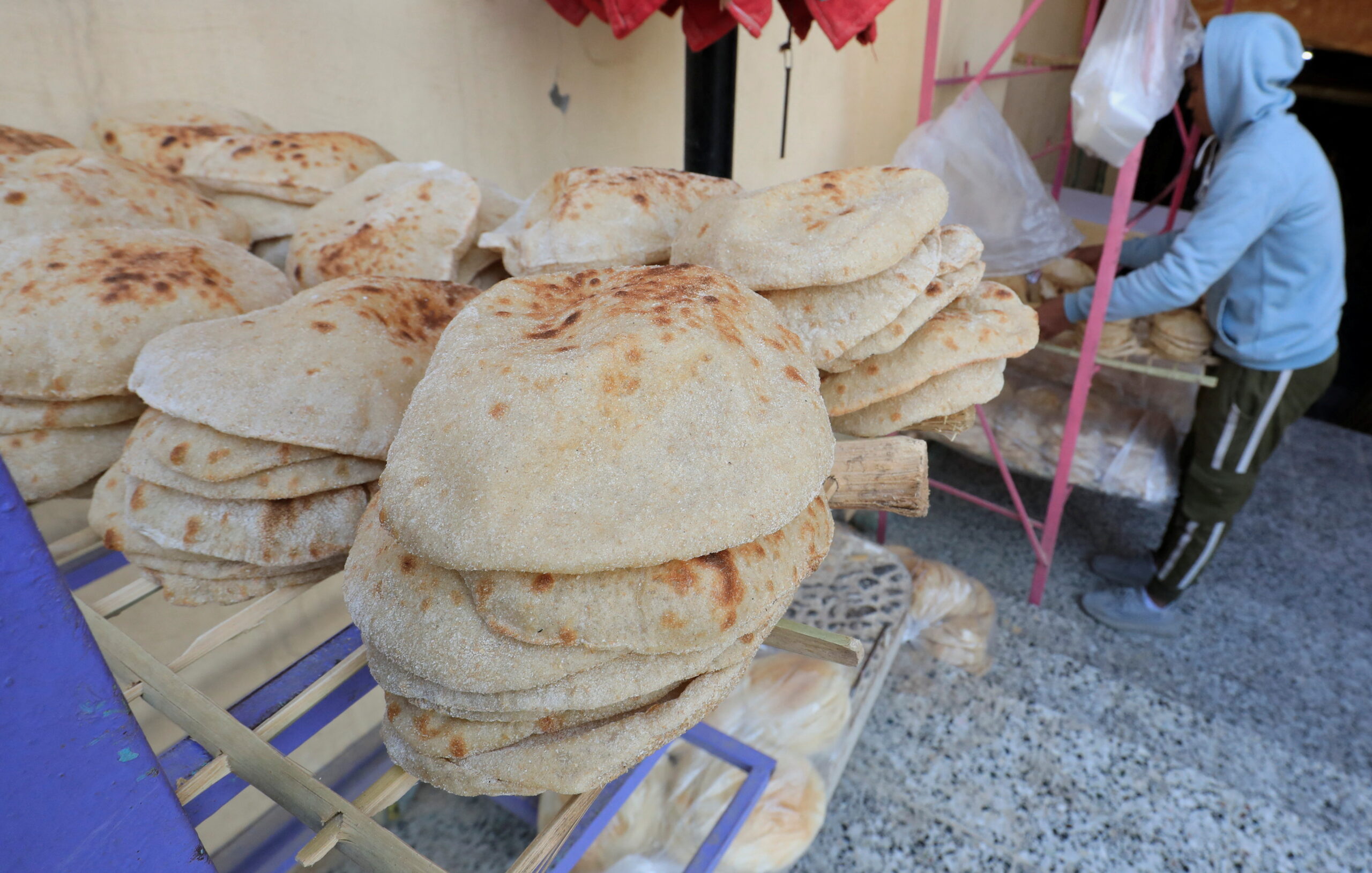
Egypt has reinstated price controls on unsubsidised bread, capping costs in private bakeries to shield consumers from soaring inflation.
The move follows rising global oil prices linked to the Iran war, which pushed Egypt to increase fuel costs, affecting transport and production.
Bread remains a dietary lifeline for Egypt’s roughly 120 million people, making any price adjustment politically delicate and socially sensitive.
Supply Minister Sherif Farouk announced new ceilings on Thursday, setting an 80-gram loaf at 2 Egyptian pounds and a 50-gram roll at the same rate.
Smaller loaves were also capped: 60-gram bread at 1.5 pounds and 40-gram loaves at 1 pound, according to a ministry statement.
Authorities pledged to monitor bakeries closely, enforcing the rules and penalising vendors who breach the pricing limits to ensure fairness.
Egypt imports more than half of its wheat, relying on global suppliers to meet both private market demand and subsidised programmes serving 69 million citizens.
Previous interventions in 2024 and 2022 were temporary, and industry experts doubt the government can enforce strict pricing on unsubsidised bread.
A grain industry source warned that bakeries might reduce quality if forced to sell at fixed prices amid rising wheat costs of 16,000 pounds per tonne.
Differences in wheat protein levels could further affect quality, highlighting the challenge of maintaining standards under strict price caps, the source said.
Khaled Sabry of the Federation of Egyptian Chambers of Commerce said added costs per loaf are minor, and market forces should discourage low-quality production.
Egypt’s bread policy underscores the delicate balance between economic pressures and public sustenance, as authorities attempt to keep staple food affordable.