
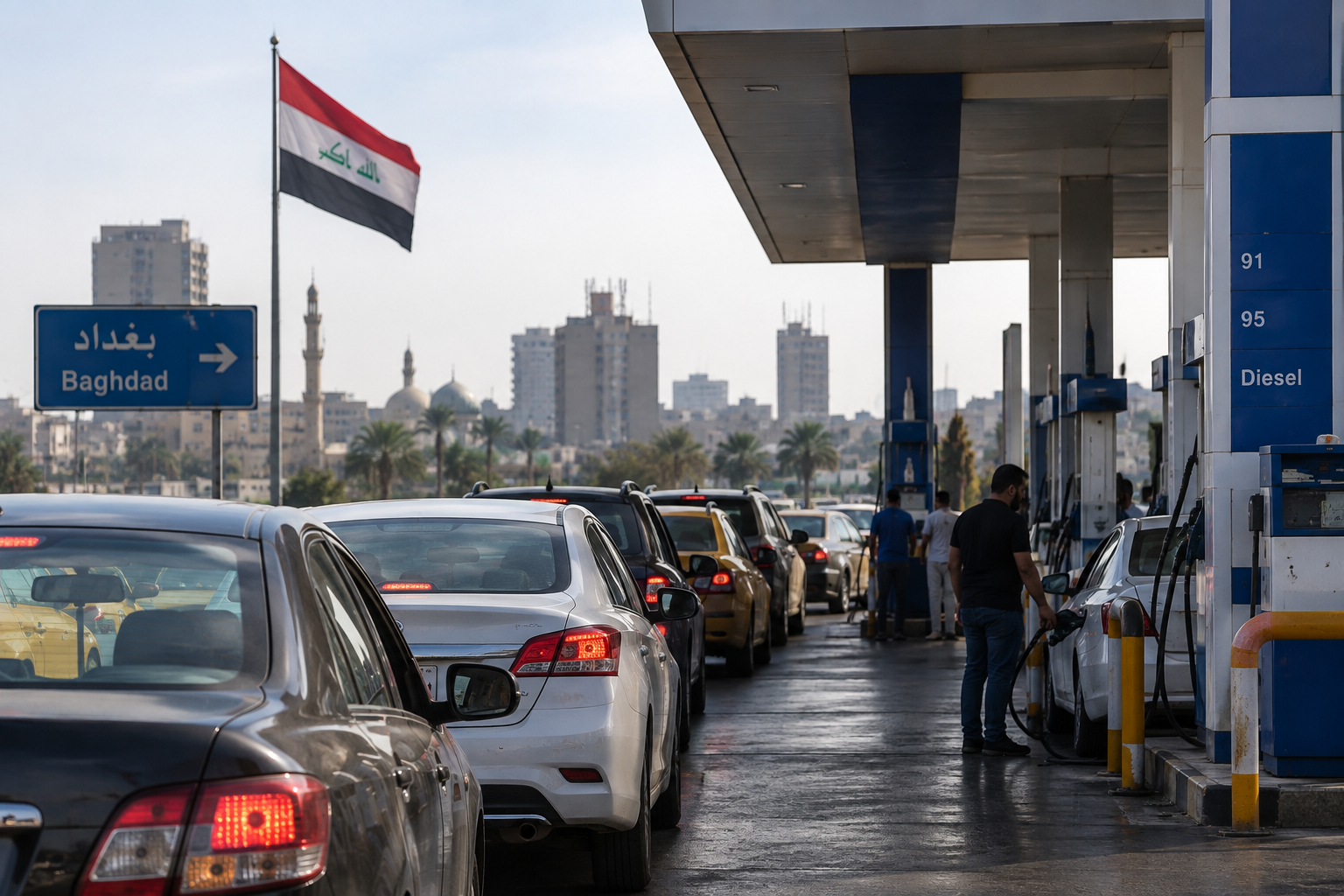
Iraq is facing a growing petrol shortage despite being one of the world’s largest oil producers, as the Middle East conflict disrupts fuel shipments and tanker traffic.
Drivers in Baghdad have been waiting in long queues at petrol stations, with some struggling to find fuel after hours of waiting.
Although Iraq produces millions of barrels of crude oil each day, the country still relies on imports of refined products such as gasoline because domestic refineries cannot fully meet demand.
Petrol demand rises amid shortages
Iraq normally consumes around 33 million litres of gasoline per day, according to authorities.
However, consumption can rise to about 38 million litres when fears of shortages trigger increased buying.
Iraq’s Oil Ministry said regional developments and the ongoing conflict were creating logistical problems for tanker traffic and delaying vessels arriving at Iraqi ports.
Authorities said they were working to ease the shortage and that additional shipments were expected. They also urged motorists to avoid buying more fuel than necessary.
Strait of Hormuz disruption hits Iraq
The wider US-Iran conflict has placed additional pressure on Iraq’s energy sector by disrupting traffic through the Strait of Hormuz.
The strategic waterway is particularly important for Iraq, which depends heavily on oil exports for government revenue.
Before the conflict began in February, Iraq was producing around four million barrels of oil per day and exporting an average of about 3.4 million barrels per day, with most shipments travelling through Hormuz.
Exports later fell sharply before recovering to more than 2.2 million barrels per day in August, according to the Oil Ministry.
Iran’s state news agency IRNA reported last month that Tehran had allowed a number of Iraqi oil tankers to pass through the Strait of Hormuz during the previous six months.
The fuel shortage highlights Iraq’s vulnerability to regional supply disruptions despite its position as a major crude oil producer.