
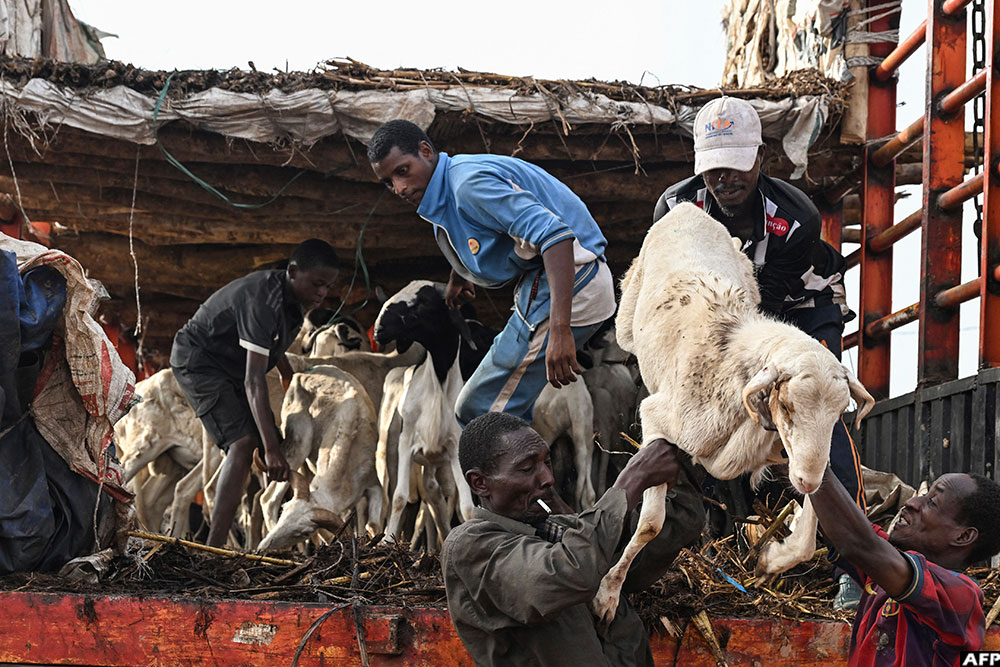
Buyers waded through muddy livestock markets in Abidjan ahead of Eid al-Adha, as sheep prices rose sharply across the city this year.
Ivory Coast relies heavily on imports, with around 75% of Tabaski livestock typically coming from Sahel countries each year. Traders say supply has tightened significantly after Burkina Faso banned exports, while earlier restrictions in Niger have further disrupted regional flows.
Several traders reported animals stranded along key routes. Assimi Barry said 300 cattle remain stuck at the Burkina Faso border despite being fully paid for but unable to enter Ivory Coast. Ibrahim Sow reported a further 150 animals blocked in Mali’s Koutiala, also paid for and awaiting safe passage through increasingly difficult transport corridors.
In Abidjan’s Adjamé livestock market, prices surged as buyers and sellers engaged in intense bargaining amid shortages. One buyer, Lagazane Ouattara, initially offered 250,000 CFA francs for a ram, but sellers demanded double that amount. After negotiations, he eventually bought a large ram for 320,000 CFA francs, saying prices had risen significantly this year.
Many residents say livestock has become unaffordable, particularly in a country where the monthly minimum wage is about 75,000 CFA francs. Officials say around 165,000 sheep are already on the market, meeting about 47% of national demand ahead of Eid celebrations.
Authorities are also seeking to boost local production, which currently covers an estimated 25% to 45% of demand. However, locally bred sheep are generally smaller than Sahel imports and are often less preferred for major Eid family celebrations.