
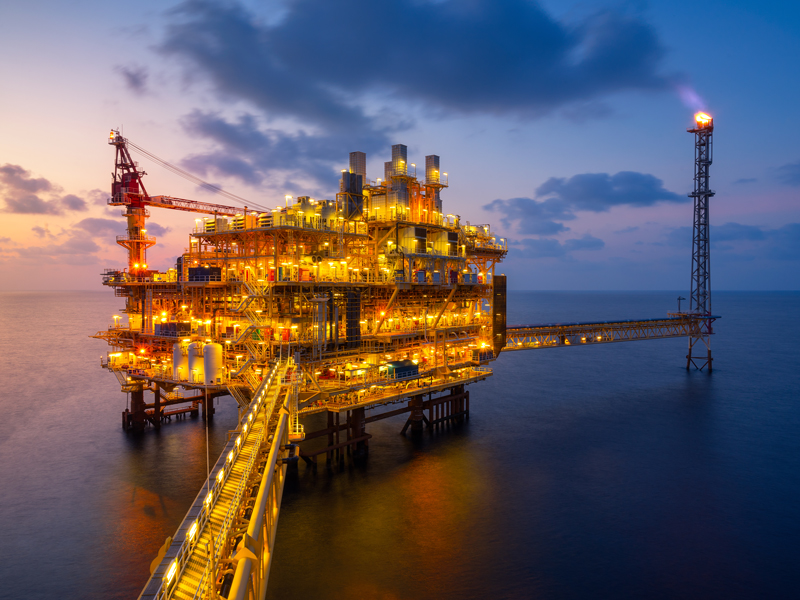
Oil majors are racing back to offshore West and Southern Africa, drawn by promising geology, regulatory reforms, and the search for Brazil-scale discoveries.
Chevron, TotalEnergies, Shell and others are rebuilding portfolios as fossil fuel demand proves more resilient than forecasts once suggested.
With U.S. shale growth plateauing, Africa’s Atlantic margin is again commanding attention from global explorers seeking long-term production.
Since 2020, about 11% of global oil and gas discoveries, roughly 8.7 billion barrels of oil equivalent, have emerged offshore West Africa.
TotalEnergies has led international activity, securing new production-sharing contracts across Nigeria, Congo Brazzaville and Liberia.
Angola has sweetened its appeal through tax cuts, investment reforms and its exit from OPEC, loosening production constraints.
Shell has returned to Angolan waters after two decades, calling new exploration vital to sustaining output into the 2030s.
Chevron recently entered the MSGBC basin off Guinea-Bissau, describing West Africa as a “super prolific” exploration corridor.
Executives say Africa’s underexplored west coast mirrors Brazil’s geology, reviving hopes of transformative Atlantic discoveries.
Namibia has emerged as the standout, recording 6.2 billion barrels of discovered recoverable resources, far ahead of regional peers.
TotalEnergies is advancing its Venus project and holds a major stake in the Mopane discovery, estimated at least 10 billion barrels.
Despite deep-water complexity and technical risks, a drilling success rate above 70% keeps Namibia at the centre of Africa’s oil revival.