
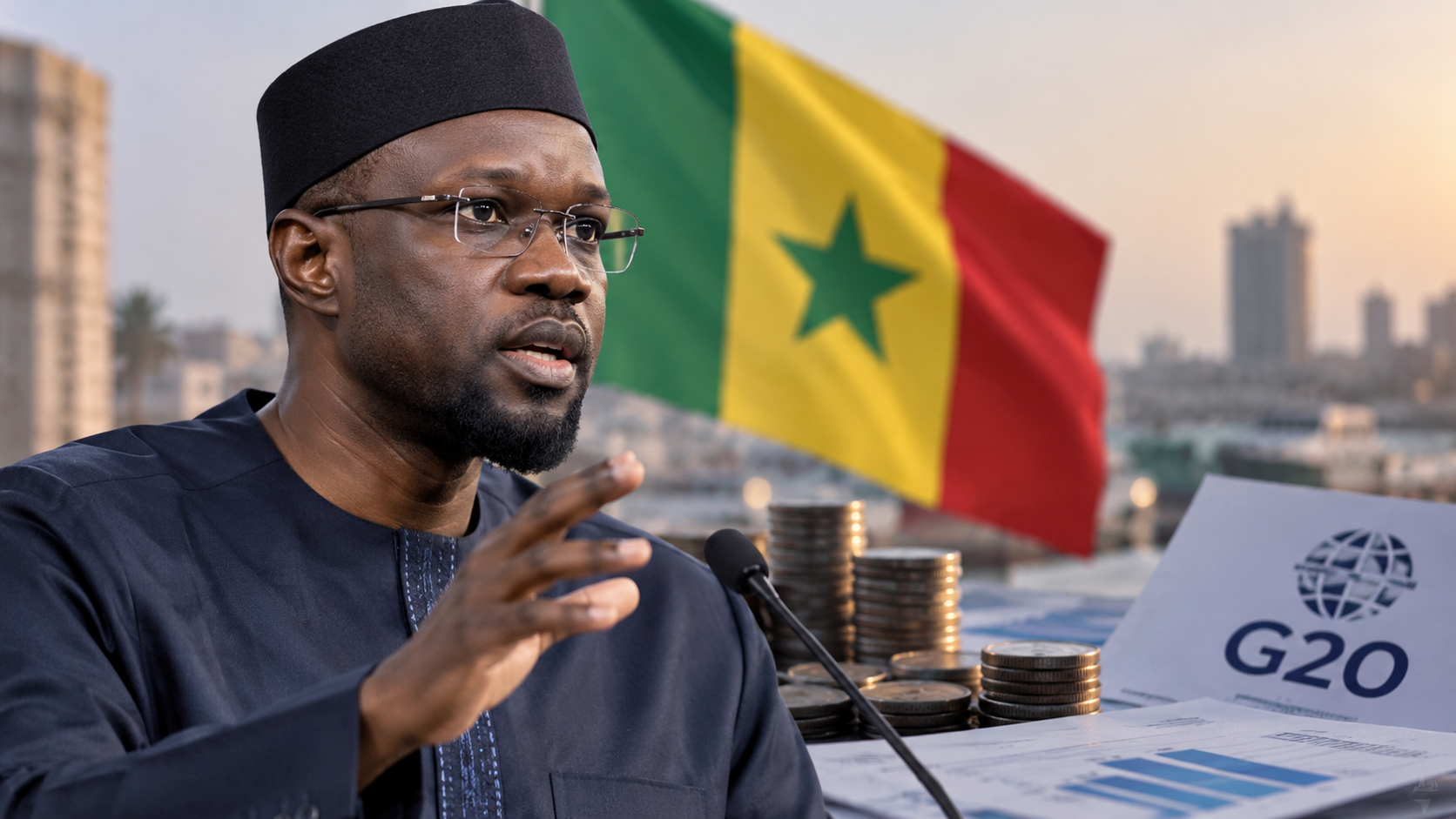
Senegal’s growing debt crisis has sparked fresh political tensions after Ousmane Sonko criticised the government’s decision to pursue a G20-backed debt restructuring mechanism.
Sonko, an influential political figure and leader of the parliamentary majority, warned that the international process could complicate efforts to stabilise the country’s finances.
According to Africanews, citing agency reports, Sonko believes Senegal needs more time to repay its debts rather than a complicated restructuring process.
His comments come as the West African nation seeks to restore confidence among international lenders and secure new financial support.
Senegal debt crisis sparks disagreement over G20 plan
Sonko questioned the government’s decision to use the G20 Common Framework, which helps countries facing financial difficulties negotiate debt arrangements with creditors.
He argued that Senegal’s main challenge is managing repayment deadlines rather than reducing the total amount owed.
According to Sonko, creditors have already indicated that they will not accept reductions in the value of their loans.
Therefore, he believes Senegal should focus on debt reprofiling, which involves adjusting repayment schedules.
Sonko also questioned why Senegal should become the first country to test the new G20 initiative.
He warned that an unnecessarily complicated process could delay solutions to the country’s financial problems.
Sonko warns of political deadlock
The dispute has also raised concerns about possible disagreements between Senegal’s government and parliament.
Sonko warned that his parliamentary majority could refuse to support a major finance bill if the debt negotiations reach a deadlock.
He argued that the government should adopt a more practical approach to managing the crisis.
His comments highlight growing political pressure over how Senegal should handle its financial obligations.
The disagreement comes at a critical time for the country’s economy.
Senegal seeks $2.2 billion IMF programme
Senegal’s debt problems intensified in 2024 after an audit uncovered previously undeclared government borrowing.
The findings raised concerns about the country’s public finances and its ability to manage existing debt.
Since then, Senegal has been working to restore confidence among international creditors.
The government is seeking a $2.2 billion programme from the International Monetary Fund (IMF).
It is also negotiating with official lenders and private bondholders over its repayment obligations.
However, uncertainty surrounding the restructuring process continues to complicate the country’s financial outlook.
G20 debt framework faces renewed scrutiny
The G20 Common Framework was introduced to help financially distressed countries coordinate debt negotiations with creditors.
The mechanism aims to bring different lenders together and establish a structured process for resolving debt problems.
However, previous negotiations involving Zambia and Ghana faced criticism over lengthy delays.
Sonko fears Senegal could encounter similar difficulties.
Meanwhile, Washington has called for Senegal’s debt restructuring process to be completed within one year.
US officials have described Senegal’s case as an important test of the improved G20 mechanism.
Senegal targets debt agreement by December
Senegalese authorities are aiming to reach an agreement in principle with creditors by December.
A successful deal could help the country stabilise its finances and rebuild confidence among international investors.
However, prolonged negotiations could increase uncertainty and place additional pressure on public spending.
The government must also balance debt repayments with the need to support economic growth and essential services.
As discussions continue, the outcome will play an important role in determining Senegal’s financial future.
The dispute highlights the difficult choices facing the country as it seeks to address its debt crisis while maintaining economic stability.