
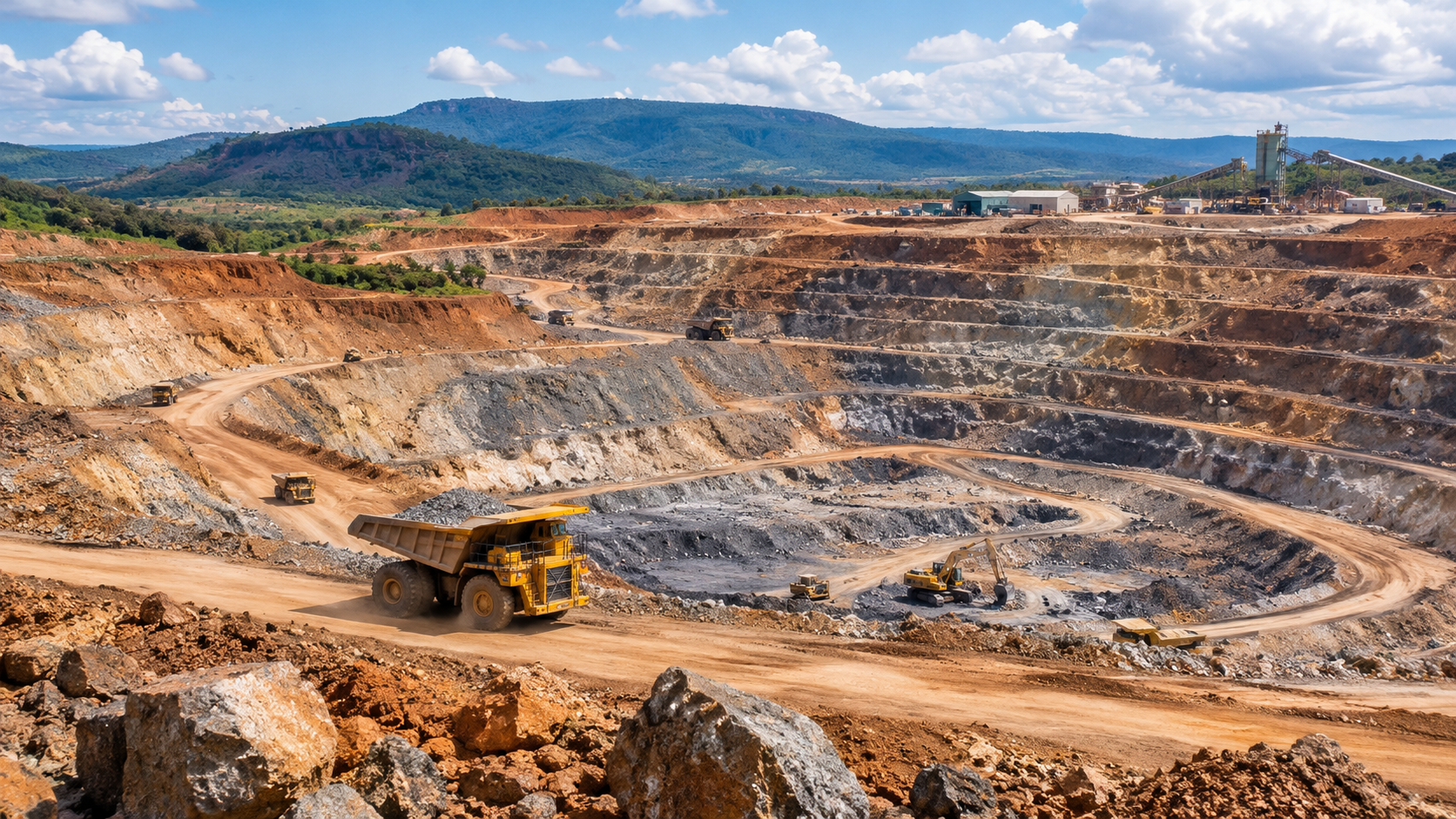
Competition for Africa’s mineral wealth is intensifying as the United States, China and Russia seek access to resources critical to global industries.
From cobalt in the Democratic Republic of Congo (DRC) to lithium in Mali and uranium in Niger, African minerals are becoming increasingly important to global economic and geopolitical interests.
According to Al Jazeera, the rivalry extends beyond mining to infrastructure, security partnerships and international trade routes.
For African governments, however, the growing competition presents both economic opportunities and significant challenges.
Global powers compete for Africa’s mineral wealth
Africa holds substantial reserves of cobalt, copper, lithium and uranium. These minerals play a vital role in electric vehicles, renewable energy, advanced technology and defence industries.
The United States is seeking to reduce its dependence on Chinese-dominated supply chains.
In February 2026, US President Donald Trump announced Project Vault, a $12 billion initiative to establish a strategic mineral stockpile.
Meanwhile, China has spent years investing in African mines, processing facilities and transport infrastructure.
According to Chinese customs figures cited by Al Jazeera, trade between China and Africa reached a record $348 billion in 2025.
Russia has taken a different approach. Moscow has expanded its influence through security partnerships, particularly in the Sahel.
Gold has also become an important part of Russia’s economic engagement with Africa, according to a 2024 RAND Europe study cited in the report.
DR Congo becomes a strategic mineral hub
The DRC remains central to the competition over critical minerals.
According to US Geological Survey estimates cited by Al Jazeera, the country accounted for 73 percent of global mined cobalt production in 2025.
Chinese companies hold significant interests in several major Congolese copper and cobalt mines. China also dominates global cobalt refining.
However, Washington is seeking to expand its presence in the sector.
In December 2025, the US and DRC signed a strategic partnership covering critical minerals, infrastructure and processing investments.
Congolese authorities want the agreement to deliver more than increased mineral exports.
DRC Economy Minister Daniel Mukoko Samba recently urged Washington to turn its commitments into concrete investments.
Kinshasa hopes to expand domestic mineral processing, improve electricity access and create economic opportunities.
Transport corridors gain strategic importance
Competition for Africa’s mineral wealth also involves the infrastructure connecting mines to international markets.
China has invested heavily in African infrastructure through its Belt and Road Initiative.
Meanwhile, the US and its European and African partners are backing the Lobito Corridor.
The transport network connects Angola’s Atlantic coast with mining regions in the DRC. A planned railway extension would also connect Zambia to the corridor.
The project aims to reduce transport costs, strengthen regional trade and improve access to international markets.
However, its broader economic benefits will depend on whether it supports African businesses and local communities.
Mali and Niger attract growing interest
The Sahel has emerged as another important region in the competition for strategic resources.
Mali, Niger and Burkina Faso have strengthened security relations with Russia following military coups and deteriorating ties with Western governments.
At the same time, Washington is seeking to rebuild economic and diplomatic relationships in the region.
Mali produced an estimated 9,400 tonnes of lithium in 2025, according to US Geological Survey figures cited by Al Jazeera.
Chinese companies have interests in Mali’s Goulamina lithium mine. Meanwhile, a subsidiary of Russia’s state nuclear corporation Rosatom has secured an exploration licence for the Bougoula lithium project.
In neighbouring Niger, uranium has attracted renewed American interest.
In September 2026, the US International Development Finance Corporation approved up to $414 million in financing for the Dasa uranium project.
However, the financing remains subject to conditions, including securing a viable transport route for uranium exports.
Africa seeks greater economic benefits
Growing international interest gives African governments opportunities to diversify partnerships, attract investment and negotiate better mining agreements.
However, foreign investment does not automatically translate into widespread economic development.
Dependence on raw mineral exports can limit the value that African economies retain. Corruption, insecurity and inadequate infrastructure can also prevent mining revenues from benefiting local communities.
Expanding domestic processing could help African countries create jobs, develop industries and retain a greater share of their mineral wealth.
Ultimately, the challenge for Africa is not simply attracting investment from competing global powers. It is ensuring that its natural resources deliver lasting economic benefits for its own people.