
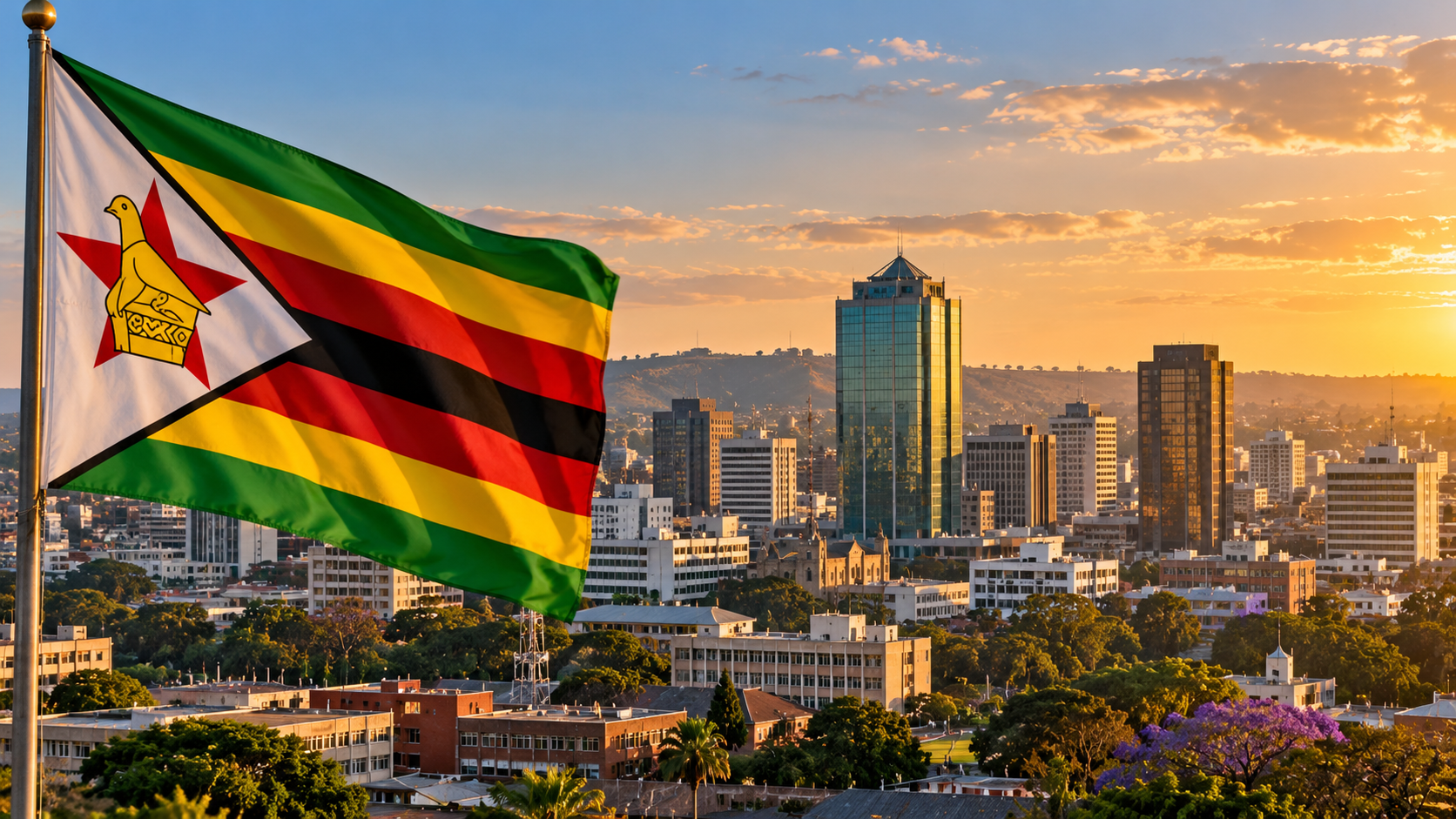
Zimbabwe’s economy is projected to reach $65.92 billion in 2026, placing the country 14th among Africa’s largest economies, according to the International Monetary Fund’s latest estimates.
The improved ranking reflects a recovery in agriculture, stronger mining activity and higher gold export earnings, despite continued challenges involving inflation, currency stability and public debt.
According to Business Insider Africa, citing the IMF’s October 2026 World Economic Outlook, Zimbabwe now ranks ahead of Cameroon and Tunisia.
However, neighbouring Tanzania is expected to maintain a considerably larger economy and record faster growth this year.
Zimbabwe rises in Africa’s largest economy rankings
Zimbabwe’s projected gross domestic product (GDP) of $65.92 billion places it among Africa’s 15 largest economies.
The country ranks ahead of Cameroon, whose GDP is estimated at $64.81 billion, and Tunisia, at $62.74 billion.
The latest projection represents an improvement from earlier IMF estimates.
In 2025, Zimbabwe was ranked 17th, with GDP estimated at $51.22 billion.
An April 2026 projection placed the country 16th, with an economy valued at $56.71 billion.
The October revision has now moved Zimbabwe into 14th position.
However, changes in dollar-denominated GDP rankings can also reflect exchange rates and statistical revisions rather than increases in economic production alone.
Mining and agriculture support Zimbabwe’s economic growth
Zimbabwe’s economy is forecast to grow by 5% in 2026, following estimated growth of 8.3% in 2025.
Higher gold prices, improving agricultural production and remittances have supported the recovery.
Mining remains an important contributor to economic activity, particularly through gold exports.
Meanwhile, the agricultural sector has benefited from improving production following earlier difficulties.
Despite these developments, Zimbabwe continues to face structural economic challenges.
High public debt, outstanding arrears and limited access to international financing remain obstacles to sustained growth.
US dollar reliance remains a major economic challenge
Zimbabwe continues to rely heavily on the US dollar following years of inflation, currency depreciation and repeated monetary reforms.
In April 2024, the government introduced the Zimbabwe Gold currency, known as ZiG, to replace its previous local currency.
The reform aimed to improve monetary stability and restore confidence in domestic transactions.
However, the US dollar remains dominant in the country’s payment system.
According to the IMF’s May 2026 assessment, approximately two-thirds of payments by value were still conducted in US dollars.
While dollarisation has helped businesses and households protect their finances from local currency depreciation, it has also limited the central bank’s ability to manage monetary conditions.
Zimbabwe’s annual ZiG inflation reached 3.7% in September, compared with 2.9% in August, according to the Zimbabwe National Statistics Agency.
The IMF has called for continued fiscal discipline and financial reforms to strengthen economic stability.
Tanzania’s economy remains larger and grows faster
Despite Zimbabwe’s improved ranking, Tanzania maintains a significant economic advantage.
Tanzania’s GDP is projected to reach $96.18 billion in 2026, approximately $30.26 billion more than Zimbabwe’s.
The East African country’s economy is also expected to grow by 5.9%, compared with Zimbabwe’s projected 5%.
Tanzania has pursued policies aimed at strengthening the use of its national currency, the Tanzanian shilling.
In March 2025, authorities introduced regulations requiring businesses to price goods and services and accept payments in shillings, subject to certain exceptions.
The country has also benefited from investment in agriculture, construction, mining, tourism and infrastructure.
Additionally, Tanzania is pursuing a proposed $42 billion liquefied natural gas project involving international energy companies.
However, a final investment decision on the project remains pending.
Zimbabwe’s economic recovery faces long-term challenges
Zimbabwe’s rise in Africa’s economic rankings reflects improving output and revised IMF estimates.
Nevertheless, the country’s reliance on foreign currency, debt challenges and history of monetary instability continue to affect its economic outlook.
GDP figures expressed in US dollars can fluctuate because of currency movements and changes in national accounting methods.
As a result, a higher ranking does not necessarily translate into improved household incomes or living standards.
While Zimbabwe is expected to maintain positive growth in 2026, sustained economic stability will depend on continued reforms, investment and stronger confidence in its financial system.