
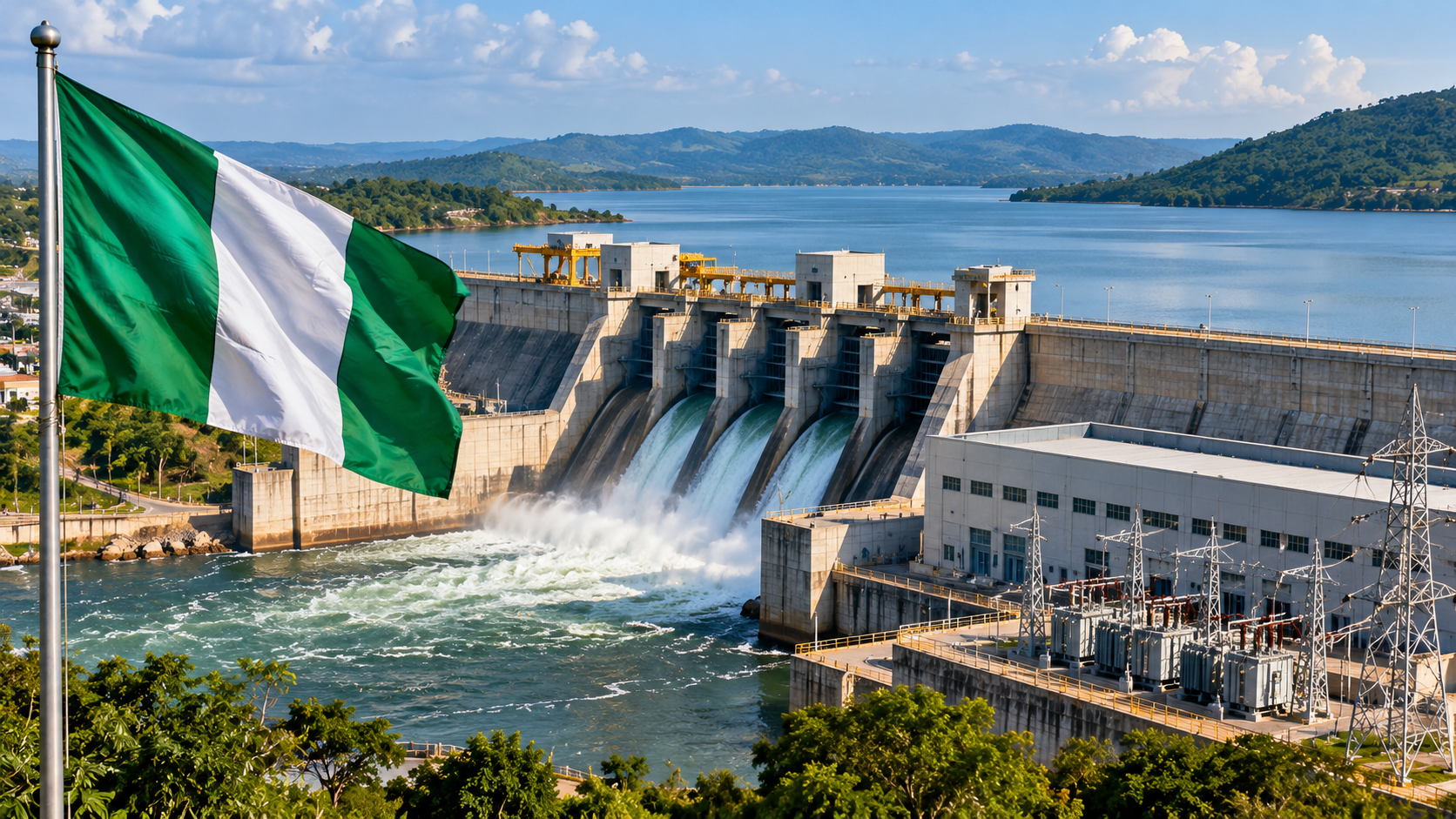
Nigeria has launched a regulatory review of its $1.3 billion Zungeru hydropower plant after reports that it is operating at around half its installed capacity.
The Zungeru hydropower plant is currently supplying about 350 megawatts (MW) of electricity against its installed capacity of 700MW.
Authorities are now examining the challenges affecting the facility’s performance and exploring ways to improve electricity generation.
Nigeria reviews Zungeru hydropower plant performance
According to Business Insider Africa, Nigeria’s Infrastructure Concession Regulatory Commission (ICRC) announced the review on October 8.
The commission held a meeting in Abuja with government agencies and the plant’s operator, Penstock Limited.
Representatives from the ministries of power and water resources also attended. The Bureau of Public Enterprises (BPE) participated in the discussions.
The meeting focused on contractual and operational issues that could be limiting electricity production.
Officials aim to identify obstacles and improve the plant’s performance under its public-private partnership agreement.
However, the commission did not identify the specific causes of the reduced output.
$1.3 billion plant designed to generate 700MW
The Zungeru hydropower plant is located on the Kaduna River in Nigeria’s Niger State.
Built with Chinese assistance, the facility has four generating units. Each unit has an installed capacity of 175MW.
Together, they provide a total installed capacity of 700MW.
However, the plant is currently supplying about 350MW to Nigeria’s national electricity grid.
This represents approximately 50% of its installed capacity.
The ICRC did not clarify whether the reported figure reflects average generation or output at a particular time.
Beyond electricity production, the project was also designed to support irrigation, flood control and water supply.
Government examines operational challenges
ICRC Director-General Jobson Oseodion Ewalefoh said the review would examine the responsibilities of both the government and the private operator.
He stressed that signing a concession agreement was only the beginning of a successful partnership.
According to Ewalefoh, both parties must fulfil their contractual obligations to ensure reliable services and value for money.
The Zungeru hydropower plant is operated by Penstock Limited, a subsidiary of Mainstream Energy Solutions Limited.
Meanwhile, the BPE represents the government’s interests under the concession arrangement.
The regulator said its responsibility was to monitor compliance rather than manage the agreement directly.
However, officials did not provide a timeline for increasing electricity production.
The commission also did not release details of the specific legal or operational challenges discussed.
Five other Nigerian hydropower plants face reviews
Nigeria plans to extend similar regulatory reviews to five additional hydropower facilities.
These include Kainji, Jebba, Shiroro, Dadinkowa and Kashimbila.
The reviews will assess compliance with existing agreements and identify issues affecting operations.
Ewalefoh said a final report would be submitted to President Bola Tinubu.
Following the Zungeru meeting, stakeholders agreed to continue discussions after identifying the main legal and operational concerns.
Improving output from existing facilities could help Nigeria strengthen its electricity supply without immediately building new power plants.
However, the amount of additional electricity that could become available remains uncertain.
The review highlights the importance of ensuring that major infrastructure investments deliver their intended benefits.