
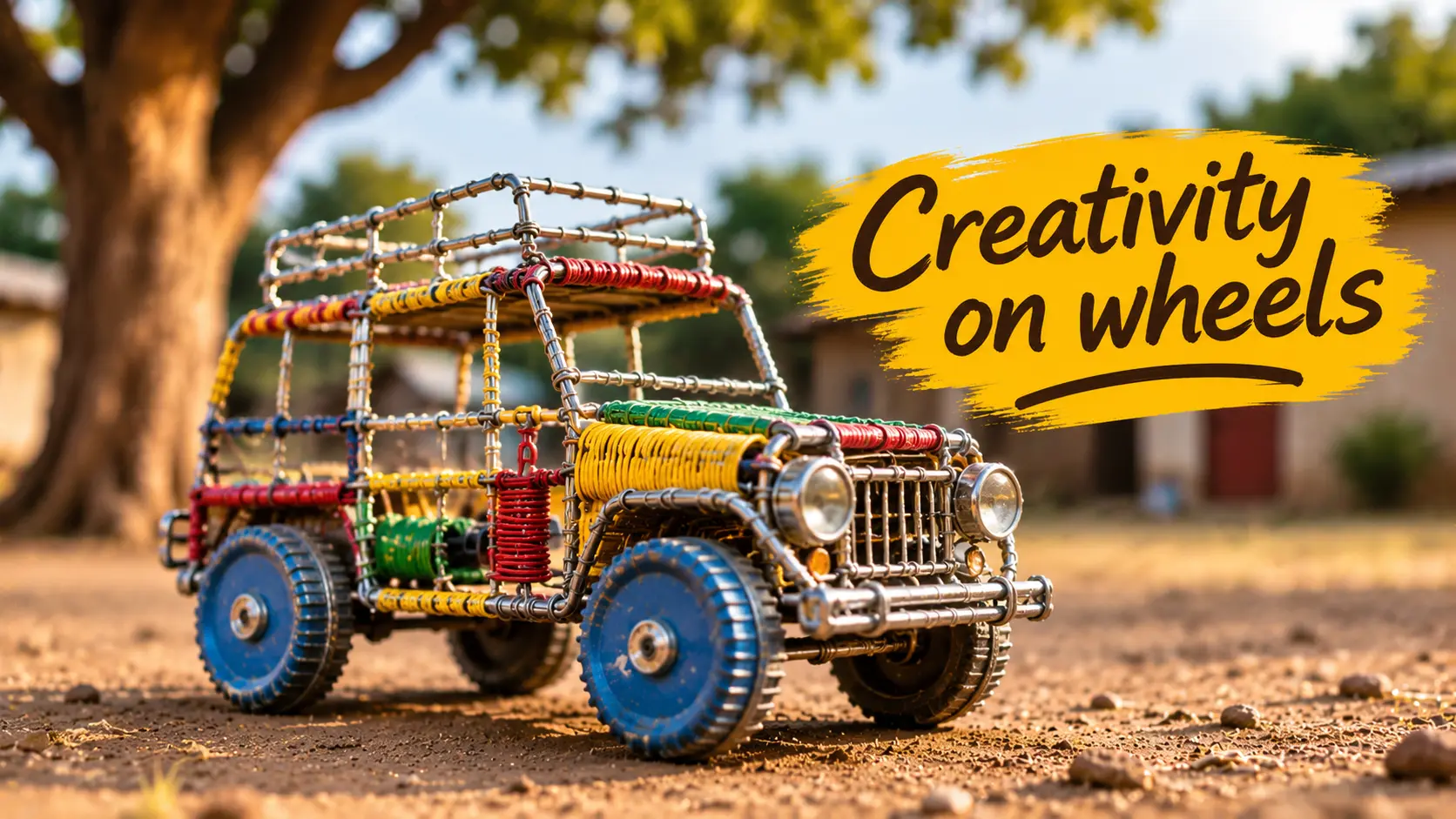
For generations, children in Kenya have turned ordinary pieces of wire into miniature cars, trucks and buses, transforming everyday materials into imaginative toys.
Known as wire cars, these handmade creations reflect a tradition of resourcefulness, creativity and childhood entertainment.
Instead of relying on expensive factory-made toys, children can build their own vehicles using simple materials found in their communities.
Turning scrap wire into toys
Kenyan wire cars often feature frames made from bent metal wire. Children can use bottle caps, rubber or other discarded materials to create wheels.
Some designs even include steering mechanisms connected to a long wire handle. This allows children to steer their miniature vehicles while walking or running behind them.
More elaborate models feature doors, seats and detailed frames inspired by real vehicles.
Learning through play
Making wire cars involves more than entertainment. Children can develop practical skills while designing, building and repairing their toys.
For example, creating a working steering system requires patience, coordination and problem-solving.
Children can also share ideas, exchange materials and compete to see who can build the most impressive vehicle.
The activity shows how everyday objects can become opportunities for learning and creative expression.
A tradition beyond Kenya
Although wire cars are familiar in Kenya, similar handmade toys can be found in several other African countries.
Designs vary depending on available materials and local interests. Some children recreate buses and trucks, while others design racing cars or off-road vehicles.
In an age of smartphones and digital entertainment, handmade wire cars offer a reminder that childhood fun does not always require expensive technology.
Sometimes, a few pieces of wire and a little imagination are enough.
A childhood craft with international recognition
In 1979, an exhibition organised by Germany’s Übersee-Museum showcased handmade toys created by children in Nairobi.
The collection included cars, buses, bicycles and aircraft made from recycled materials.
By 2001, Kenyan newspaper Coastweek also documented how handmade wire vehicles had become products sold by artisans and street vendors in Kenya. obra-gruesa.cultura.gob.cl+1
What began as a simple form of childhood entertainment also became an example of African craftsmanship.