
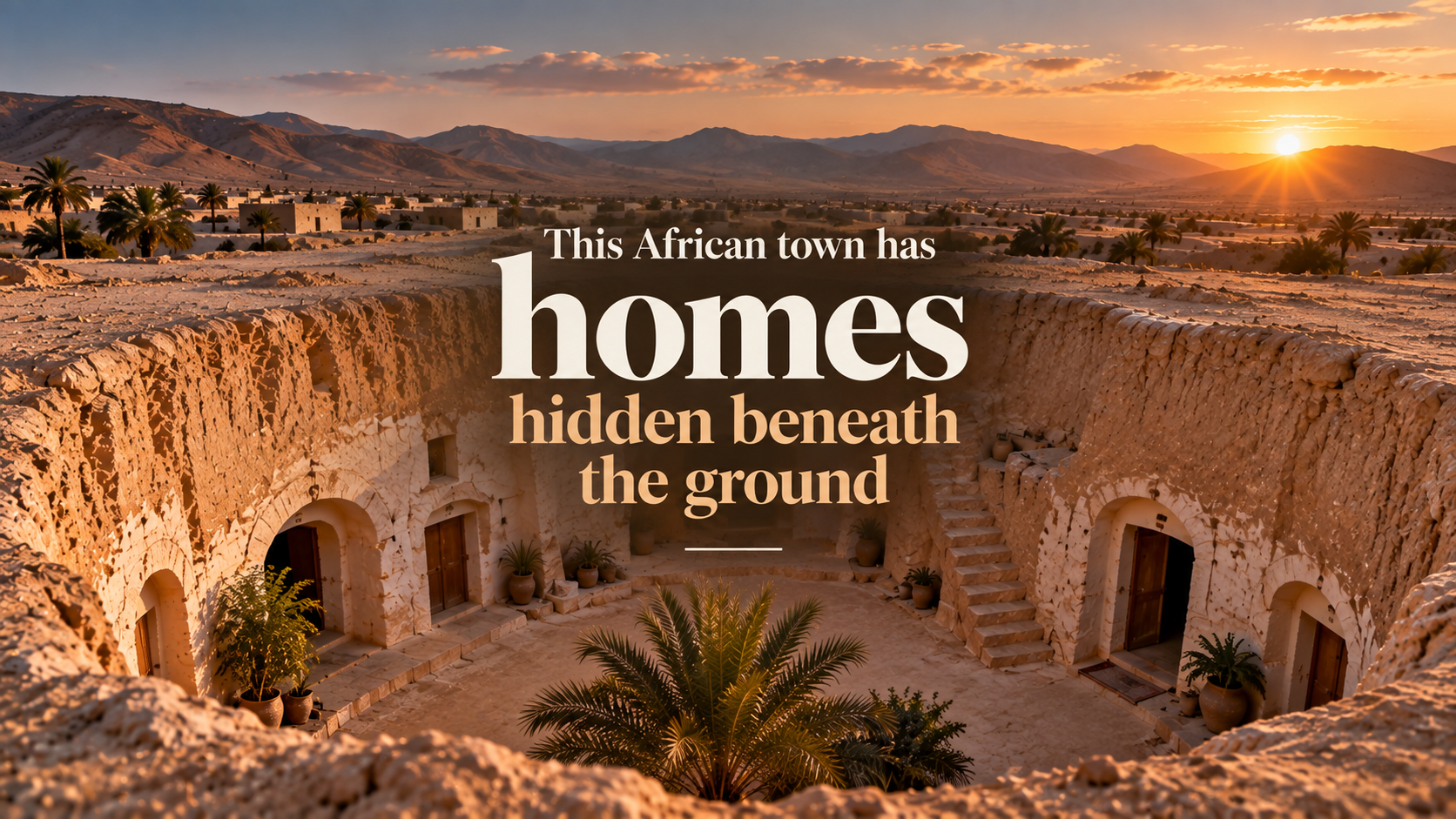
In southern Tunisia, some traditional homes are hidden beneath the ground.
The town of Matmata is famous for this unusual style of architecture.
Instead of building homes entirely above ground, local communities dug large courtyards into the earth.
They then created rooms around these open spaces.
As a result, much of the home sits below ground level.
Inside Matmata’s underground homes
A traditional Matmata home has a large open courtyard at its centre.
This courtyard is dug deep into the ground.
Rooms are then created around it.
These spaces can include bedrooms, kitchens and storage areas.
Meanwhile, a passage connects the home to the outside.
From above, the houses can be difficult to spot.
Homes designed for the heat
Southern Tunisia can become extremely hot.
However, the underground design helps protect the rooms from the heat.
The surrounding earth provides natural insulation.
As a result, the rooms can stay cooler during hot summer days.
The central courtyard also allows light and air to enter the home.
Therefore, the design works well with the region’s dry climate.
Part of Amazigh heritage
The homes are closely linked to the Amazigh heritage of southern Tunisia.
They show how local communities adapted their buildings to the surrounding landscape.
Some traditional underground homes can still be found around Matmata today.
In addition, Tunisia has placed its southern troglodyte settlements on its tentative list for UNESCO World Heritage status.
Matmata gains worldwide attention
Matmata later became known far beyond Tunisia.
One traditional underground building was used as a filming location for Star Wars.
However, this architecture existed long before the films.
For local communities, the homes represent a traditional way of building in southern Tunisia.
Today, Matmata remains one of Africa’s most distinctive examples of underground architecture.