
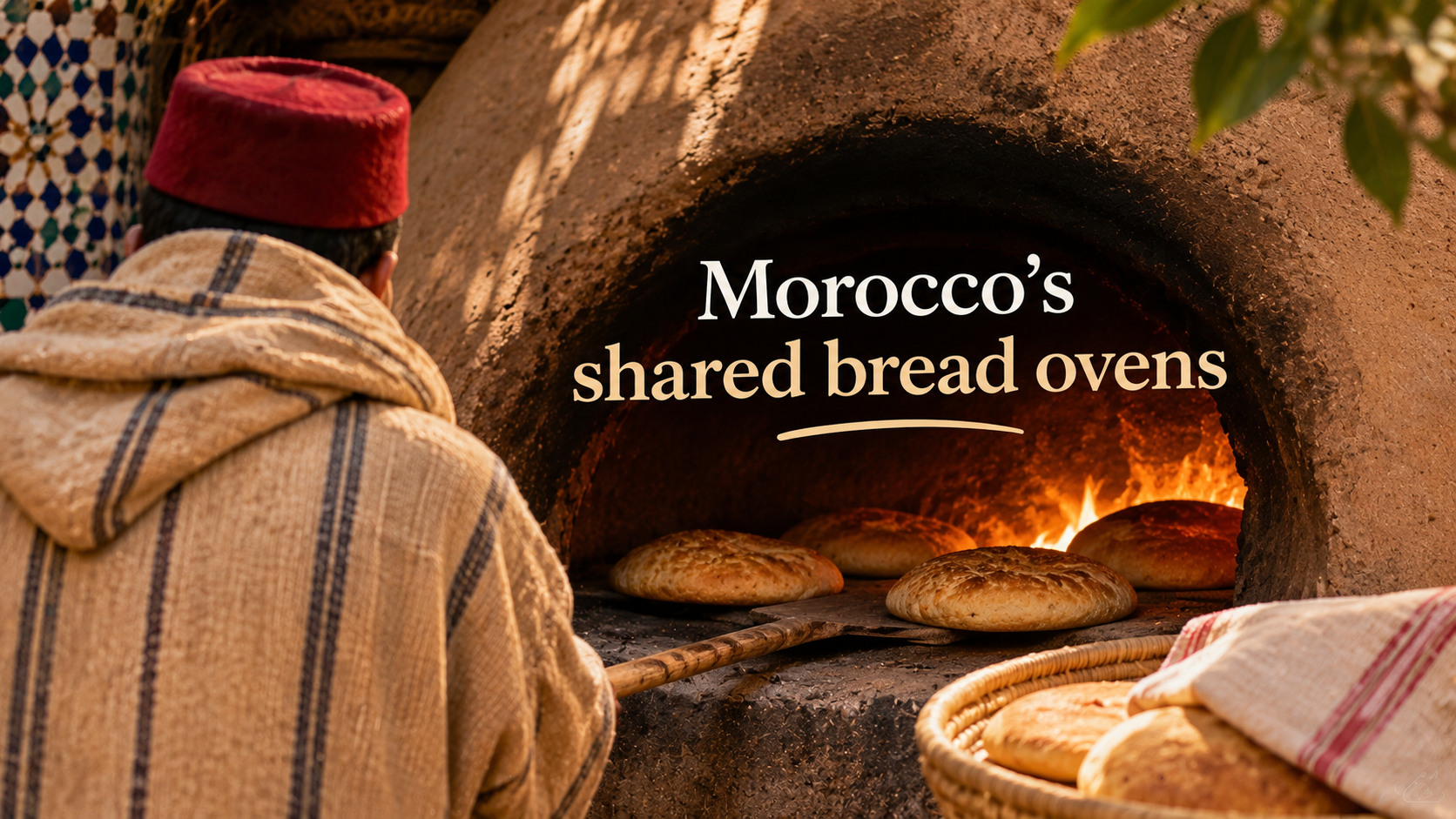
In many Moroccan neighbourhoods, baking bread has traditionally been more than a household task. It has also been a way of bringing communities together.
For generations, families have prepared bread dough at home before taking it to a shared neighbourhood oven, known locally as a ferran.
This Moroccan bread tradition reflects a culture of hospitality, cooperation and everyday community life.
How Morocco’s communal bread ovens work
In traditional Moroccan neighbourhoods, particularly within historic medinas, families often prepare their own bread using flour, water, yeast and salt.
Instead of baking it at home, they take the dough to a communal bakery.
The baker places the loaves inside a large oven, where several families’ bread can be baked during the same period.
To avoid confusion, families may shape or mark their loaves differently so they can recognise them when collecting their bread.
The arrangement allows households to use a professionally maintained oven without needing a separate large oven at home.
A Moroccan tradition built around community
Morocco’s communal bread ovens have served an important social purpose.
Neighbours visiting the same bakery could exchange greetings, share news and maintain connections with people living nearby.
The baker also became a familiar figure in neighbourhood life.
For many families, collecting freshly baked bread was part of their daily routine.
The tradition demonstrates how something as simple as preparing food can help strengthen community relationships.
Bread holds a special place in Moroccan culture
Bread is a staple of Moroccan cuisine and is commonly served alongside traditional dishes.
One of the country’s best-known breads is khobz, a round, relatively flat loaf with a soft interior and firm crust.
Families often enjoy it with tagines, soups, vegetables and other meals.
Bread also carries cultural significance as an everyday food that should be treated with respect.
In many Moroccan households, avoiding food waste and sharing meals remain important values.
Are communal bread ovens still used in Morocco?
Although modern kitchens and commercial bakeries have changed how people prepare food, communal bread ovens have not disappeared.
They can still be found in some traditional neighbourhoods, particularly in older urban areas.
However, their use varies between communities. Not every Moroccan family uses a shared oven today.
For some households, the ferran remains a practical part of daily life.
For others, it represents a cherished connection to Morocco’s culinary heritage.
A simple tradition with a meaningful lesson
Morocco’s neighbourhood bread ovens offer a reminder that cultural traditions are often preserved through ordinary activities.
A loaf of bread can represent much more than food.
It can also reflect generosity, cooperation and the relationships that connect neighbours.
Fun fact: In traditional Moroccan neighbourhoods, several families could prepare bread at home and have it baked in the same communal oven, each collecting their own loaves afterward.