
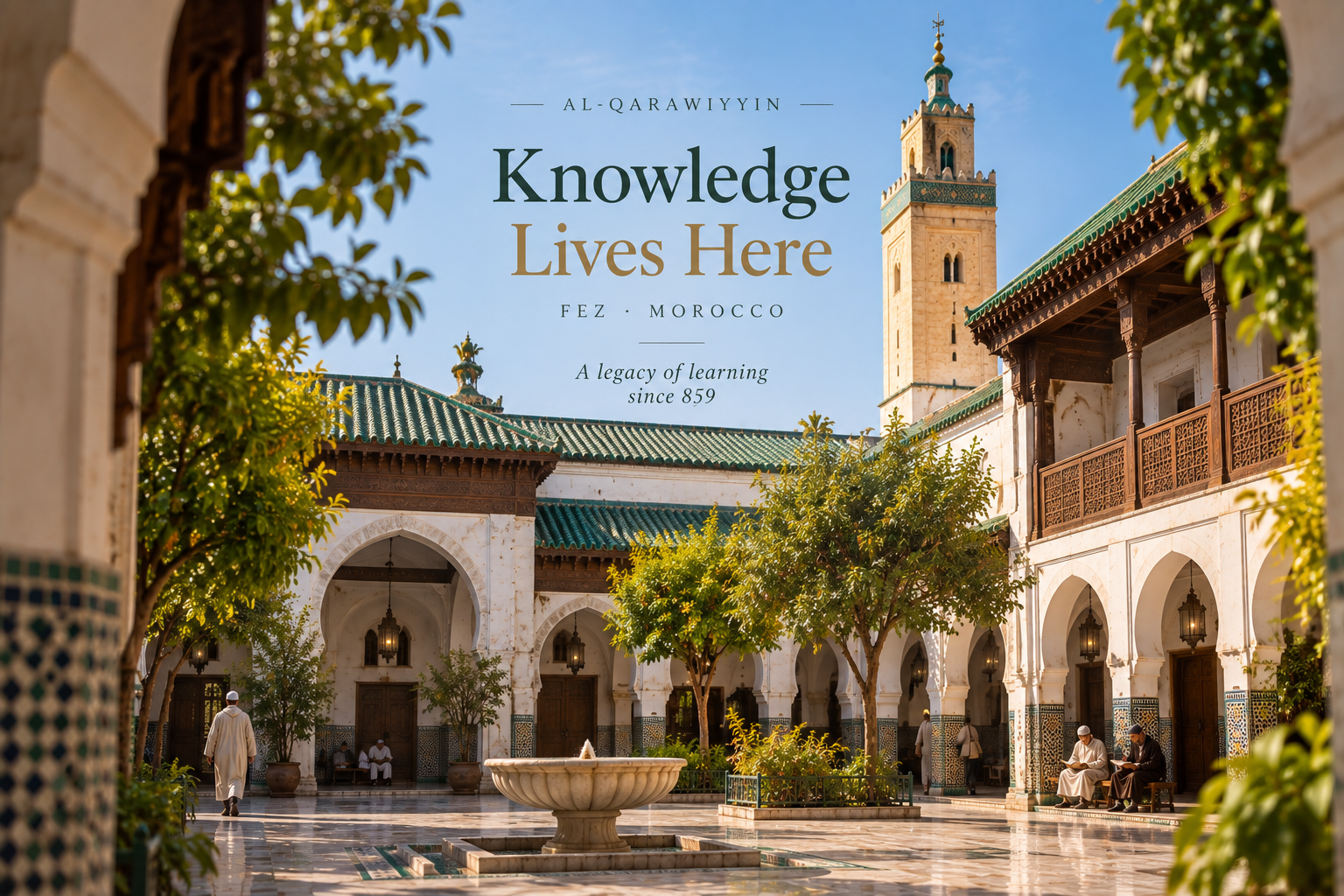
When people think about the world’s oldest universities, Europe may come to mind first.
But one of the strongest claims to the title is found in Fez, Morocco.
Al-Qarawiyyin was founded in 859 and developed into an important centre of learning.
Guinness World Records recognises it as the world’s oldest existing and continually operating educational institution. UNESCO also describes Fez as home to the world’s oldest university.
An African centre of learning for more than 1,100 years
Al-Qarawiyyin traces its history back more than 1,100 years.
It was established in the ninth century in Fez, a city that later became one of Morocco’s major cultural and intellectual centres.
The institution developed around the Qarawiyyin Mosque and became known as an important place of scholarship and education.
Over the centuries, learning in Fez included religious studies alongside subjects such as language and other fields of knowledge.
Is Al-Qarawiyyin really the world’s oldest university?
The answer depends partly on how the word “university” is defined.
Modern universities developed through different traditions, so historians and institutions do not always use the term in exactly the same way for medieval centres of learning.
However, Guinness World Records identifies Al-Qarawiyyin as the world’s oldest existing and continually operating educational institution.
For comparison, the University of Bologna in Italy was founded in 1088 and is generally recognised as Europe’s oldest university.
That means Al-Qarawiyyin’s origins predate Bologna by more than two centuries.
Fez remains a historic centre
Al-Qarawiyyin is closely connected to the history of Fez itself.
The city was founded in the ninth century and reached a major period of prosperity during the 13th and 14th centuries.
Its historic medina contains mosques, madrasas, palaces, traditional residences and other structures reflecting centuries of Moroccan history.
UNESCO added the Medina of Fez to the World Heritage List in 1981.
More than a millennium after Al-Qarawiyyin’s foundation, its history remains a striking reminder of Africa’s long tradition of scholarship and organised learning.