
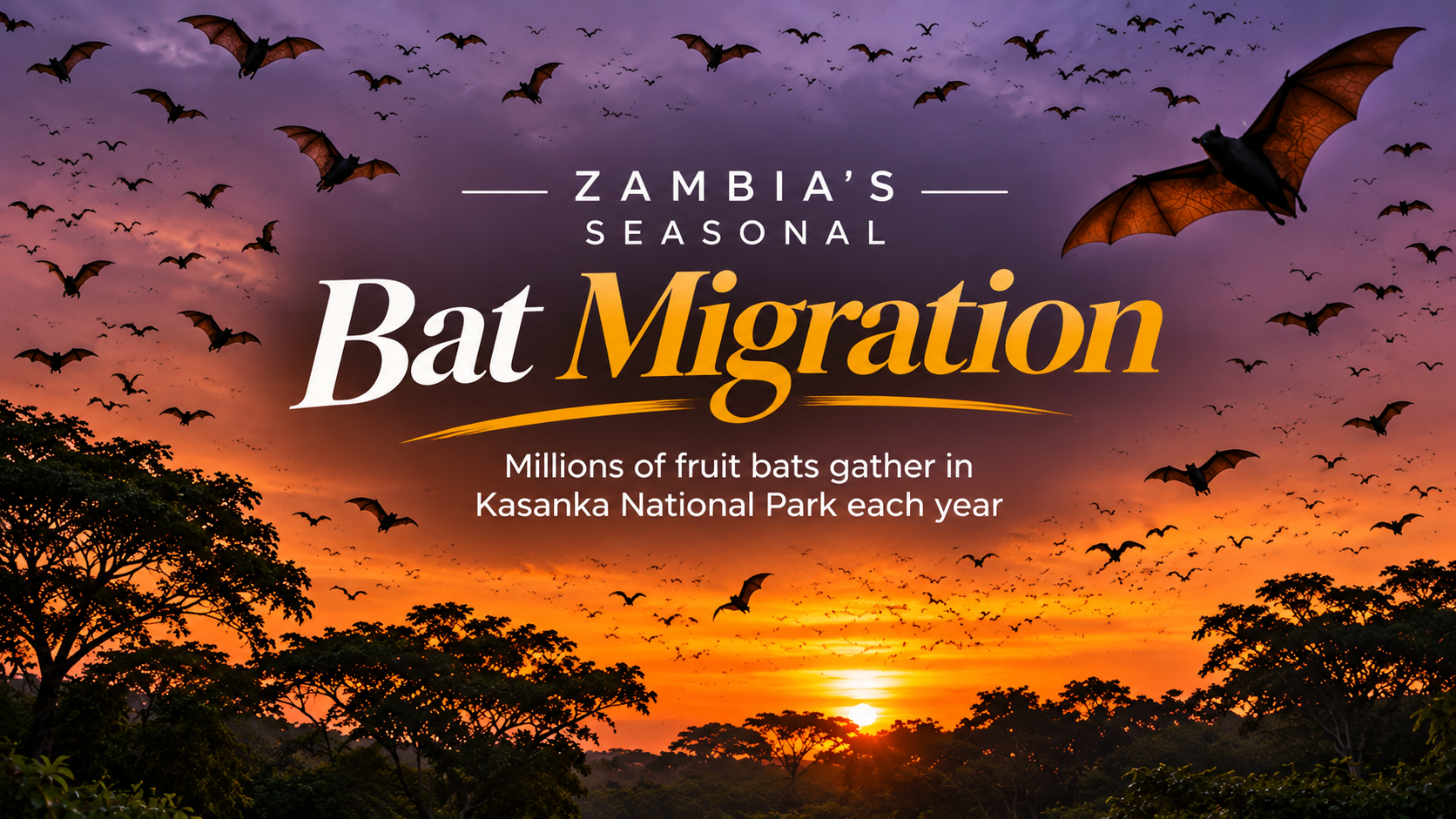
Every year, millions of bats arrive in a small forest in Zambia, creating one of Africa’s most remarkable wildlife spectacles.
The gathering takes place in Kasanka National Park, where enormous numbers of straw-coloured fruit bats travel from different parts of Africa.
Between October and December, the bats fill the forest canopy, resting in trees during the day before flying out to search for food at sunset.
Researchers estimate that several million bats can gather in the park during the migration season, making it one of the largest known mammal gatherings in the world.
Why do millions of bats travel to Zambia?
The bats arrive in Kasanka when seasonal fruits become abundant.
The forest provides an important feeding opportunity, particularly as trees produce fruit during the rainy season.
Unlike many smaller bats that feed on insects, straw-coloured fruit bats mainly eat fruit.
They play an important role in spreading seeds across large distances, helping trees grow and supporting forest ecosystems.
Scientists believe the bats travel hundreds or even thousands of kilometres to reach Zambia.
However, researchers are still studying their migration routes and how the animals navigate such long distances.
A forest filled with millions of bats
Kasanka National Park contains a relatively small area of swamp forest where the bats gather.
During the day, large groups hang from branches, sometimes covering entire sections of the forest canopy.
As evening approaches, the bats begin leaving their resting places in enormous numbers.
For visitors, the sight of thousands of bats flying across the sky at once is particularly striking.
The nightly movement can continue for an extended period as the animals travel to nearby feeding areas.
Despite their large numbers, these fruit bats are not known for attacking people. They generally avoid human contact.
Why are these bats important to Africa’s forests?
Straw-coloured fruit bats help maintain healthy forests by dispersing seeds.
After eating fruit, they carry seeds away from parent trees and deposit them in other locations.
This natural process helps plants spread and supports the regeneration of forests.
Their long-distance movements also connect ecosystems across different parts of Africa.
As a result, protecting the bats and their habitats can benefit many other plant and animal species.
One of Africa’s most unusual wildlife migrations
Kasanka’s annual bat gathering has attracted growing interest from wildlife researchers and nature enthusiasts.
However, the animals face threats from habitat loss, hunting and changes to their feeding environments.
Conservation efforts aim to protect the forest and maintain the conditions that support the migration.
The gathering offers a fascinating example of how seasonal changes influence wildlife movements across Africa.
For a few months each year, a small forest in Zambia becomes home to millions of visiting bats before they disperse again across the continent.