
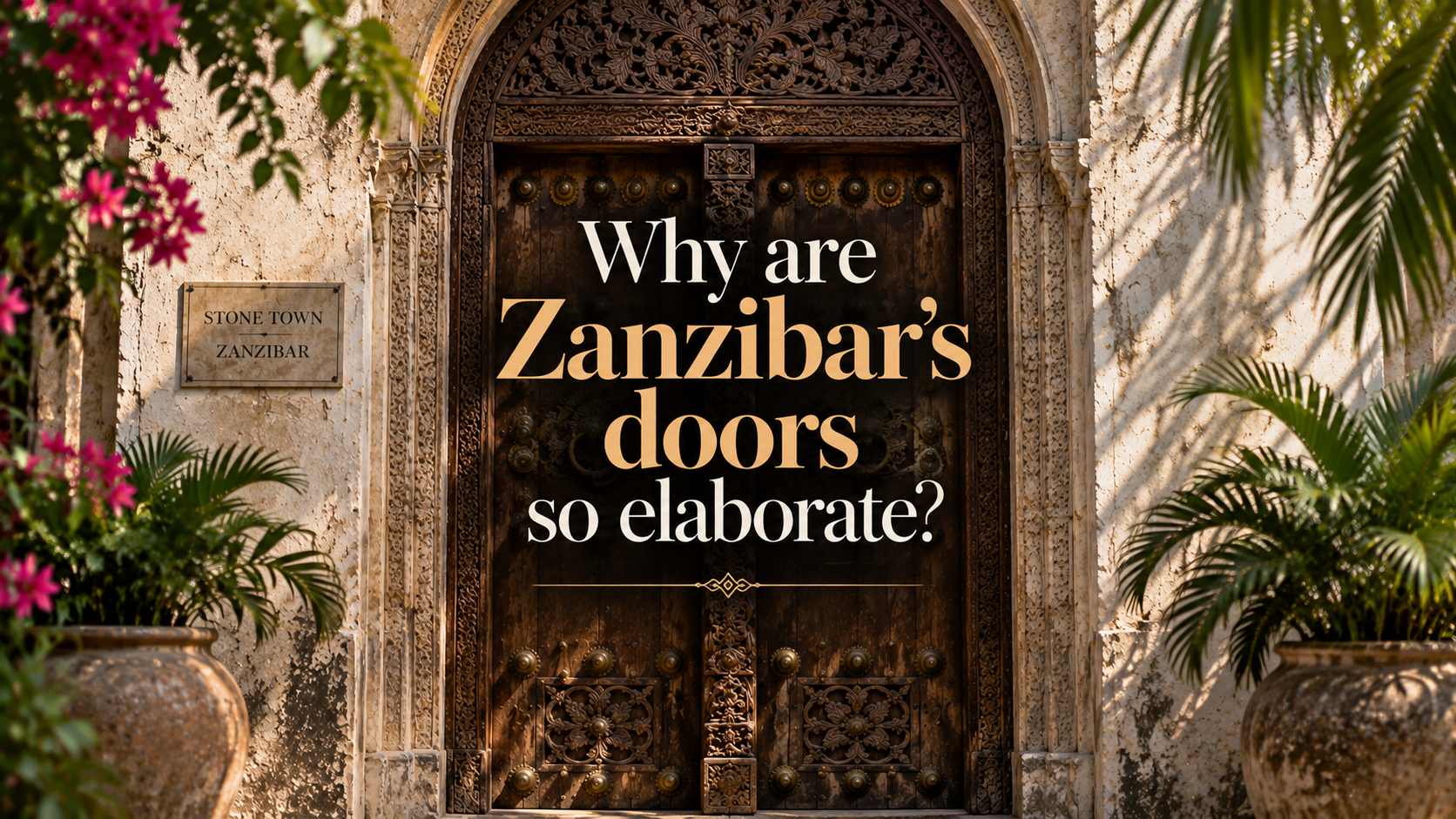
Walk through Zanzibar’s Stone Town and one feature is difficult to miss: its huge, beautifully carved wooden doors.
Some feature detailed floral patterns. Others have geometric designs, heavy wooden frames and rows of metal studs.
But why did Zanzibar develop such elaborate doors?
The answer lies in centuries of trade, craftsmanship and cultural exchange across the Indian Ocean.
Zanzibar’s doors tell a story
Stone Town was an important trading centre on the East African coast.
For centuries, people and goods moved between Zanzibar, mainland Africa, the Arabian Peninsula, India and other parts of the Indian Ocean.
Those connections influenced the city’s architecture.
According to UNESCO, Stone Town’s buildings combine Swahili, Arab, Indian and European influences.
Its famous carved wooden doors became one of the clearest features of that architectural tradition.
Arab and Indian influences shaped the designs
Different architectural traditions left their mark on Zanzibar.
Omani houses often featured large carved wooden doors as a major decorative feature.
Meanwhile, Indian merchants brought additional architectural styles to Stone Town.
Indian influence can still be seen in decorated façades, carved verandas and other details around the historic city.
Over time, these influences mixed with local Swahili building traditions.
The result was a distinctive style associated with Zanzibar.
More than just an entrance
The doors were not simply practical entrances.
Their size and detailed craftsmanship made them an important part of a building’s appearance.
Some doors feature remarkably complex wood carving and decorative metalwork.
Today, they remain among the most recognisable sights in Stone Town.
UNESCO describes ornate carved timber doors as a characteristic feature of the historic city.
A symbol of Stone Town
Stone Town was added to the UNESCO World Heritage List in 2000.
UNESCO describes the city as an outstanding example of cultural exchange between Africa and regions around the Indian Ocean.
The carved doors are a small but striking reminder of that history.
So when you walk through Zanzibar and spot an enormous carved doorway, you are looking at more than decoration.
You are seeing centuries of craftsmanship and cultural exchange preserved in wood.