Africa

South Africa reroutes Mozambique trade amid violence

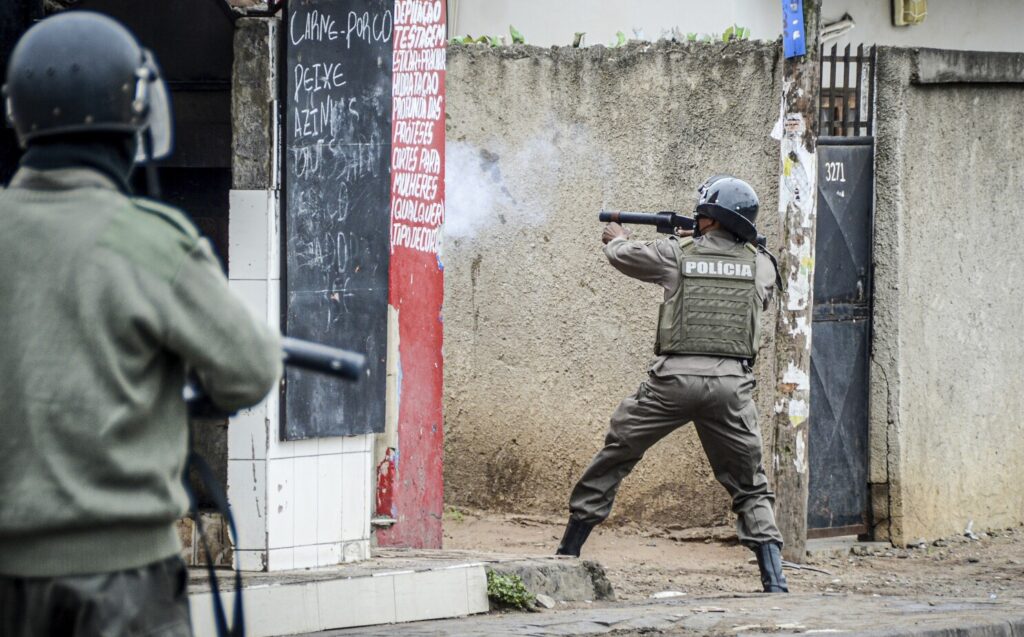
As Mozambique grapples with a political crisis following a disputed national election and violent protests, the situation at its southern border with South Africa is increasingly volatile, affecting trade and travel. The violence in Mozambique forced trade and travel to be diverted from South Africa’s Leebombo Border Post to Eswatini’s Mananga Border Post, with Mananga serving as a makeshift lifeline for those seeking passage from Mozambique. Michael Masiapato, commissioner of South Africa’s Border Management Authority, told VOA that although authorities are managing the crisis, it continues to pose significant challenges. “Even … when they deploy the military and when they deploy police officers on the corridor [between the capital, Maputo, and the border], it is not able to cover each and every area,” he said. The protests, he said, are “very much sporadic” and “very much widespread.” Following presidential candidate Daniel Chapo’s controversial election victory Monday, Mozambique plunged into turmoil, leaving scores dead amid violent protests. Some analysts expressed concern that continued political violence could destabilize regional security and impede economic development, sparking weapons proliferation and criminal activity. Solomon Mondlane, a political analyst in Mozambique, told VOA he is cautiously optimistic that South African and European efforts can help calm the situation. “The situation is volatile,” Mondlane said. “The good news is we’re hearing more calls from different countries — from South Africa, from other European countries — calling for more dialogue. South Africa has come out to say they are willing to facilitate a dialogue. “We know that South Africa’s ANC-led government has been in support of Frelimo,” the ruling political party,” he said. “They were the first to congratulate Frelimo for winning these rigged elections. But we are happy that they are adhering to the calls now to say we are willing to facilitate dialogue between the opposition in Mozambique and the ruling party.” Levy Ndou, a South African political analyst and lecturer at Tshwane University of Technology in Johannesburg, said he believes regional players’ efforts at dialogue with the Mozambican government are encouraging signs that many in the region are seeking peace and stability. “Of course, if the situation gets out of hand, it will therefore require the intervention of SADC in order to ensure that there is peace, there is stability and, indeed, there is economic activity that is going on,” Ndou said, referring to the Southern African Development Community. Zimbabwean President Emmerson Mnangagwa, the SADC chair, has said the regional bloc is ready to assist Mozambique.

South Africa reroutes Mozambique trade amid violence Read More »

2 soldiers killed in clash between Nigerian army, militants

 Two soldiers were killed in a clash between the Nigerian Army and suspected members of the armed wing of the Indigenous People of Biafra (IPOB) in Imo State, authorities said Sunday.  Joseph Akubo, the spokesperson for the 34 Artillery Brigade of the Nigerian Army, said in a statement that the clash occurred in the Osina area.  He confirmed that two soldiers lost their lives in the confrontation while one soldier remains missing.  The Nigeran Civil War, also known as the Biafra War, took place from 1967-1970 between the federal government and the Biafran people, who sought to establish an independent state of Biafra in southeast Nigeria, claiming between 500,000 and 2 million lives.  The Republic of Biafra, proclaimed in 1967, was reabsorbed into Nigeria following the civil war.  IPOB, classified as a terrorist organization by the Nigerian government, continues to advocate for the establishment of an independent state.

2 soldiers killed in clash between Nigerian army, militants Read More »

Climate change adds 41 days of extreme heat in 2024

Newly published research indicates that climate change added an average of 41 days of dangerous heat in 2024, harming human health and ecosystems. The joint report by World Weather Attribution (WWA) and Climate Central warns that every country needs to prepare for rising climate risks to minimize deaths and damage in 2025 and beyond. The world experienced an average of 41 extra days of dangerous heat in 2024 due to human-caused warming, the study said, suggesting that a much faster transition away from fossil fuels is needed to avoid a future of relentless heat waves, drought, wildfires, storms and floods. The report noted that climate change intensified 26 of the 29 weather events studied by World Weather Attribution which killed at least 3,700 people and displaced millions. “Climate change had a stronger influence than El Nino on many extreme weather events,” it added. Friederike Otto, lead of WWA and senior lecturer in Climate Science at Imperial College London, said the impacts of fossil fuel warming “have never been clearer or more devastating” than in 2024, adding: “We are living in a dangerous new era.” He said extreme weather killed thousands of people, forced millions from their homes this year and caused unrelenting suffering, recalling that floods in Spain, hurricanes in the US, drought in the Amazon and floods across Africa are “just a few examples.” “We know exactly what we need to do to stop things from getting worse: stop burning fossil fuels,” said Otto. “The top resolution for 2025 must be transitioning away from fossil fuels, which will make the world a safer and more stable place.” – ‘Failed scorecard’ Citing projections that this year is set to be the hottest on record, the report also noted that the first six months saw record-breaking temperatures, extending a streak that started in 2023 to 13 months, with the world’s hottest day in history recorded on July 22. “If the world does not rapidly transition away from oil, gas and coal, the number of dangerous heat days will continue to increase each year and threaten public health,” warned the scientists. According to the study, a faster shift away from fossil fuels, improvements in early warning, real-time reporting of heat deaths and international finance to help developing countries become more resilient are the key resolutions for 2025 to both tackle climate change and protect people from extreme weather. “Another devastating year of extreme weather has shown that we are not well prepared for life at 1.3-1.5°C of warming,” said Julie Arrighi, director of programs at the Red Cross Red Crescent Climate Centre. “In 2025, it’s crucial that every country accelerate efforts to adapt to climate change,” she added. Ben Clarke, researcher at the Centre for Environmental Policy, Imperial College London, said this annual report reads like a “failed scorecard.” “The world is not cutting emissions and preparing for climate change quickly enough. The consequences are record-breaking extreme weather events that cause deaths, displacement, and loss of livelihoods.”

Climate change adds 41 days of extreme heat in 2024 Read More »

Cyclone Chido: Mayotte begins repatriations as aid needs grow

Days after Cyclone Chido hit Mayotte, transport links to the French overseas territory are gradually resuming, allowing some residents to be repatriated. Sea connections between Mayotte and the Comoros have reopened, enabling the return of around 500 undocumented Comorians. While commercial flights have yet to resume, French authorities have established an air route to Reunion Island for evacuations of French citizens. Since the cyclone struck, about 3,000 people have been evacuated from Mayotte, which is now facing shortages of essential supplies. Locals report widespread lack of water and electricity, with many living in makeshift shelters after their homes were destroyed by the storm. In response to the disaster, the European Commission is providing emergency aid to Mayotte and Mozambique. Several countries, including Belgium, Germany, and Italy, have also pledged shelter and essential supplies.

Cyclone Chido: Mayotte begins repatriations as aid needs grow Read More »

U.N. exposes failures and corruption in Nigeria’s oil spill cleanup

In 2021, as a satellite passed over the Niger Delta, it captured images of vast swathes of barren land. The site, located outside Port Harcourt, was part of a cleanup project listed by the United Nations Environment Programme (UNEP), aimed at restoring the area to its former state as green farmland. This was supposed to reverse the damage caused by decades of oil spills, which had transformed the Delta into a symbol of environmental degradation. However, instead of being rejuvenated, the land had become a desolate “moonscape,” deemed unusable for agriculture, according to U.N. documents. It wasn’t an isolated failure. A series of newly uncovered investigations, emails, letters to Nigerian ministers, and meeting minutes reveal a pattern of mismanagement and poor execution. Senior U.N. officials described the Nigerian cleanup agency, the Hydrocarbon Pollution Remediation Project (HYPREP), as a “total failure.” The agency’s selection of cleanup contractors came under heavy criticism in a U.N. review, which found that many of the firms hired lacked relevant expertise. The cleanup effort was further marred by shoddy practices: soil samples were sent to laboratories that lacked the necessary equipment to conduct the required tests, and auditors were physically obstructed from verifying whether work had actually been completed. The cleanup companies were often linked to powerful Nigerian politicians, a former Nigerian environment minister told the AP. U.N. officials shared similar concerns, pointing to the cozy relationship between political elites and contractors, which contributed to the project’s failures. The situation was supposed to be different. The Niger Delta has experienced thousands of oil spills since oil production began in the 1950s. Studies and reports have shown that local communities often use contaminated water for drinking, washing, and cooking, exacerbating health and environmental problems. Despite a 2011 U.N. survey that highlighted the severity of the pollution, spills continue to occur regularly. In November 2023, for example, the Ogboinbiri community in Bayelsa State suffered its fourth spill in just three months, devastating fields, streams, and fisheries. “We haven’t harvested anything,” said farmer Timipre Bridget. “There’s no way to survive.” Following the 2011 survey, oil companies, including Shell—the country’s largest private oil and gas firm—agreed to contribute $1 billion toward cleaning up the worst-affected area, Ogoniland. The U.N. was relegated to an advisory role, while the Nigerian government took charge of managing the funds. But an internal investigation by U.N. scientists last year revealed that cleanup efforts outside Port Harcourt had been abysmal. The site was left without topsoil, with nearly seven times the petroleum contamination allowed by Nigerian health standards. The company responsible for the cleanup had its contract terminated, according to Nenibarini Zabbey, the current director of HYPREP. However, Philip Shekwolo, who was in charge when the contract was awarded, rejected the allegations. He dismissed the U.N. documents as “baseless” and “cheap blackmail,” insisting that the cleanup had been a success. Yet U.N. officials had raised concerns about the process as early as 2021, when Shekwolo was acting chief of HYPREP. A U.N. review in January 2022 found that 21 out of 41 contractors approved for cleanup work had no relevant experience. Some of these companies were simply construction firms or general merchants, according to meeting minutes. U.N. Senior Project Advisor Iyenemi Kakulu described the situation as effectively handing contractors a “blank check,” while Hyprep’s own communications chief, Joseph Kpobari, acknowledged that incompetent firms were responsible for the poor cleanups. Yet, these same firms were awarded contracts for more polluted sites, according to U.N. documents. Zabbey defended HYPREP’s record, claiming that 16 out of 20 sites in the first stage of the project had been certified as clean by Nigerian regulators. He also insisted that the agency followed proper procedures when issuing contracts. However, two anonymous sources familiar with the cleanup efforts told the AP that when officials visited laboratories used by HYPREP, they found that these labs lacked the necessary equipment to perform the required tests. In a letter to its customers, a U.K. laboratory that frequently worked with HYPREP admitted that many of its tests in 2022 were flawed and unreliable. The U.K. laboratory accreditation service even confirmed that the lab had been suspended twice during that period. Zabbey, however, claimed that HYPREP now closely monitors contractors, ensuring that laboratories adhere to Nigerian and U.N. standards and are regularly inspected. In 2021, the U.N. raised further alarms about HYPREP’s financial management, warning that the agency’s spending was not being tracked. Internal auditors faced strong resistance and were “demonized for doing their job,” according to the U.N.’s assessment. HYPREP’s previous leadership had actively obstructed audits, even physically preventing auditors from verifying whether work had been completed. Zabbey responded by claiming that the audit team is now valued, and financial accounts are audited annually. However, he only provided one audit cover letter, which acknowledged “weaknesses” in HYPREP’s financial management. One Nigerian politician, Sharon Ikeazor, attempted to bring about change. A lawyer by training, Ikeazor served as environment minister in 2019 and quickly recognized the depth of the problem. “The companies had no competence whatsoever,” she said in a phone interview. In February 2022, she received a letter from senior U.N. official Muralee Thummarukudy, warning of “significant opportunities for malpractice” in the contract awarding process. This was unusually strong language in U.N. diplomatic circles. Ikeazor removed Shekwolo from his position as acting HYPREP chief the following month, citing concerns that he was too closely tied to political interests. Shekwolo’s connections to politicians, many of whom owned cleanup companies, were well known, Ikeazor said. She explained that the few competent firms in the sector were excluded from major contracts, while the politically connected companies dominated. Shekwolo’s former employer, Shell, and the U.N. had both warned her about his involvement in the cleanup effort. Ikeazor’s decision to review and investigate the contracts sent “shockwaves” through Nigeria’s political class. She was quickly removed from office, with Shekwolo reinstated just two months later. Shekwolo denied any undue political influence in his work, insisting that his removal had no explanation and was merely a result of personal dislike from Ikeazor. In 2023, the U.N. officially ended its involvement in the Nigerian oil spill cleanup, citing the completion of its five-year consultancy agreement. However, Ikeazor and two other sources familiar with the project believe that the real reason for the U.N.’s exit was frustration over rampant corruption. Zabbey contended that the U.N.’s departure was simply a matter of the organization shifting its focus and moving on from the project.

U.N. exposes failures and corruption in Nigeria’s oil spill cleanup Read More »

Scroll to Top