

Siga tech supplies mpox therapy to Morocco
Morocco takes proactive measures to combat mpox by procuring the antiviral drug Tpoxx from Siga Technologies.
Siga tech supplies mpox therapy to Morocco Read More »
Morocco takes proactive measures to combat mpox by procuring the antiviral drug Tpoxx from Siga Technologies.
Siga tech supplies mpox therapy to Morocco Read More »

Mozambique is set to hold general elections on October 9 to choose a new President, Parliament, and regional governments. The ruling Liberation Front of Mozambique (Frelimo) is campaigning to maintain the presidency and its parliamentary majority under new leader Daniel Chapo. They face challenges from the Mozambican National Resistance (Renamo) led by Ossufo Momade, the Democratic Movement of Mozambique (MDM) headed by Lutero Simango, and independent candidate Venancio Mondlane. As the campaign wraps up on October 6, there have been no significant reports of partisan violence. However, on September 28, the National Electoral Commission (CNE) disclosed it had experienced a cyber-attack, the repercussions of which are still unclear. In anticipation of the elections, authorities are expected to heighten security across the nation, with potential measures including checkpoints, increased patrolling in urban areas, border restrictions, and curfews. Protests and clashes between party supporters and security forces are anticipated, particularly in major urban centers, opposition strongholds, and northern provinces like Cabo Delgado, Nampula, Niassa, and Zambezia. Significant disruptions to urban and intercity travel, business operations, and telecommunications may occur due to civil unrest or preemptive security measures.
Towards the parliamentary elections in Mozambique Read More »

Ethiopia’s two houses of parliament elected Taye Atske Selassie as president on Monday (Oct. 7). He was sworn in on the same day, receiving the Constitution from the outgoing president. Taye succeeds Ethiopia’s first female president, who held the largely ceremonial role for six years, as executive power remains with the prime minister. The Chairperson of the African Union congratulated Taye and reaffirmed the AU’s support for Ethiopia’s democratic development. A seasoned diplomat, Taye previously served as Ethiopia’s Permanent Ambassador to the United Nations in New York. His predecessor, Zewde, who made history as Ethiopia’s first female president in 2018, resigned from her role as the UN Secretary-General’s Special Representative to the African Union to take on the presidency. Reports suggest there were tensions between her and Prime Minister Abiy Ahmed.
Ethiopia elects Taye Atske Selassie as first female president Read More »

Zambia signed a Memorandum of Understanding (MOU) with China on Monday to establish the southern African nation’s first cholera vaccine manufacturing plant. The project’s first phase will cost $37 million, with about three million doses expected to be produced through a joint venture between Zambia’s Industrial Development Corporation (IDC) and Jijia International Medical Technology Corporation. Speaking during the signing ceremony for the agreement at State House in the capital Lusaka, Zambian President Hakainde Hichilema said the development was a key step in the country’s quest to eradicate the disease, which took away productivity as a result of affecting citizens. “We are also sending a signal that Zambia, Africa and the globe are able to work together. Zambia must be looked at as a center, as a location to manufacture for a bigger market. And if you look at the population of Africa, it is growing very rapidly,” Hichilema was quoted as saying on state television. Hichilema said he expected the project to be commercially viable, adding there was no room for bureaucracy in its implementation, as it was lifesaving. He added that ahead of the manufacturing, China would donate about three million doses of the cholera vaccine. Cholera is perennial in the southern African nation, especially during the rainy season, and while curable, it also claims lives.
Zambia and China sign MOU for Africa’s first cholera vaccine plant Read More »

Ten miners were reported dead, and five others survived with injuries after a mine pit they were quarrying in collapsed, trapping an undisclosed number of people under the debris. The incident occurred at the Luili gold mine in Mumbwa District, approximately 150 kilometers (93 miles) west of Zambian capital of Lusaka on Monday. “An unknown number of people went to conduct mining activities at the pit this morning and during the course of their activities, the earth collapsed on them,” Charity Chanda, the police commissioner for Central Province, said in a statement. “Rescue efforts led to the recoveries of six miners with injuries, while nine were confirmed dead on the spot. Unfortunately, one of the six injured miners later succumbed to his injuries at Nangoma mission hospital,” said the statement. Chanda said that efforts to rescue any remaining miners trapped under the debris were still underway, and the injured miners were receiving treatment at Nangoma Mission Hospital, which is located nearby. Nangoma Member of Parliament Collins Nzovu, who is also the country’s Minister for Water Development and Sanitation, revealed that the number of miners still trapped under the debris was five. Nzovu told reporters during his visit to the site that he had since directed the suspension of all mining activities at the quarry. While officially opening the inaugural Zambia Mining and Investment Insaka in Lusaka on Monday, Zambia’s President Hakainde Hichilema cautioned against unsafe mining practices, urging citizens interested in the sector to ensure they obtain licenses to conduct mining in a safe and legal environment.
10 die in Zambia mine collapse Read More »

In Nigeria, a country rich in oil and natural gas, 15 illegal refineries processing stolen crude oil have been destroyed. Danjuma Jonah Danjuma, Acting Director of Army Public Relations, announced in a written statement that the military conducted aerial operations against oil smugglers in the Niger Delta, the nation’s oil-producing region. He reported the destruction of 15 illegal refining sites and the seizure of 11 tankers carrying oil, along with several boats. Additionally, 115,000 liters of stolen crude oil were recovered. Oil theft in Nigeria is negatively impacting the country’s economy. Nigerian Senator Ned Nwoko has stated that due to increasing oil theft and attacks on pipelines, the country has suffered losses exceeding $3 billion in 2023. Nigeria’s proven oil reserves are approximately 37 billion barrels, accounting for 3.1% of global reserves. Ranked among the top 15 countries in crude oil production, Nigeria is the 8th in the world for oil reserves and 6th in oil exports. In the Delta region, where oil fields are located, armed groups are involved in sabotage, conflicts, and kidnappings related to oil operations.
Nigeria: 15 illegal oil refining sites have been destroyed Read More »
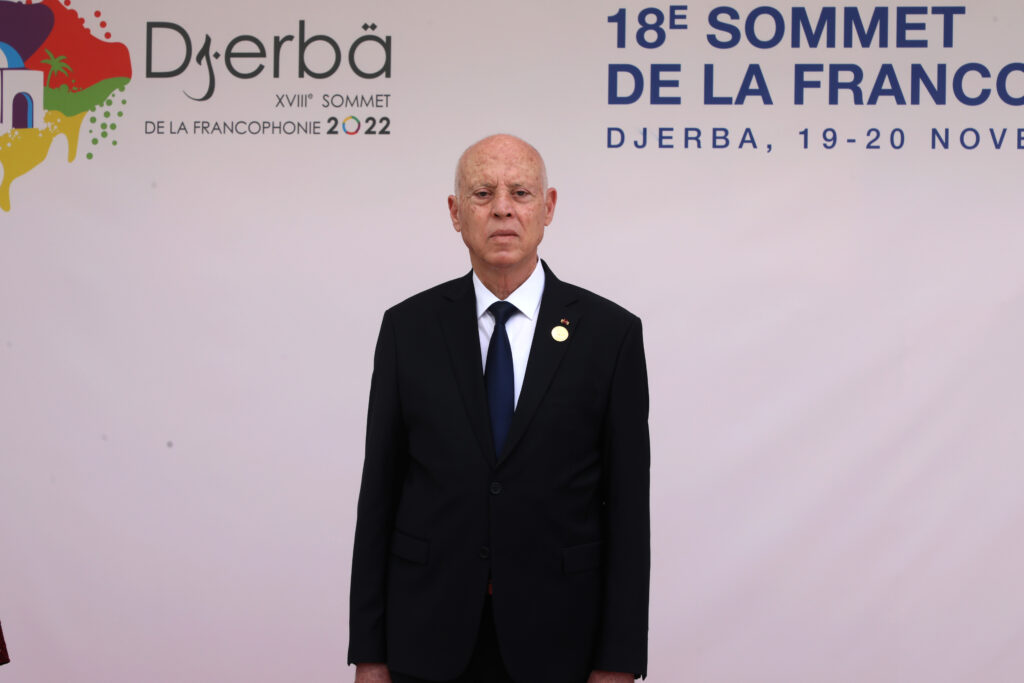
Tunisia’s President Kais Saied has won a second term with 90.69% of the votes in the presidential election held on Sunday, the country’s electoral commission announced on Monday. At a press conference in the capital Tunis, the head of Tunisia’s Independent High Authority for Elections (ISIE), Farouk Bouasker, said the voter turnout was 28.8%. While Saied received 90.69% of the votes, his competitor Ayachi Zammel garnered 7.35%, and Zouhair Maghzaoui received only 1.97% of the votes, Bouasker added. Tunisia’s election took place amid political tensions, economic challenges, and a polarized nation.
Tunisian President Saied wins 2nd term Read More »

This shift is driven by rising fuel costs and the country’s abundant renewable energy sources.
Ethiopia’s EV revolution: Solution to fuel shortages Read More »
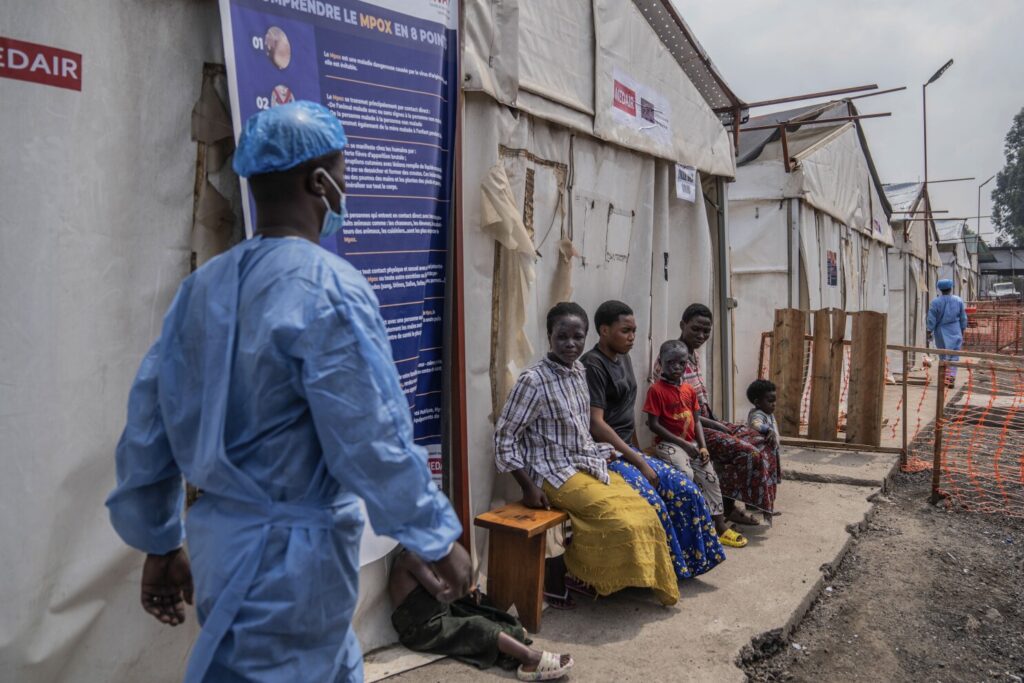
After a delay due to logistical difficulties, Congolese authorities have started administering vaccinations against mpox in an attempt to curb the outbreak. 265,000 doses were given to the DRC by the EU and the US, have been administered in the city of Goma and north Kivu province, where healthcare resources have been stretched amid the surge in mpox cases. The country, which has recorded some 30,000 cases, accounts for more than 80% of all the cases and 99% of deaths reported on the continent this year. More than 850 deaths from the disease have been reported in the DRC this year. Back in August, the WHO declared that the surge in mpox cases in the DRC, which spread to several countries, constituted a global health emergency. Beyond the African continent, a handful of cases have also been recorded in countries including Sweden and Pakistan. Caused by a virus in the same family as smallpox, mpox was initially passed from animals to humans. It is transmitted from person to person through close contact with someone who is infected. The current outbreak has seen the spread of a new strain of the disease dubbed clade 1b, which is more serious than clade 2, which triggered a public health emergency in 2022.
DRC begins mpox vaccinations amid outbreak surge Read More »

While Israel’s main benefactors during its ongoing war on Gaza have been major Western nations, it has also found support in parts of the African continent, including the East African nation of Kenya. The Kenyan government has consistently backed Israel with words and diplomatic actions, including votes at the UN, despite a clear divide in public opinion within the country. This support is rooted in diplomatic relations dating back to the 1960s, but the two countries have deepened ties in various sectors over the years, including security, technology and agriculture, while Israel is also viewed as a strategic counterterrorism ally in East Africa. Kenya’s relationship with Israel has existed “long before it became official,” going back to the days when apartheid still plagued South Africa and many African nations were vocally opposed to Israel, according to Herman Manyora, a political analyst and University of Nairobi lecturer. “Kenya has a very interesting relationship with Israel. Long before this relationship became official, when Israel was not recognized by most of Africa, Kenya had silent relations with Israel and apartheid South Africa,” he told Anadolu. However, while Kenya “came out strongly in support of Israel” after the Hamas-led Oct. 7 attack, the government was forced to “quickly retract, seeing as it wasn’t sitting well with many African countries,” he said. On multiple occasions, the Foreign Ministry issued statements condemning rocket attacks on Israeli cities, framing Israel’s military response as legitimate self-defense, while President William Ruto has reaffirmed that Kenya views Israel as a “great friend.” - Divisions within Kenya’s close relationship with Israel has, at times, drawn muted criticism within Africa, particularly when it comes to Nairobi’s diplomatic support to Tel Aviv. On several resolutions brought before the UN General Assembly and Human Rights Council condemning Israel’s actions in Gaza, Kenya either abstained or voted against the motions, aligning with Western powers. Standing with Israel, which is accused of genocide at the International Court of Justice (ICJ), has made Kenya an outlier in Africa. Esther Mwai, a political analyst based in Nairobi, said Kenya “has suffered negatively across Africa” because of its support to Israel. “Many African countries have traditionally supported Palestine, and Kenya’s position placed it at odds with the broader African consensus,” she said. Public opinion within Kenya is also divided as many feel a strong sense of solidarity with the Palestinian cause, seeing parallels between their struggle and Africa’s own historical battles against colonialism and oppression. “I’m disappointed that our government continues to support Israel despite the atrocities being committed in Gaza,” said Movicks Ogalo, 29, a laboratory technician in Nairobi. “The images we see every day of children and families suffering are heartbreaking. It feels like we’ve abandoned our principles of fighting for justice and human rights.” Ogalo’s sentiments are shared by many in Kenya’s civil society and activist groups, but not all Kenyans are critical of the government’s position. Some view Israel as an important ally in Kenya’s fight against terrorism, particularly in dealing with groups like al-Shabaab, which operates across the region. “I fully support our government’s stance with Israel,” said Vincent James Kamau, a businessman in Nairobi. “Israel has helped Kenya with intelligence-sharing and counterterrorism efforts.” Kamau’s views echo those of Kenya’s political establishment, which sees Israel as a key partner in ensuring regional stability and security cooperation between the two nations, especially in intelligence and military training, as critical in combating terrorism threats. – A diplomatic pivot? Despite the government’s initial support for Israel, recent events suggest that Kenya may be reassessing its position. During a UN General Assembly session last month, Kenyan Ambassador Ekitela Lokaale condemned the humanitarian atrocities in the Middle East, particularly in Gaza. This marked a significant departure from Kenya’s position, suggesting that the government may be moving toward a more balanced approach. While the Kenya Foreign Ministry did not respond to multiple Anadolu queries on the subject, analysts see a potential shift as a response to growing international and domestic pressure over the humanitarian catastrophe in Gaza, where Israel has killed or wounded more than 140,000 Palestinians, most of them women and children. The relentless Israeli assault has devastated almost the entire Gaza Strip, displacing hundreds of thousands of Palestinians, while it has also imposed a crippling blockade on food, water, medicine and all essentials. “Kenya has always been an ally and friend of Israel, even when many African countries are against it,” said Manyora. However, he emphasized that recent actions such as the government backtracking on its post-Oct. 7 support to Israel reflect “a need to align with broader African sentiment.”
1 year of Gaza genocide: Will Kenya change tack on supporting Israel? Read More »