Africa

West African nations to launch common passport

The Alliance of Sahel States (AES), a regional bloc that was established last September by the military leaders of Mali, Niger and Burkina Faso, announced Sunday that they will launch a common passport to enhance cooperation and security. AES Chair and Mali’s junta leader Col. Assimi Goita said in a TV address that the alliance would soon launch a common biometric passport that will also facilitate the mobility of citizens across the three nations. He made the statement to mark the one-year anniversary of the AES since its creation on Sept. 16 last year. Burkina Faso, Mali and Niger formed the AES and announced the creation of a joint military force to counter spiraling security challenges posed in their countries by terrorist groups. The three West African nations withdrew from the Economic Community of West African States (ECOWAS), which had threatened to intervene militarily in Niger following a coup in that country in July last year. The three countries, with a combined population of 72 million, are affected by instability caused by militant groups. In July this year, the leaders of the three military regimes held their first joint summit in the Nigerien capital of Niamey, where they announced the confederation of three Sahel states. Highlighting joint “significant victories” against terrorist groups in the region, Goita said the AES was “open to discussion with international partners as well as sub-regional partners.” “This enhanced cooperation has helped to significantly weaken these (terror) groups, thus contributing to an improvement in security in the region, he added. Goita said the AES will also launch a common TV station.

West African nations to launch common passport Read More »

Comoros president slightly injured in knife attack at funeral

The president of Comoros, an island nation in the Indian Ocean, sustained “slight injuries” in a knife attack during a religious leader’s funeral on Friday, according to his office. A bystander who tried to protect President Azali Assoumani was also injured. The president’s injuries were not severe, and he has since returned home. The attacker has been apprehended by security forces, though details about their identity and the circumstances of the attack remain undisclosed. The incident occurred in Salimani, near the capital city of Moroni. Government minister Aboubacar Said Anli reported that a civilian was injured while trying to shield the president, but there is no immediate information on the severity of these injuries. Assoumani, who was reelected in January amid allegations of election fraud, has faced political unrest, including a fatality linked to the post-election turmoil. The 65-year-old former military officer first seized power in a 1999 coup and has since served multiple terms. He recently extended his presidency into a fourth term by altering the constitution, removing term limits, and ending a rotational presidency system. His administration has been criticized for cracking down on dissent and banning peaceful protests. Comoros, an archipelago off Africa’s east coast, has experienced numerous coups and attempted coups since gaining independence from France in 1975.

Comoros president slightly injured in knife attack at funeral Read More »

Tunisians protest election turmoil amid candidate bans and repression

Tunisians are set to protest on Friday against the turmoil surrounding the upcoming elections, where candidates have been arrested, barred from voting, or banned from politics for life. The Tunisian Network for the Defense of Rights and Freedoms aims to highlight what it sees as a “rise of authoritarianism.” Mohieddine Lagha, secretary general of the Tunisian League for Human Rights, stated that the demonstration is in response to widespread violations of rights and the exclusion of some citizens from running in the presidential election. Tensions have escalated between the Independent High Authority for Elections (ISIE) and judges over candidate eligibility for the October 6 vote. Critics argue that the commission, appointed by President Kais Saied, is biased and lacks independence. The ISIE has rejected election observer groups and excluded three candidates who had won court appeals. Former health minister Abdellatif Mekki, now running with his own party, Work and Achievement, was arrested in July and banned from politics for life. Although a court recently ordered his reinstatement, the ISIE has not complied with the ruling. Ahmed Neffati, Mekki’s campaign manager, urged mass participation in the protest to pressure for democratic reforms, asserting that Tunisians will not forfeit their right to free elections. President Saied has recently reshuffled his cabinet and intensified crackdowns on opposition figures. The International Crisis Group has labeled the situation as “deteriorating,” while Human Rights Watch has called for the reinstatement of excluded candidates, criticizing the election process as undermining democratic rights.

Tunisians protest election turmoil amid candidate bans and repression Read More »

Fitch affirms South Africa’s BB- rating with stable outlook

Fitch Ratings said Friday it affirmed South Africa’s long-term foreign currency issuer default rating at BB- with a stable outlook. The rating agency said South Africa’s rating is supported by the country’s favorable debt structure, strong institutions and a credible monetary policy framework. Those factors, however, are balanced against low real GDP growth, a high level of poverty and inequality, and a high government debt/GDP ratio. Fitch said it expects real GDP growth of 0.9% this year, after 0.7% last year. Real GDP is forecast to show growth of 1.5% in 2025 and 1.3% in 2026. “Growth is hampered by a struggling logistics sector, deeply entrenched structural factors, particularly high levels of inequality, poverty and unemployment, and weak investment,” it said in a statement. “We expect the weakness to persist, despite robust demographics,” it added. “Electricity shortages, which dragged on growth in 2022 and 2023, are expected to ease, but sporadic incidents of load-shedding could still occur.” While headline inflation eased to 4.6% in July, Fitch expects it to fall to 4.5% by the end of the year, 4% in 2025 and 2026, as food and oil prices continue their slowdown.

Fitch affirms South Africa’s BB- rating with stable outlook Read More »

In US, South Africa’s foreign minister calls for solidarity with Palesti...

During his visit to the US, South Africa’s Foreign Minister Ronald Lamola on Friday called for global solidarity with Palestine. “We continue to call on the collective conscience of the global community to stand in solidarity with the people of Palestine… to call Israel to stop the genocide that is currently unfolding” in Gaza, Lamola said at the Congressional Black Caucus Foundation’s 53rd Annual Legislative Conference in Washington, D.C. “We will continue to do so, despite threats that come from across the globe, because we believe we are standing on principles,” he added. “The future of the world depends on the rule of law being protected” by all nations, said Lamola, who is on his first trip to the US after being appointed in July. He arrived in Washington on Thursday for a weeklong visit, amid reports that Israeli diplomats are lobbying US lawmakers to pressure South Africa into dropping its genocide case against Tel Aviv at the International Court of Justice (ICJ). His schedule during the trip released by his spokesperson Chrispin Phiri, however, did not indicate whether Lamola will have a bilateral meeting with his US counterpart. After his appointment, US Secretary of State Antony Blinken had a phone call with Lamola to congratulate him. The two had discussed Russia’s war on Ukraine as well as Israel’s war on Gaza. “We continue to champion human rights in Gaza. We stand with the people of Palestine,” Lamola told the audience in Washington, which included US lawmakers as well as prominent diaspora members of the African community. “This has been a historic position of the South African government,” he said, recalling words of anti-apartheid hero Nelson Mandela, who had said: “We know too well that our freedom is incomplete without the freedom of the Palestinians.” – ‘Disproportionate’ response from Israel The “whole world was quiet” when South Africa took the decision to take the Gaza case to the ICJ, Lamola said. Condemning last year’s Hamas attack, he, however, said: “The state of Israel’s response to the incident of Oct. 7 is disproportionate to the offense committed.” A trained lawyer himself, Lamola said: “It is going beyond self-defense as predicated by international law and it is against this background that we went to the International Court of Justice to call for a cease-fire, to stop maiming of innocent women and children, to stop the destruction of Gaza.” The court indicated that Israel “should cease its military operations, to cease the destruction of infrastructure,” Lamola, who served as justice minister in the previous term of President Cyril Ramaphosa, said, adding: “Despite the court’s ruling Israel continues to do so.” Pointing to the conflict in Ukraine, he said South Africa’s non-alignment position was a “catalyst for peace and democratic engagements.” “We are unequivocal about sovereignty and independence of all nations,” he said stressing that unlawful occupations “should not be allowed.” Reminding the Global North about the impacts of wars, Lamola said Africans were “most affected” due to the impact on value chains, including in the supply of food. – Mutually beneficial ties with US Taking no qualms, Lamola acknowledged “differences of opinion” with the US on “certain issues.” However, striking a positive note with a call for engagement “on the basis of constructive dialogue,” he said the bilateral relations “should not be based on threats but on mutual respect.” “We believe our relationship with the US is mutually beneficial and we value this relationship,” he emphasized. And Washington, he said, “also benefits from this relationship.” “It is a relationship that must be preserved,” Lamola said. “Let us engage on differences but we may agree to disagree,” he said, addressing the Joe Biden administration. “We will not tell the US what to do and we expect the US not to tell us what to do,” the South African foreign minister said. He added: “We will remain open to be persuaded and we are hopeful that we can also persuade the US on a number of issues in various multilateral platforms and this becomes a relationship of mutual respect.”

In US, South Africa’s foreign minister calls for solidarity with Palesti... Read More »

Zambia’s Hichilema unveils drought plan, anti-corruption measures

Zambia’s President Hakainde Hichilema said Friday his government has in place a response plan, with the provision of humanitarian assistance, for Zambians hard-hit by drought from erratic rains in the previous season. In a State of the Nation Address at the opening of the fourth session of the 13th National Assembly in Lusaka, Hichilema said the government was implementing recovery and resilience interventions to mitigate the effects of climate change, after drought wiped out more than 1 million hectares of crops, affecting nearly 10 million people and 6.6 million in need of direct relief in 84 of the country’s 116 districts. Having declared that the El Nino phenomenon introduced a national disaster and emergency in February, Hichilema applauded Zambians for their resilience and patience as well as local and international partners for humanitarian support. Hichilema said his administration was committed to upholding the rule of law, respecting human rights and the Constitution, as well as the core of good governance. His administration was determined to eradicate all forms of corruption, remaining committed to a zero-tolerance policy against the vice, he said. Hichilema said all cases of corruption were being thoroughly investigated and prosecuted in accordance with the law, with assorted properties worth more than 100 million Zambian Kwachas ($3.8 million) and cash amounting to $30.8 million and 56.6 million Kwachas forfeited to the state. He said through a foreign policy anchored on the pillars of peace, security and economic diplomacy; Zambia effectively presided over the Southern African Development Community Organ on Politics, Defence (SADC) and Security, fulfilling the bloc’s mandate of promoting regional peace, security and stability: ultimately creating more economic opportunities. This was in addition to successfully leading SADC electoral observer missions to Zimbabwe, Eswatini, Madagascar, Congo DR, Lesotho and South Africa. Hichilema also highlighted growth prospects in agriculture, mining, tourism, energy, manufacturing and technology, among other sectors.

Zambia’s Hichilema unveils drought plan, anti-corruption measures Read More »

Ethiopian Airlines adds nonstop to Conakry, resumes Monrovia

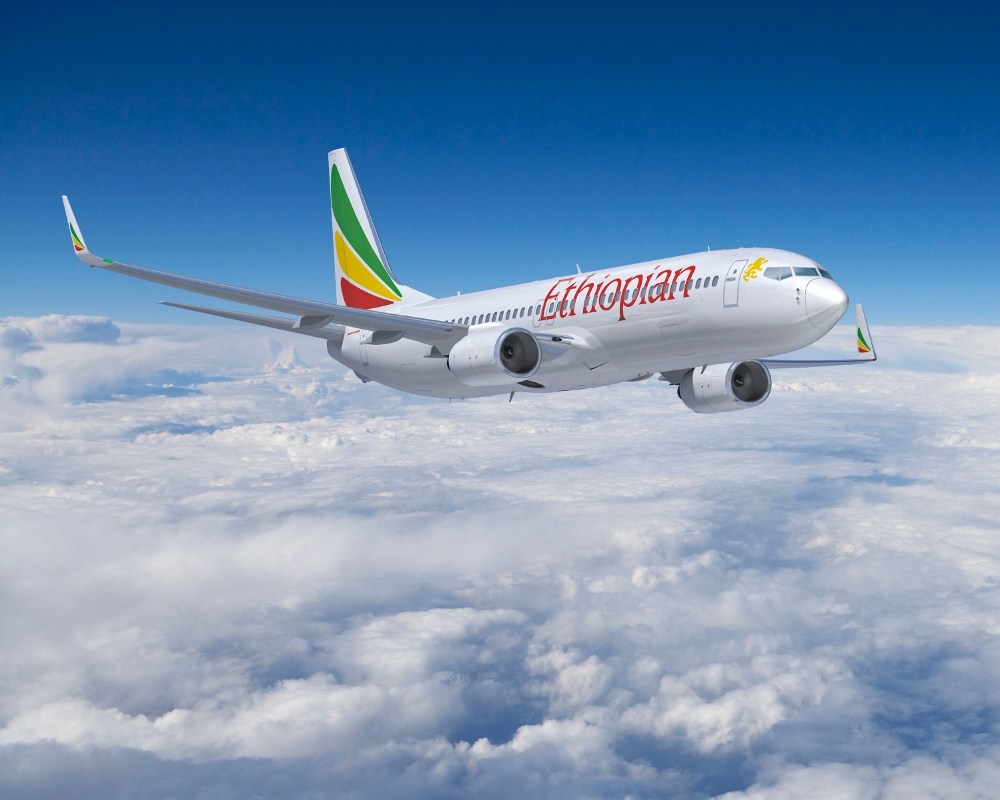
Ethiopian Airlines will soon offer direct flights between Addis Ababa and Conakry, Guinea’s capital, marking its first nonstop service to this West African city. Starting November 30, the airline plans to operate at least three weekly flights using the 787-8 Dreamliner. The journey will take approximately 9 hours and 5 minutes, with flights arriving in Guinea in the afternoon and departing the next morning. This move coincides with ongoing upgrades to regional airports in Guinea, signaling a potential boost in air traffic. Additionally, Ethiopian Airlines will resume flights to Monrovia, Liberia, ending its previous service to Ouagadougou. This marks the return of Ethiopian Airlines to Liberia since 2010. The Star Alliance member now serves over 50 cities across Africa.

Ethiopian Airlines adds nonstop to Conakry, resumes Monrovia Read More »

Bassirou Diomaye Faye calls for snap elections on Nov. 17

 Senegal’s President Bassirou Diomaye Faye dissolved the country’s opposition-led National Assembly on Thursday in a bid to break the tension between the legislature and the executive branch. In a national address, Faye said snap elections will be conducted on Nov. 17 this year. “By virtue of the powers conferred on me by Article 87 of the Constitution, and after consulting the Constitutional Council on the right date, the Prime Minister and the President of the National Assembly, on the expediency, I dissolve the National Assembly,” he said. The move came six months after Faye was elected under an opposition platform. He said the opposition-dominated legislature had made it hard for him to carry out the “systemic transformation” he promised during campaigns. He asked voters to give his Patriots of Senegal for Work, Ethics and Fraternity (PASTEF) party a mandate. The outgoing house, elected in 2022, was dominated by members of former President Macky Sall’s Benno Bokk Yakaar (United in Hope) coalition. Tension between the executive and the legislature was reported recently after opposition lawmakers cancelled a budget debate and threatened to table a motion to censure the government. The Benno Bokk Yakaar parliamentary group criticized the dissolution, saying it was aimed at avoiding the submission of a motion to censure the government by the parliamentary majority. In a statement, the group accused President Faye and Prime Minister Ousmane Sonko of “manipulating institutions to serve their own political interests.” “This dissolution is a blatant attempt to silence the parliamentary opposition and avoid any democratic debate on the management of the country,” said Abdou Mbow, president of the majority parliamentary group.

Bassirou Diomaye Faye calls for snap elections on Nov. 17 Read More »

Putin: 34 countries have expressed desire to join

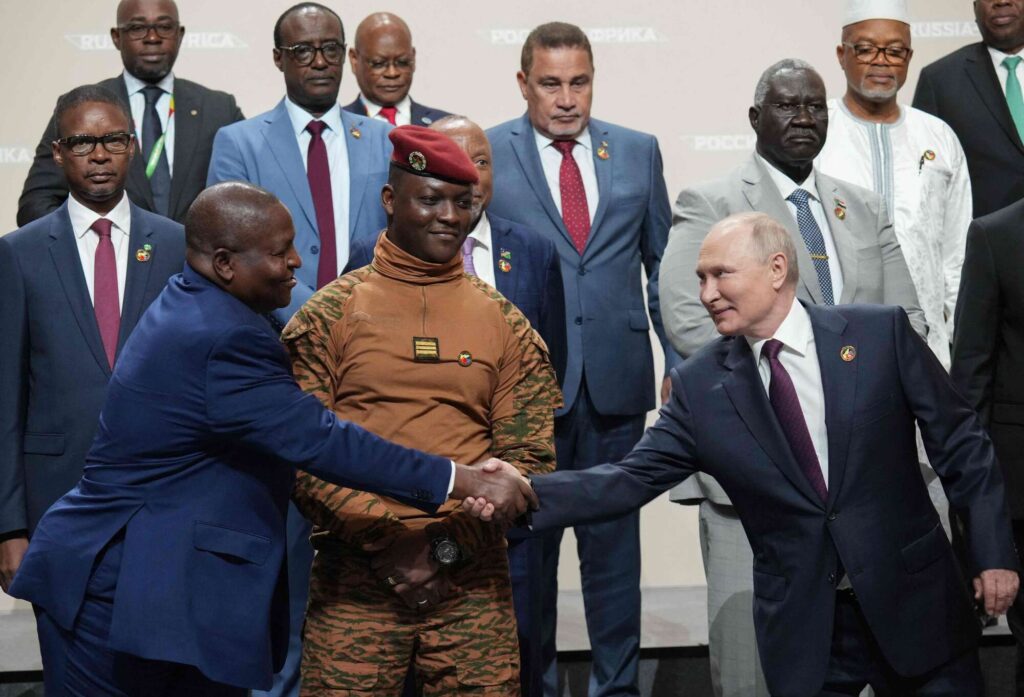
Russian President Vladimir Putin met with high-ranking representatives of BRICS countries on Thursday (Sep. 12). Russia took the rotating presidency of the group in 2024.  Putin who met with the representatives in the Konstantinovsky Palace in Saint Petersburg announced a possible new wave of BRICS expansion.  “We cannot ignore the increasing interest in BRICS from many countries. Today, more than thirty countries, specifically 34, have expressed a desire to join our union in one form or another. Therefore, an active discussion has been initiated among all BRICS participants regarding the modalities for a new category of partner states.”  The meeting is part of the 2-day BRICS security summit set to discuss the parameters of the future world order. Th intergovernmental organization comprises Brazil, Russia, India, China, South Africa, Iran, Egypt, Ethiopia, and the United Arab Emirates. It has a stated aim to build a multipolar world. Its founding members have called for a fairer world order and the reform of international institutions like the United Nations, the International Monetary Fund and the World Bank.

Putin: 34 countries have expressed desire to join Read More »

Phelophepa health train provides crucial relief in Gauteng

For the past 30 years, the Phelophepa train has been a lifeline across South Africa, offering free medical care to those in remote communities. What started as a single three-carriage train has expanded to two 16-carriage trains, serving patients who often struggle with overcrowded or distant local clinics. The train recently arrived in Tembisa, a township east of Johannesburg. Thabang, a local resident, shared his experience: “I’ve been suffering from my eyesight. I heard the train was coming to help people. They see around 150 people a day, and some of us stay overnight because we live far away.” The Phelophepa train provides a crucial service in a country where about 84% of people rely on an overstretched public health system. With only 16% of South Africans covered by health insurance, many face significant barriers to accessing care in a country with over 32% unemployment. In addition to healthcare professionals, the train is staffed by managers, translators, and security personnel. Operated by the Transnet Foundation, the social responsibility branch of Transnet, South Africa’s state-owned railway company, the train began in 1994. Originally focused on eye care, it quickly expanded its services to meet broader health needs. Now serving areas around Pretoria and Johannesburg, the train will spend two weeks in Tembisa. Despite its impact, the train is not a panacea for South Africa’s healthcare challenges. Public health expert Alex van den Heever notes that while there have been increases in the healthcare budget and staffing since 1994, the public health system still faces significant pressures. In Gauteng province, which includes Pretoria and Johannesburg, the health department’s budget has surged from 6 billion rand ($336 million) in 2000 to 65 billion rand ($3.6 billion) today. However, public health expert Alex van den Heever attributes the challenges facing the public sector to the African National Congress, the ruling party since the end of apartheid. For many South Africans who have witnessed the decline in healthcare services firsthand, the arrival of the Phelophepa health train offers a welcome reprieve. Thethiwe Mahlangu, who visited the clinic for an eye exam and pap smear, expressed her gratitude: “This train is truly helpful. I hope it doesn’t end here today. They should come back, even if it’s next year. There are so many of us who are really sick and in need.” Hundreds of residents walked away satisfied with the care they received, underscoring the train’s vital role in addressing health disparities.

Phelophepa health train provides crucial relief in Gauteng Read More »

Scroll to Top