

Denmark closes Sahel embassies, expands elsewhere
The country is also upgrading its existing embassies in South Africa, Kenya, Egypt, and Nigeria to regional hubs.
Denmark closes Sahel embassies, expands elsewhere Read More »
The country is also upgrading its existing embassies in South Africa, Kenya, Egypt, and Nigeria to regional hubs.
Denmark closes Sahel embassies, expands elsewhere Read More »

Despite abundant pods on trees, Ivory Coast’s cocoa harvest is starting slowly due to below-average rainfall.
Below-average rains hinder Ivory Coast’s cocoa harvest Read More »
Hamas’ negotiating team left Cairo after reviewing the results of the latest round of Gaza cease-fire talks with Israel from the Egyptian and Qatari mediators, the resistance group said. Izzat al-Rishq, a Hamas leader, said on Telegram that their delegation “left Cairo this evening after meeting with mediators from Egypt and Qatar and hearing from them about the results of the latest round of negotiations,” without giving further details. “The delegation demanded that the occupation adhere to what was agreed upon on July 2, based on the statements made by US President Joe Biden and the UN Security Council resolution,” he added. Hamas reiterated “its readiness to implement what has been agreed upon to achieve the higher interests of its people and to halt aggression against them.” He said the delegation “emphasized the necessity for any agreement to include a permanent cease-fire, a complete withdrawal from the Gaza Strip, residents’ return to their areas, humanitarian aid and reconstruction, and a serious hostage swap deal.” Earlier in the day, the Israeli negotiating team returned to Tel Aviv from Cairo after taking part in Gaza cease-fire and hostage swap deal talks with Palestinian factions, Israeli public broadcaster KAN reported. The authority, citing unnamed Israeli officials, indicated that “the chances of making progress in the talks today are slim.” “The delegation’s mandate does not allow for reaching an agreement regarding the Philadelphi Corridor” in the border city of Rafah with Egypt, which Israeli Prime Minister Benjamin Netanyahu insists on maintaining military control over, the officials added. Israeli news website Walla reported that David Barnea, the head of Mossad, took part in a quadrilateral meeting that included the head of the CIA, William Burns, the head of Egyptian intelligence, Abbas Kamel, and the prime minister of Qatar, Mohammed bin Abdulrahman Al Thani. – Philadelphi Corridor Netanyahu on Saturday pledged to US President Joe Biden that the Israeli army will withdraw one kilometer (0.6 miles) from the 14-km-long (8.7-mi) Philadelphi Corridor, which runs along the Gaza-Egypt border, while leaving a minimal number of military sites in the area. The pledge comes as part of ongoing discussions between Israel and the US over the military offensive on the Gaza Strip and the broader implications for regional security, reported Israel’s Channel 12. The broadcaster claimed that Egypt has agreed to provide Hamas with updated maps of Israeli army positions in the Philadelphi Corridor, although Cairo has made no official statement on the matter. The corridor, a demilitarized buffer zone along the border between the Gaza Strip and Egypt, remains one of the major sticking points in Israel-Hamas negotiations. For months, the US, Qatar and Egypt have been trying to reach an agreement between Israel and Hamas to ensure a prisoner exchange and cease-fire and allow humanitarian aid to enter Gaza. But mediation efforts have been stalled due to Netanyahu’s refusal to meet Hamas’ demands to stop the war. Israel has continued its brutal offensive on the Gaza Strip following an attack by the Palestinian group Hamas last Oct. 7, despite a UN Security Council resolution calling for an immediate cease-fire. The onslaught has resulted in over 40,400 Palestinian deaths, mostly women and children, and over 93,400 injuries, according to local health authorities. An ongoing blockade of Gaza has led to severe shortages of food, clean water and medicine, leaving much of the region in ruins. Israel faces accusations of genocide at the International Court of Justice, which has ordered a halt to military operations in the southern city of Rafah, where over one million Palestinians had sought refuge before the area was invaded on May 6.
Hamas delegation leaves Cairo after reviewing results of a cease-fire talks Read More »

The campaign for the general elections set for October 9 began on Saturday, August 24, in Mozambique. The ruling party since independence in 1975, Frelimo, will face the main opposition party, Renamo, which originated from a former anti-communist rebellion. However, an independent candidate, Venâncio Mondlane, might create a surprise. The issues voters will consider include inequality and the management of the conflict in Cabo Delgado. While Frelimo has always refused to negotiate with jihadist groups, the opposition favors discussions and emphasizes addressing the social causes of the insurgency. The issues of wages and the cost of living are also expected to be central to the debates, as inequalities are widening between rural populations and urban elites in Mozambique. The current President, Filipe Nyusi, who has been in power since 2015, cannot run again. His ruling Frelimo party has nominated Daniel Chapo. The main opposition party, Renamo, on the other hand, will be represented by Ossufo Momade. The third candidate who could also change the status quo in this race is Venâncio Mondlane, who embodies the hope for regime change and could “create a surprise,” according to a political analyst. On that day, Mozambicans will also elect their parliamentarians and provincial authority representatives.
Campaigns begin in Mozambique ahead of October 9 polls Read More »
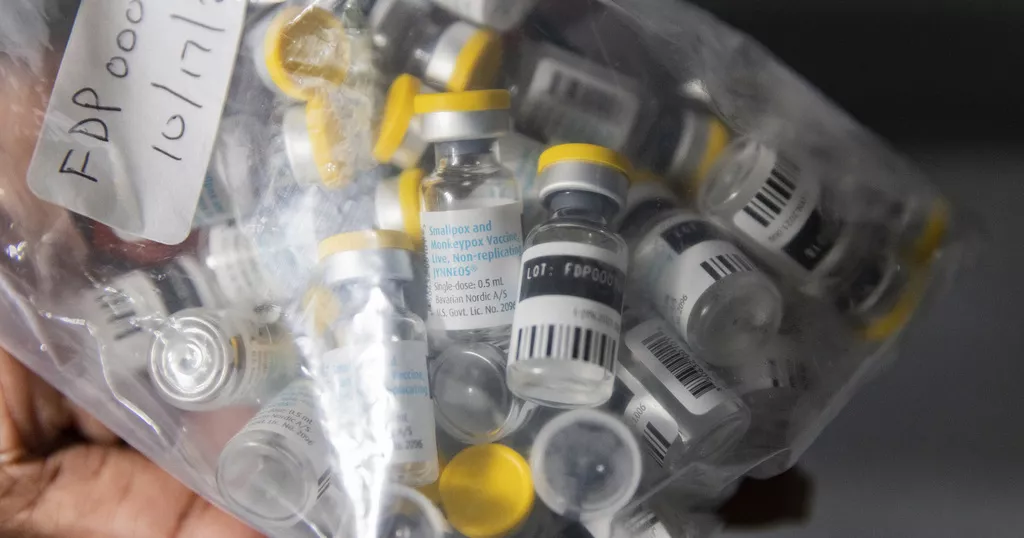
Malawi has begun screening for mpox at all ports of entry in a bid to prevent the spread of the virus. The move comes just days after the first two suspected cases were registered in the country and are currently awaiting laboratory test results. This includes a 31-year-old male who is being treated in hospital and a 17-year-old boy who is receiving care at home. The Democratic Republic of Congo (DRC) is the epicentre of a more deadly strain of the virus that emerged last year and has subsequently spread to more than 10 other African states. Just over a week ago, the World Health Organization declared the spread of the new strain of mpox a public health emergency of international concern. Africa’s top public health agency on Wednesday said some countries on the continent could start vaccinating against mpox within days. While Malawi says it is planning for a worst-case scenario, not everyone will be vaccinated against the virus. “It’s not given to just everyone like we are doing with the Covid-19 vaccine or other vaccines, this is only reserved for those who are at a very high risk,” says Adrian Chikumbe, spokesperson for the Malawi Ministry of Health. The decision to screen visitors to the country is part of a raft of preventative measures which includes an awareness campaign, especially through community health networks. It has also set up a mobile diagnostic unit at a hospital in the country’s capital, Lilongwe. “My advice to people is that, when you meet a person or see someone who has mpox, please avoid any contact with them and also avoid contact with any materials that people with mpox have used,” says community health worker, Carol Luka. Malawi is one of the few Southern African countries that have so far managed to avoid an a mpox outbreak.
Malawi beings screening for mpox at all points of entry Read More »

In preparation for the Magal pilgrimage in Touba on August 23, 2024, Senegalese authorities have introduced enhanced health measures to address the spread of mpox (formerly monkeypox). With millions of pilgrims expected, including many from abroad, approximately 6,000 healthcare professionals have been deployed. Given the recent rise in mpox cases across Africa, the focus is on rapid detection. Dr. Mamadou Dieng, the regional health director of Diourbel, detailed the measures, including training for surveillance teams and the installation of testing equipment at multiple locations. A total of 186 sites have been established for pilgrims showing symptoms. Testing will be managed by the Institut Pasteur, and quarantine zones have been set up. Dr. Dieng stressed the importance of personal responsibility, urging pilgrims to wash their hands frequently, avoid close contact, and wear masks in crowded areas. Although these measures may be difficult to adhere to, they are vital for preventing the disease’s spread.
Senegal: Health measures against mpox in place Read More »

Spain’s Prime Minister Pedro Sánchez visited the Canary Islands on Friday to meet with regional President Fernando Clavijo amid a surge in migrant arrivals and challenges in caring for thousands of unaccompanied minors. Sánchez’s minister for territorial policy and democratic memory, Ángel Victor Torres, who previously served as the regional president of the Canaries, spoke on behalf of Sánchez’s government after the meeting. Torres announced an additional 50 million euros in financial aid for the archipelago, building on previous support. While adult migrants typically leave the islands for mainland Spain or other European destinations, the regional government is responsible for unaccompanied minors. The Canary Islands are currently caring for over 5,000 children and teenagers who arrived alone or lost their parents during the perilous journey from West Africa. Sánchez and Clavijo agreed to pursue long-term solutions for irregular migration, particularly for unaccompanied minors. Torres noted that a proposed legal change to mandate solidarity among Spanish regions must pass through parliament. However, a similar attempt in late July was unsuccessful, with lawmakers rejecting a proposal to distribute unaccompanied minors among other regions. Sánchez’s visit comes just before his trip to Mauritania, Senegal, and Gambia to address migration issues at their sources. Between January and mid-August this year, over 22,300 migrants arrived in the Canary Islands, a 126% increase compared to the same period last year. On Friday, Spain’s Maritime Rescue Service reported rescuing 173 people, including six babies and eight women, and recovering two bodies from a boat near El Hierro. The Atlantic route from West Africa to the Canaries is among the world’s deadliest, with migrant rights group Walking Borders estimating thousands of fatalities due to the lack of precise departure data. Boats often disappear in the Atlantic or are found adrift in the Caribbean, carrying the remains of their passengers.
Spain pledges €50 million to tackle migrant crisis in the Canary Islands Read More »

WHO’s Tedros Adhanom Ghebreyesus calls for global unity to combat the mpox outbreak, emphasizing the need for international cooperation, research, and community engagement to control and eradicate the virus.
WHO: Mpox can be stopped with concerted action Read More »

Eritrean authorities released 31 Yemeni fishermen on Thursday after holding them for three days, according to Houthi-affiliated media. The Saba News Agency reported that the fishermen returned to the fishing port in Al Hudaydah province, which is under Houthi control. The fishermen revealed that Eritrean forces arrested them in Yemeni territorial waters while they were fishing in three boats and took them to Eritrean prisons at gunpoint. During their detention, the fishermen said “they were subjected to torture and starvation before being forced to return on a single boat, with the Eritrean forces confiscating the other two boats along with their fishing equipment,” the agency reported. There has been no official response from Eritrean authorities regarding the incident. For years, Yemen and Eritrea have been locked in a dispute over the Hanish Islands, located between the two countries’ coasts near the Bab al-Mandeb Strait, which links the Red Sea and the Gulf of Aden. In 1998, an international arbitration court ruled in favor of Yemen, but Eritrea has not fully acknowledged the ruling and frequently detains Yemeni fishermen near the islands. Many Yemenis in coastal cities rely on fishing for their livelihood amid deteriorating living conditions caused by the ongoing war in the country. Yemen has been embroiled in nearly a decade of conflict between government forces backed by a Saudi-led Arab coalition and the Iran-aligned Houthi rebels, who have controlled several provinces, including the capital Sanaa, since September 2014.
Eritrea releases 31 Yemeni fishermen after 3 days of detention Read More »

Rwandan authorities announced a ban Thursday on the activities of 43 faith groups across the country effective Aug. 28, weeks after thousands of illegal churches were closed. A letter issued by the Ministry of Local Government directed districts leaders to enforce the ban, saying an ongoing evaluation found the affected faith-based organizations operating in contravention of existing regulations. Most of the affected groups were of Pentecostal denominations, including the Lutheran Church, a member of the Lutheran World Federation established in the 1990s in Rwanda to continue the work of German missionaries. The move came weeks after authorities, in a major crackdown, closed over 5,000 churches accused of failing to comply with required legal standards and exposing the lives of worshipers to unnecessary risks. Authorities said 59.3% of over 13,000 churches inspected at the end of July were shut down due to non-compliance. It was the second major crackdown on places of worship in the country. In 2018, Rwandan authorities closed more than 700 churches found to be operating illegally. All preachers were also required to have theological training before opening a church under the law determining the organization and functioning of faith-based organizations in the country. The government had given church leaders five years to enforce the necessary legal standards, something that many reportedly failed to do. A large number of Rwandans, or about 40% of the population, belong to the Roman Catholic Church. But the number of Pentecostal churches has been growing in recent years in many parts of the African continent, mostly run by charismatic preachers who preach the prosperity gospel — promising their followers miracles to change their fortunes. However, authorities have become suspicious of the intentions of some religious groups. Rwandan President Paul Kagame, commenting on the crackdown on churches this month, suggested that some clerics under the cover of God manipulate and fleece their followers. He also suggested the need to introduce a tax on church collections.
Rwanda announces ban on over 40 religious groups Read More »