Africa

Egyptian pound falls against foreign currencies

The Egyptian pound is declining against foreign currencies, nearing 50 per U.S. dollar following recent hikes in metro fares and fuel prices. On Tuesday, the currency was valued at 49.16 per U.S. dollar, according to the Central Bank of Egypt. After fluctuating between 47 and 48 per dollar in June and July, the pound has lost approximately 60% of its value since its initial public offering in March, falling to around 30 per dollar. This new exchange rate comes a week after the International Monetary Fund (IMF) completed its third review of Egypt’s financial situation, authorizing the release of $820 million as part of an $8 billion bailout package. This loan aims to support Egypt’s struggling economy, which faces challenges such as a foreign currency shortage, soaring inflation, and unrest in the Red Sea due to attacks by Yemen’s Houthi rebels. The IMF noted last week that while inflation remains high, it is decreasing, and a flexible exchange rate is central to the country’s economic strategy. Egyptians are dealing with significant inflation, with the oil ministry recently announcing a 10% increase in fuel prices. The last fuel price hike occurred in March, attributed to rising costs due to Red Sea attacks and the currency’s depreciation. The Houthis have targeted commercial ships in the Red Sea in response to Israel’s actions in Gaza, impacting global trade routes. Oil, natural gas, and grain passing through these sea lanes are crucial to the Suez Canal, which handles 12% of world trade. Additionally, Cairo Metro fares increased last week, now ranging from 2 to 5 Egyptian pounds, as reported by the National Tunnels Authority. This fare increase aligns with Egypt’s agreement with the IMF to double its bailout, which now totals $8 billion. The price adjustments are part of the conditions set by the IMF for continued financial aid.

Egyptian pound falls against foreign currencies Read More »

Global wind energy plans fall short of reaching the 2030 target

Countries aim to increase global wind energy capacity 2.4-fold by 2030, but national plans fall short of the UN’s COP28 commitment to triple global renewable energy capacity. London-based think tank Ember analyzed the 2030 wind energy targets of 70 countries and the EU, which account for 99% of the current installed wind capacity, to see if they align with the COP28 goal. The report found that while national targets would double global wind capacity by 2030, they are insufficient to meet the COP28 pledge. Current targets would expand wind energy capacity from 901 gigawatts at the end of 2022 to 2,157 gigawatts by 2030. Achieving the tripling goal requires an additional 585 gigawatts worldwide. Most of the expected increase will come from China, which is projected to triple its wind capacity by 2030 and account for over half of the global increase in wind capacity from 2024 to 2030. However, the U.S. and India face significant gaps between their current targets and the needed increase. Not all countries are falling short. Brazil needs to build 0.3 gigawatts of new wind capacity annually from 2024 to 2030 to meet its 2030 targets. Last year, Brazil set a record by adding 5.3 gigawatts of wind capacity, and the IEA predicts it will add an average of 2.4 gigawatts annually until 2030. Turkey has nearly achieved its goal of generating 12% of its electricity from wind by 2030 and has the potential to set higher targets. Ember Electric Analyst Katye Altieri noted, “Governments are not ambitious or proactive enough, especially in onshore wind capacity. Despite its role in providing cheap electricity and complementing solar energy, wind energy isn’t receiving adequate attention.” Ben Backwell, CEO of the Global Wind Energy Council (GWEC), emphasized that wind energy must be central to the clean energy transition. “Every gigawatt installed is a step towards a greener world. Targets play a crucial role in guiding our direction, but only real actions that meet these targets can effectively address climate change, drive clean industry, and ensure secure energy,” he said.

Global wind energy plans fall short of reaching the 2030 target Read More »

Tunisia’s president fires prime minister, appoints successor

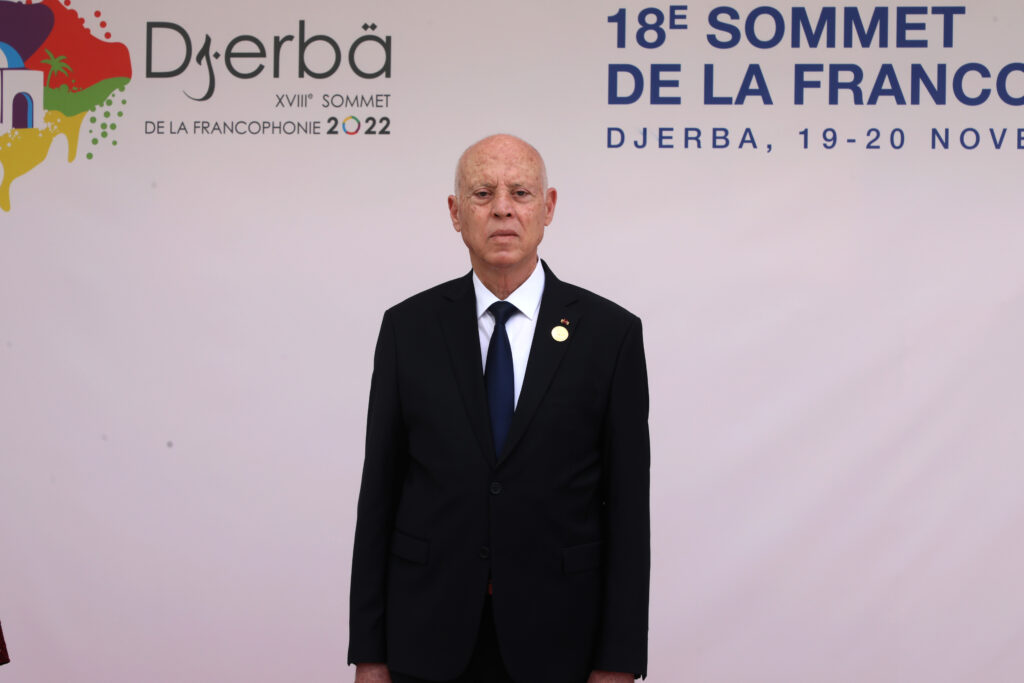
Tunisian President Kais Saied dismissed Prime Minister Ahmed Hachani on Wednesday, just a year into his tenure. Saied appointed Kamel Maddouri, the Minister of Social Affairs, as the new Prime Minister, according to a presidential statement. Hours before his dismissal, Hachani claimed in a video message that the government had made progress despite challenges with high food and energy prices. The dismissal comes amid widespread discontent over water and electricity outages across the country. The government blames these issues on a severe drought, leading to water rationing. The agriculture ministry reports that dam levels are critically low at 25 percent, while Saied views the water shortages as a conspiracy against him, asserting that the dams are actually full. Saied has announced his intention to run for president in October, facing strong opposition and criticism from human rights organizations and rivals who accuse him of suppressing and intimidating opponents to secure a second term.

Tunisia’s president fires prime minister, appoints successor Read More »

South Africa to enact national health insurance bill despite opposition

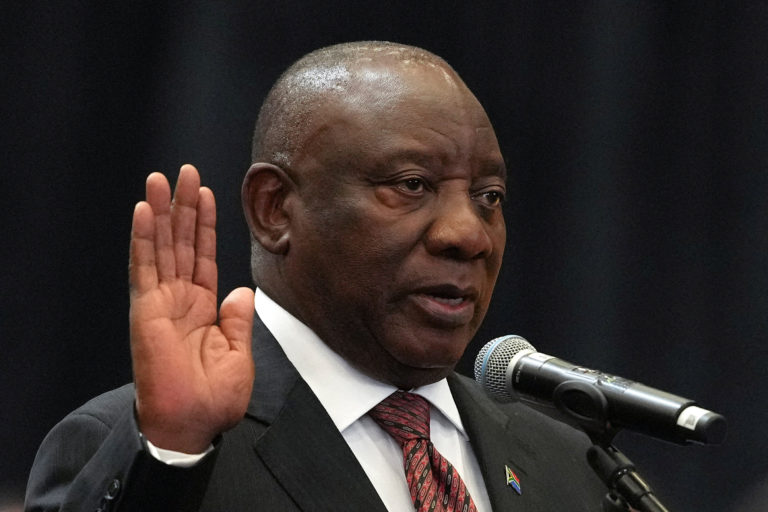
South Africa’s President Cyril Ramaphosa has pledged to advance the National Health Insurance (NHI) Bill despite significant opposition. He signed the contentious Bill into law just before his party, the African National Congress, lost its parliamentary majority in May. The NHI aims to overhaul the country’s two-tier healthcare system to provide universal coverage and gradually reduce the role of private health insurance, currently held by fewer than 16% of South Africans. While supporters view the Bill as a step towards addressing apartheid-era inequalities, critics argue that the funding model is flawed and fear that corruption and budget constraints may hinder its success. On the final day of the ANC policy meeting, Health Minister Aaron Motsoaledi announced that some sections of the Bill would be implemented immediately, including forming advisory committees and updating health laws. However, he acknowledged that the full rollout would be phased over several years and might face delays due to legal challenges.

South Africa to enact national health insurance bill despite opposition Read More »

World Bank: 100+ Countries Trapped in “Middle-Income Trap”

The World Bank announced on Thursday that over 100 countries risk falling into a “middle-income trap” unless they implement bold economic growth strategies. Countries such as South Africa, India, Brazil, and China face significant challenges that could impede their progress toward becoming high-income nations in the coming decades. The World Development Report 2024: The Middle Income Trap reveals that as countries become wealthier, they often encounter a “trap” when their GDP per capita reaches approximately 10 percent of the annual US GDP per person. Somik Lall, Senior Advisor to the World Bank Group Chief Economist and Director of the report, noted that the outlook for these countries is bleak. “Over the past 30 years, only 34 middle-income economies have successfully transitioned to high-income status, while others remain trapped,” he said. The study highlights that middle-income countries face tougher challenges compared to their predecessors, including rapidly aging populations, increasing protectionism in advanced economies, and the urgent need for faster energy transitions. It presents a “comprehensive roadmap” to help developing countries escape the “middle-income trap” and achieve high-income status. Lall suggests that countries should abandon outdated methods and adopt a “3i strategy” involving a phased approach with progressively sophisticated policies tailored to their development stage. Low-income countries should focus initially on investment policies (the 1i phase). As the benefits of investment diminish, they should then shift to “infusion,” incorporating global ideas and integrating them into local economies. For upper-middle-income countries, the final phase involves “innovation,” where they strive to become global leaders and producers. Lall emphasized that success will depend on how well societies manage the balance between creation, preservation, and destruction. “Countries that avoid the discomfort of reforms and openness will miss out on the benefits of sustained growth,” he concluded.

World Bank: 100+ Countries Trapped in “Middle-Income Trap” Read More »

Pope Francis renews appeal to avoid escalation in Middle East

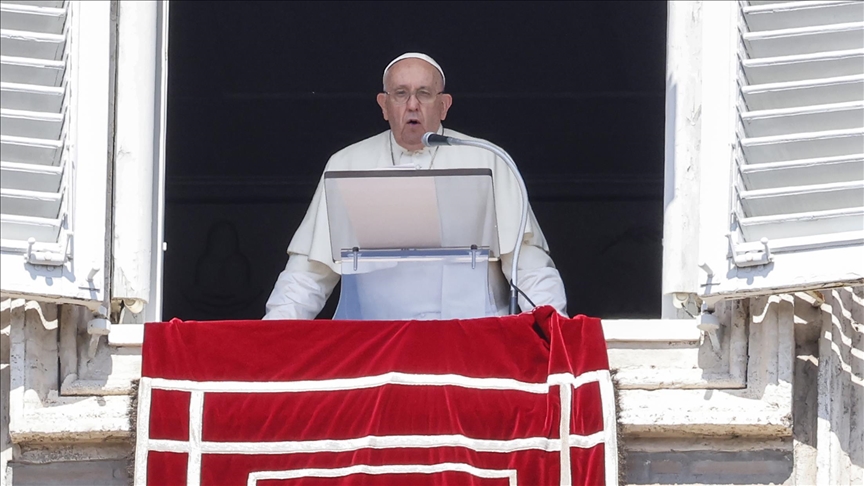
Pope Francis on Wednesday renewed his appeal to avoid escalation of conflict in the Middle East, Vatican News reported. “I reiterate my appeal to all parties involved to ensure that the conflict does not spread and to immediately cease fire on all fronts, starting from Gaza where the humanitarian situation is extremely serious and unsustainable,” the pontiff said while addressing the weekly general audience. “I pray that the sincere search for peace will extinguish strife, love will overcome hatred and revenge will be disarmed by forgiveness,” he added. Israel has killed nearly 40,000 Palestinians in Gaza since the Oct. 7, 2023 Hamas incursion. The relentless military campaign has levelled much of the territory and left most of the people homeless, and hungry.  Tensions have grown after the assassination of Hamas leader Ismail Haniyeh in Iran’s capital Tehran on July 31. Iran and Hamas have blamed Israel, which has neither confirmed nor denied responsibility. The pope also asked the faithful to join his prayers for the “war-torn peoples” of Ukraine, Myanmar and Sudan.

Pope Francis renews appeal to avoid escalation in Middle East Read More »

Six people die from food poisoning in Nigeria

In Nigeria’s Kogi State, six people have died from food poisoning. According to national reports, individuals who consumed the local dish “amala” at a home in the Anyoke area of Kogi State were affected. Six of those poisoned died at the residence. Kogi State Health Commissioner AbdulAzzez Adams Adeiza stated that two others from the same household were hospitalized with symptoms of vomiting and abdominal pain. A health committee has been established to investigate the incident, and food samples have been collected for analysis.

Six people die from food poisoning in Nigeria Read More »

Africa hosts Astronomical Union General Assembly for first time

The International Astronomical Union (IAU), celebrating its 105th anniversary, is holding its General Assembly in Africa for the first time this year. Cape Town, South Africa, is hosting the IAU’s 32nd General Assembly from August 6-15. The event, taking place at the Cape Town International Convention Centre, brings together over 2,000 scientists and researchers from 82 countries, including Turkey. The assembly features more than 200 sessions covering the latest developments in astronomy. Topics include innovations from the James Webb Space Telescope, new techniques for discovering planets, combating light pollution, and astronomy’s role in global development. This year’s assembly is notable as the first to be held in Africa in the IAU’s 105-year history. The IAU General Assembly, a major scientific meeting in astronomy, has been held every three years since 1919, except during World War II.

Africa hosts Astronomical Union General Assembly for first time Read More »

Scroll to Top