Africa

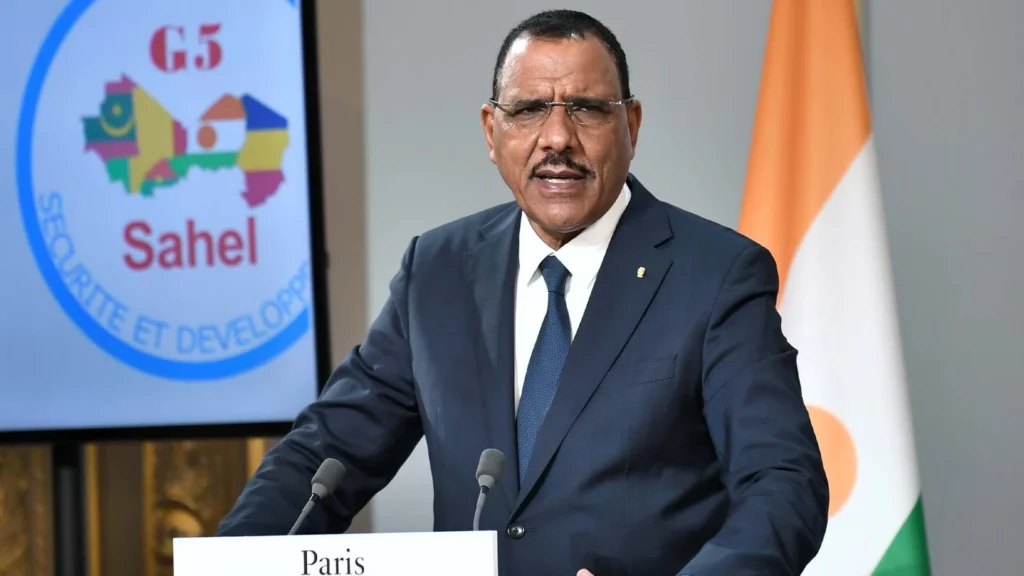
Mohamed Bazoum remains defiant despite detention

A year ago, Mohamed Bazoum was ousted in a military coup led by General Tiani, who seized control of Niger with army backing. Since then, the military has entrenched its authority by curbing freedoms, suspending political parties, and silencing dissent. There is no set timeline for restoring civilian rule, and Niger has distanced itself from Western allies while aligning more closely with Russia. Bazoum and his wife, Hadiza, have been under detention at the presidential residence since October, cut off from the outside world except for regular visits from his doctor. He has no phone and is under constant guard, with his doctor bringing him food and books. Despite these harsh conditions, Bazoum remains resolute in refusing to resign. A former philosophy professor, he finds solace in reading extensively, from classic authors like Shakespeare and Tolstoy to contemporary figures like Romain Gary. He also reads political texts, including Dominique Moïsi’s “The Triumph of Emotions.” Even after a bout of malaria weakened him in the spring, Bazoum remains determined. He refuses to step down, despite the recent lifting of his presidential immunity, which could lead to a trial.

Mohamed Bazoum remains defiant despite detention Read More »

Tshisekedi criticizes Ruto on Nairobi process

DRC President Félix Tshisekedi has criticized Kenyan President William Ruto for mishandling the Nairobi Process, which was intended to facilitate dialogue with armed groups in eastern DRC. Tshisekedi accused Ruto of aligning with Rwanda, which he believes has stalled the initiative. The Nairobi Process, originally launched by former Kenyan President Uhuru Kenyatta, aimed to support disarmament and demobilization. Despite several meeting cycles, progress has stalled since the third round in December 2023. Tshisekedi’s criticism highlights the growing tensions between the DRC and Kenya. Kinshasa has previously expressed dissatisfaction with the East African Community (EAC) force’s handling of the M23 rebellion, accusing it of inadequate action. The situation worsened when Nairobi announced the formation of the Congo River Alliance (AFC), a political-military group associated with the M23. Kenya’s refusal to arrest AFC leader Corneille Nangaa led the DRC to recall its ambassadors to Kenya and the EAC for consultations.

Tshisekedi criticizes Ruto on Nairobi process Read More »

Photo Gallery: Daily Life in Tanzania

Daily Life in Tanzania Daily life in Tanzania reflects the country’s cultural diversity and geographical differences. Here are some key points about daily life in Tanzania: Nature and Activities: Tanzania is renowned for its natural beauty. Outdoor activities such as safaris, mountain climbing (especially Mount Kilimanjaro), and beach activities are popular among both locals and tourists. Cultural Diversity: Tanzania is a rich mosaic of various ethnic groups. This diversity is evident in everything from food to music and clothing. Cuisine: Tanzanian cuisine typically includes maize, rice, sweet potatoes, bananas, and various meats and seafood. In the northern regions, especially Zanzibar, spices and seafood are prominent. Daily Life: In cities, people usually rise early and spend their days working, studying, or engaging in other activities. In rural areas, life tends to be more traditional and agriculture-based. Farming, particularly maize and coffee production, is a primary livelihood for many. Transportation: In cities and rural areas, public transportation options include buses, shared minivans, and motorcycle taxis (boda-boda). These are common for city commuting. Education and Health: Education and healthcare services are more developed in cities, while rural areas may have limited access. Education is provided through both public and private schools. Healthcare services are offered by public hospitals and private clinics. Social Life: Tanzanians are social and hospitable. Family events, community celebrations, and religious ceremonies are integral parts of daily life. Religious festivals, particularly among Christians and Muslims, are widely celebrated. Markets: In cities and villages, markets are popular places to buy fresh fruits, vegetables, food items, and other goods. Markets also serve as important social hubs. Clothing: Clothing styles vary depending on the region and culture. In cities, modern and Western-style clothing is common, while traditional attire is more prevalent in rural areas. Climate and Lifestyle: Due to the tropical climate, daily life is often adjusted to warm and humid conditions. The dry and rainy seasons significantly influence lifestyle.

Photo Gallery: Daily Life in Tanzania Read More »

The UN is sending a short mission to aid in CAR’s local election

Preparations are underway in the Central African Republic for local elections in October, the first in over 36 years. MINUSCA, the UN peacekeeping mission, is playing a crucial role in this process. According to spokesperson Florence Marchal, MINUSCA will support the review of the electoral register by deploying 104 tonnes of equipment and transporting 384 people. The mission is also providing $1.3 million for electoral roll revision and advocating for additional resources and the participation of women and youth. In addition to logistical support, MINUSCA’s involvement includes political efforts to ensure an inclusive and peaceful electoral process. The mission is collaborating with national forces to develop an election security plan and aims to register around 800,000 new voters from a total of 2 million, updating the roll since its last revision in 2020. This effort aligns with the 2019 Political Agreement for Peace and Reconciliation, which seeks to decentralize the peace process.

The UN is sending a short mission to aid in CAR’s local election Read More »

Namibia imposes visa on 33 countries, including USA and UK

The South African country of Namibia has introduced visa requirements for citizens of 33 countries, including the USA, UK, and EU member states. Namibia’s Deputy Minister of Home Affairs, Lucia Witbooi, announced that from April 1, 2025, citizens of 33 countries—including the USA, Germany, the UK, France, Italy, Canada, Austria, Ireland, Australia, Japan, the Netherlands, Brazil, and Azerbaijan—will need a visa to enter Namibia. Witbooi explained that the visa requirement was being implemented because many countries that Namibia had granted visa-free access to for 33 years had not reciprocated, though the reasons for this were unclear. The decision has been met with backlash from representatives of Namibia’s tourism sector, which is a major source of income for the country. Namibia, known for its natural attractions like the Namib Desert and Etosha National Park, is predominantly visited by tourists from Western countries. Currently, Turkey and Namibia also have reciprocal visa requirements. With the new regulation, the visa application fee will increase from $65 to $86, based on the current exchange rate of the Namibian dollar.

Namibia imposes visa on 33 countries, including USA and UK Read More »

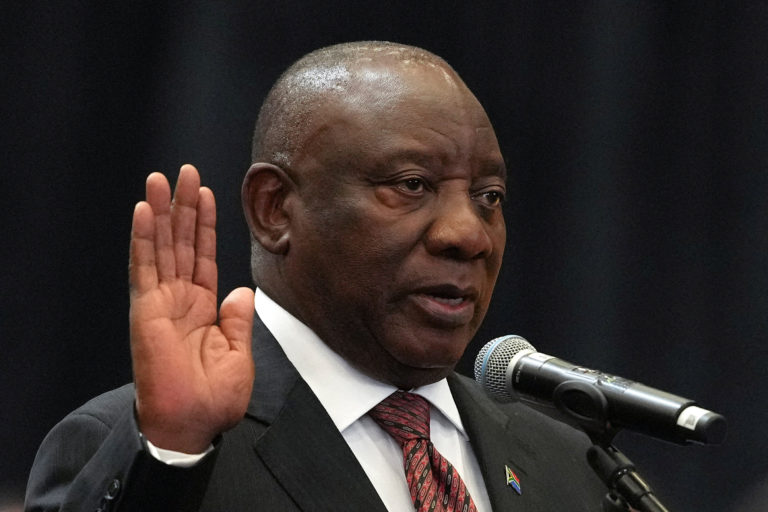
South Africa: DA wants ANC punished for Ramaphosa speech

South Africa’s Democratic Alliance took the African National Congress, the party it co-governs the country with, to court Thursday over a preelection speech in May given by President Cyril Ramaphosa. It’s an early sign of friction between the new coalition partners. The court papers were submitted to the Electoral Court by the DA in May before it entered into a coalition with the ANC, but it decided to still go ahead with the case. The DA asked the court to deduct 1% of the vote received by the ANC in the May 29 national election and fine Ramaphosa, the ANC leader, $10,900 and his party $5,450, over what it argues was a presidential address that was used for election campaigning and amounted to an abuse of office. The ANC responded Thursday by calling the DA’s legal action “frivolous and unwarranted” and said the president was following the constitution when he made the speech. Ramaphosa gave the speech three days before the election in his capacity as head of state, but used parts of it to highlight what he said were ANC successes during its 30-year rule as South Africa’s governing party. The DA said that election rules don’t allow him to engage in party politics and campaign for the ANC when he speaks as the president. The ANC lost its long-held majority in the historic election when it received just 40% of the vote. That forced it to create a coalition government for the first time to run Africa’s most industrialized country. The DA — the second biggest party with 21% of the vote — is one of seven parties represented in Ramaphosa’s Cabinet despite previously being the ANC’s fiercest critic. The coalition, referred to as a “government of national unity,” created a new political landscape for South Africa after the ANC had governed since the end of the apartheid system of white minority rule in 1994. The election was the first time in South Africa’s young democracy that more people voted for other parties, stripping the organization once led by Nelson Mandela of its dominance. The left-leaning ANC and the centrist DA are the key parties in the coalition but them working together was seen as unlikely given their stark ideological differences and history of opposition to each other. They have largely managed to project a sense of unity over the last month since the coalition was agreed.

South Africa: DA wants ANC punished for Ramaphosa speech Read More »

Head of Zambia’s Independent Broadcasting Authority found dead

The head of Zambia’s Independent Broadcasting Authority (IBA), who had gone missing the day before, was discovered dead on Wednesday with two bullet wounds in the head and back. The government has ordered police to conduct a prompt investigation into the death of Guntila Muleya, for whom the family started searching on Tuesday after he failed to return to his home. “The government has asked the police to quickly and thoroughly investigate the circumstances surrounding this unfortunate death,” Thabo Kawana, the permanent secretary in the Ministry of Information and Media, told reporters in the capital Lusaka. Muleya’s family became concerned on Tuesday night, around 9:00 p.m. local time, when he did not return home, and they began looking for him, Kawana said. “His body was discovered later today (Wednesday) in the Njolwe area with two gunshot wounds,” he said. Separately, Zambia police spokesman Rae Hamoonga said at around 10:30 a.m. local time, police received a phone call from a concerned member of the public in the Njolwe area on Lusaka’s outskirts, who reported that during the night of Tuesday at around 20:00 hours, he saw a jeep with its doors open and then heard two gunshots. “This morning (Wednesday) at approximately 10:00 a.m., on his way to work, he (the caller) discovered the body of a deceased on the ground with two bullet wounds on the back and head. “A closer examination revealed a deep bullet wound in the forehead. Two bullet cartridges were recovered at the scene,” Hamoonga explained. He said a murder case has been registered, and that investigations are currently underway.

Head of Zambia’s Independent Broadcasting Authority found dead Read More »

Scroll to Top