Africa

Sierra Leone court finds 11 involved in alleged coup guilty

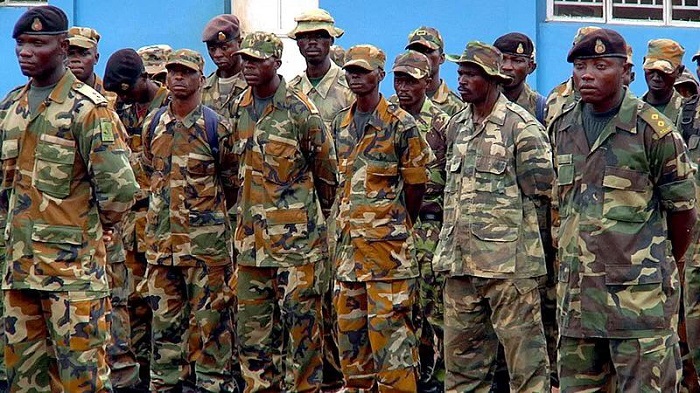
In Sierra Leone, a court has delivered verdicts against 11 individuals charged with treason and related offenses in connection with what authorities termed an attempted coup. The leader of the group, Amadu Koita Makalo, received a staggering sentence of 182 years in prison for charges including treason, murder, and attempted murder, according to Moses Lamin Kamara, spokesperson for the judiciary. The incident in November involved a group of gunmen who raided the country’s armory and a prison, resulting in the release of over 2,000 inmates and the tragic deaths of 18 security personnel. Authorities arrested approximately 80 suspects, with a dozen formally charged in January. Among those charged was former president Ernest Bai Koroma, who was later granted medical leave. Amadu Koita Makalo, formerly a bodyguard of Koroma and a vocal critic of current President Julius Maada Bio on social media, was identified as the mastermind behind the attack. Alongside Makalo, the other 10 defendants were also found guilty of treason and murder, receiving sentences ranging from 30 to 112 years in prison. Ernest Bai Koroma, although officially retired from active politics, continues to wield influence within his political party. Many of those implicated in the attack were reportedly former associates of the ex-president, as noted by Information Minister Chernor Bah. Sierra Leone has experienced heightened political tensions since President Bio’s reelection last year, which the opposition alleged was marred by electoral fraud. In the aftermath of Bio’s reelection, authorities apprehended several individuals, including senior military officers, who were purportedly planning protests aimed at destabilizing peace in the country. The nation remains in the process of recovery from a devastating 11-year civil war that concluded over two decades ago. Sierra Leone, with a population of 8 million, ranks among the world’s poorest nations. Nearby Guinea has also been grappling with political instability following a coup in 2021, contributing to regional concerns. The developments underscore ongoing challenges in governance and stability across West Africa, amid efforts to address socio-economic disparities and promote lasting peace.

Sierra Leone court finds 11 involved in alleged coup guilty Read More »
Rescue efforts ongoing after Southern Ethiopia’s deadly mudslide

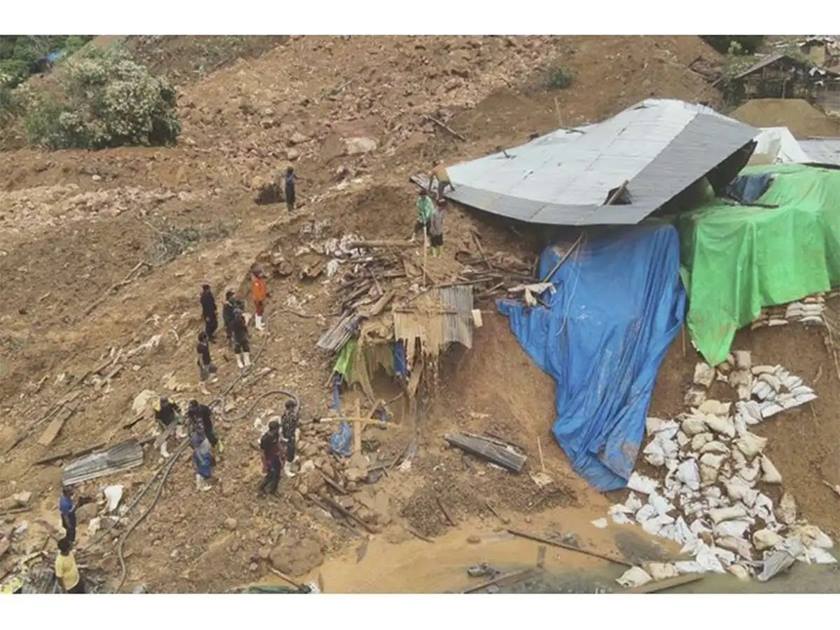
The search for survivors of a devastating mudslide in southern Ethiopia, which has tragically claimed the lives of at least 229 people, continued on Tuesday. The death toll, initially reported at 55, rose significantly, with local authorities confirming that many of the deceased were individuals who had bravely attempted to rescue others. The disaster struck Ethiopia’s remote Kencho Shacha Gozdi district following heavy rains. Among the victims were young children and pregnant women. Despite the grim toll, there have been at least five survivors rescued, according to Dagmawi Ayele, a local administrator. Prime Minister Abiy Ahmed expressed his condolences on Facebook and announced the activation of the federal disaster prevention task force to aid in ongoing search and rescue operations. The exact number of people still missing remains unknown. On Monday, funerals were held for numerous victims while rescue teams continued to comb through the rugged terrain affected by previous mudslides. Authorities from the communications office in Gofa Zone, where the mudslides occurred, confirmed that search efforts were ongoing. Markos Melese, director of the disaster response agency in Gofa Zone, noted that several rescuers themselves remain unaccounted for. Amidst the rescue operations, emotional scenes unfolded as onlookers witnessed rescuers using shovels to clear away thick mud in hopes of finding survivors. Landslides are a recurring hazard during Ethiopia’s rainy season, which spans from July to mid-September.

Rescue efforts ongoing after Southern Ethiopia’s deadly mudslide Read More »

Somali forces kill dozens of militants in retaliatory strike

Officials reported that dozens of al-Shabab militants were killed in recent clashes in southern Jubaland state. The clashes occurred following three coordinated attacks by militants on military bases held by federal and regional forces west and south of Kismayo town. Bulo Haji, Harbole, and Mido were among the bases seized from al-Shabab in the past month. The militants also targeted a fourth base at Bar Sanguni, apparently aiming to disrupt potential reinforcements. Major Mohamed Farah Dahir, spokesperson for Jubaland regional forces, told VOA Somali that 135 militants were killed in the attacks. “In total, we confirmed 135 killed,” he said. “We have also recovered weapons from the deceased. … I have never witnessed such a large number of casualties in one location in my life.” He stated that at least six militants were captured alive. He also noted that the most significant loss of life occurred in Bulo Haji. However, the federal government, which has troops stationed at the attacked bases, provided a different count of casualties. In a prepared statement, the federal Ministry of Information asserted that all assaults were repelled and over 80 militants were killed. Social media accounts have released purported video clips and photos showing numerous dead bodies. Al-Shabab asserted that their militants successfully took control of the bases and claimed that more than 70 soldiers were killed in their assaults. The casualty figures and video clips presented by both sides have not been independently verified by VOA. Al-Shabab has been battling to remove Somalia’s central government in Mogadishu for nearly twenty years. The government has partnered with local clan militias to combat the Islamist insurgents in an ongoing effort bolstered by African Union troops and U.S. air strikes. In the meantime, the Somali government has honored a prison guard with a medal for bravery who was killed after he refused to give the keys to militant prisoners during an attempted jailbreak at Mogadishu’s central prison on July 13th.

Somali forces kill dozens of militants in retaliatory strike Read More »

Uganda police out in force ahead of anti-graft rally

Police were out in force on the empty streets of the Ugandan capital Kampala on Tuesday ahead of a planned anti-corruption rally that has been banned by the authorities. President Yoweri Museveni, who has ruled the East African country with an iron fist for almost four decades, had warned the demonstrators at the weekend they were “playing with fire.” Three opposition lawmakers were remanded in custody late Monday, police said, after opposition leader Bobi Wine said his National Unity Platform (NUP) headquarters was “under siege” by police and army officers. The call to action over corruption has been organized online, drawing inspiration from the mostly Gen-Z led anti-government protests in neighboring Kenya that have roiled the country for a month. “We are the youths and heart of our country and we are not letting down our country,” leading Ugandan protester Shamim Nambasa told AFP on Monday. Posters shared online ahead of the rallies urged demonstrators to “march on parliament.” But police spokesman Kituuma Rusoke said the authorities will “not allow a demonstration that will risk peace and security of the country.” In the capital, AFP journalists said there were roadblocks on mostly quiet streets, especially near Kampala’s business district, heavily manned by officers in anti-riot gear with some wearing camouflage uniforms. A heavy police presence also remained in place around the NUP headquarters, an AFP journalist said. On Monday three lawmakers with the opposition group were detained by police on “various offenses and remanded to prison,” according to the police spokesperson who did not give further details on the charges.  Wine, whose real name is Robert Kyagulanyi, had made calls on Monday to support the rallies. “We want a country where we all belong not for the few in power,” he said. A NUP spokesperson confirmed three legislators, named as Francis Zaake, Charles Tebandeke and Hassan Kirumira, along with seven others connected to the party, had been detained. Tuesday’s march has been organized on social media by young Ugandans with the hashtag #StopCorruption. Graft is a major issue in Uganda, with several major scandals involving public officials, and the country is ranked a lowly 141 out of 180 countries on Transparency International’s corruption index.

Uganda police out in force ahead of anti-graft rally Read More »

Niger: IMF approves $71 million disbursement

Niger will receive new loans from the IMF to implement reforms aimed at reducing risks to future balance of payments stability and addressing long-standing balance of payments challenges. The IMF’s Executive Board concluded the Fourth and Fifth Reviews of Niger’s economic program supported by the Extended Credit Facility (ECF) and the First Review under the Resilience and Sustainability Facility (RSF) on Wednesday. This milestone enabled immediate disbursements of SDR 19.74 million (approximately US$ 26 million) under the ECF, bringing total disbursements to SDR 157.92 million (about US$ 210 million), and SDR 34.216 million (about US$ 45 million) under the RSF. Niger’s ECF was approved in December 2021 and supplemented by the RSF in July 2023. Both arrangements were extended by six months until December 2025 to provide adequate time for implementing critical reforms and supporting fiscal consolidation efforts. While program implementation was generally on track by late June 2023, it was disrupted by a political crisis in the country, resulting in the accumulation of arrears in external and domestic debt service payments.

Niger: IMF approves $71 million disbursement Read More »

Nigeria probes alleged import of contaminated fuel

On Monday, Nigerian lawmakers launched an inquiry into allegations of polluted fuel imports, aiming to address conflicts involving Aliko Dangote’s oil refinery and regulatory authorities. Chairman Ikenga Ugochinyere disclosed that the legislative committee is investigating claims of unregulated licensing and the absence of international standard laboratories linked to the contaminated products in Abuja. Aliko Dangote, President/CEO of Dangote Industries Limited, defended his position, expressing regret over the challenges faced but stressing the necessity to persevere through ongoing projects. The committee urged the parties in Nigeria’s petroleum sector to reduce tensions that have been heightened in recent weeks by allegations from the regulator that Dangote was trying to monopolize the market and that his refinery’s products are of poor quality. Dangote claimed that the mafia in the oil industry is more dangerous than the mafia involved in drugs.  He emphasized that while you may have some knowledge of your opponents in the drug trade, the oil mafia operates in secrecy both internally and externally.  He expressed his certainty that they may even have insiders aiding them in their operations.  Dangote also lamented the fact that Nigeria has been struggling with fuel queues since 1972, calling it a national shame. The largest refinery in Africa, located in Lagos, has a capacity of 650,000 barrels per day.  Despite being hailed as a game-changer by officials, the $19 billion facility has faced a slow start since opening over a year ago.  Due to challenges in sourcing crude oil locally, the refinery has had to rely on imports from other countries, highlighting Nigeria’s struggles with oil theft and corruption. The refinery’s senior executive has also alleged that international oil companies in Nigeria are scheming to cause the refinery to fail.  Devakumar Edwin, a vice-president of Dangote Industries, claimed that the companies are either intentionally demanding an exorbitant premium or stating that crude is not available. Farouk Ahmed, the chief executive of the regulatory agency, expressed concerns about Dangote’s request to suspend or stop the importation of petroleum products, citing potential market monopoly.  However, Dangote refuted these claims and welcomed lawmakers to inspect the plant where its products were tested.  He also clarified that he did not receive any incentives from the Nigerian government for the refinery and announced the cancellation of plans to invest in the steel industry.  The origin of the dispute between Nigerian authorities and Dangote, whose companies dominate various markets, remains unclear.  This conflict emerged after President Bola Tinubu succeeded Muhammadu Buhari, a close ally of Dangote, following last year’s presidential election.  Analysts warn that such disputes could deter foreign investments and destabilize Nigeria’s economy.  Nigerian economist Bismarck Rewane criticized allegations of low-quality products from the refinery, deeming them baseless without evidence or consumer complaints, suggesting deeper underlying issues.

Nigeria probes alleged import of contaminated fuel Read More »

Mali’s ‘king of kora’ Toumani Diabate dies at 58

Mali’s celebrated “king of kora,” Toumani Diabate, passed away on Friday at the age of 58 following a brief illness, according to an announcement from his family on social media. Diabate, a renowned master of the kora—a traditional West African stringed instrument—died at a private clinic in Bamako, the capital of Mali. Born in 1965 into a family of griots, Diabate was deeply rooted in Mali’s rich cultural heritage, serving as a guardian of the nation’s oral histories and traditions. Throughout his career, Diabate was celebrated for his extraordinary skill and innovative approach to the kora. His ability to seamlessly blend traditional Malian music with contemporary influences earned him acclaim both in Africa and internationally.  The news of his passing has led to a wave of tributes from across the West African music scene. Fellow musicians and admirers have praised Diabate for his profound impact on the music world. His contributions were recognized for bridging the gap between ancestral traditions and modern music, making a lasting imprint on Mali’s cultural landscape.

Mali’s ‘king of kora’ Toumani Diabate dies at 58 Read More »

ECOWAS allocated $14M for humanitarian aid

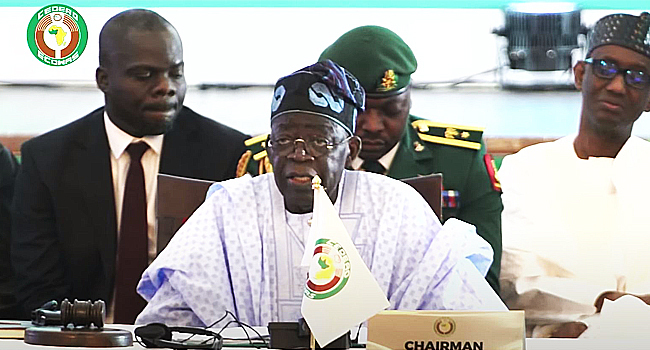
The Economic Community of West African States (ECOWAS) has reported allocating $14 million over one year to support humanitarian efforts in the region and combat terrorism. According to a statement by Ajuri Ngelale, Special Advisor to Nigerian President Bola Ahmed Tinubu, Tinubu attended the “African Union 6th Mid-Year Coordination Meeting” held in Accra, Ghana’s capital. President Tinubu, who is also the ECOWAS Chair, mentioned during the meeting that ECOWAS has allocated $14 million to support humanitarian efforts and counterterrorism in the region. He also noted that ECOWAS is exploring other financing options for its $2.6 billion Contingency Force. Tinubu highlighted that ECOWAS faces various challenges such as terrorism, food insecurity, and climate change, and mentioned that the organization will continue dialogue with Burkina Faso, Mali, and Niger, who have decided to leave ECOWAS, and will convene an “Extraordinary Special Summit” on the future of the Community. Tinubu did not announce the summit date but indicated that leaders would discuss ongoing negotiations with Niger, Mali, and Burkina Faso regarding their decision to leave ECOWAS. Burkina Faso, Mali, and Niger, who decided to leave ECOWAS and formed the Alliance of Sahel States (AES), held their first summit in Niamey, Niger’s capital, on July 6th. During the summit, they signed a joint declaration to establish the “Confederation of Sahel States,” comprising the three countries, and elected Malian President Assimi Goita as the AES Chair for a one-year term.

ECOWAS allocated $14M for humanitarian aid Read More »

Scroll to Top