

Global outcry over Mozambique’s post-election violence
The international community is expressing deep concern over the violent crackdown on protests in Mozambique.
Global outcry over Mozambique’s post-election violence Read More »
The international community is expressing deep concern over the violent crackdown on protests in Mozambique.
Global outcry over Mozambique’s post-election violence Read More »

Mozambique’s opposition leader, Venancio Mondlane, claims that 50 people were killed by security forces during post-election protests.
Mozambique Mondlane demands justice for fallen protesters Read More »
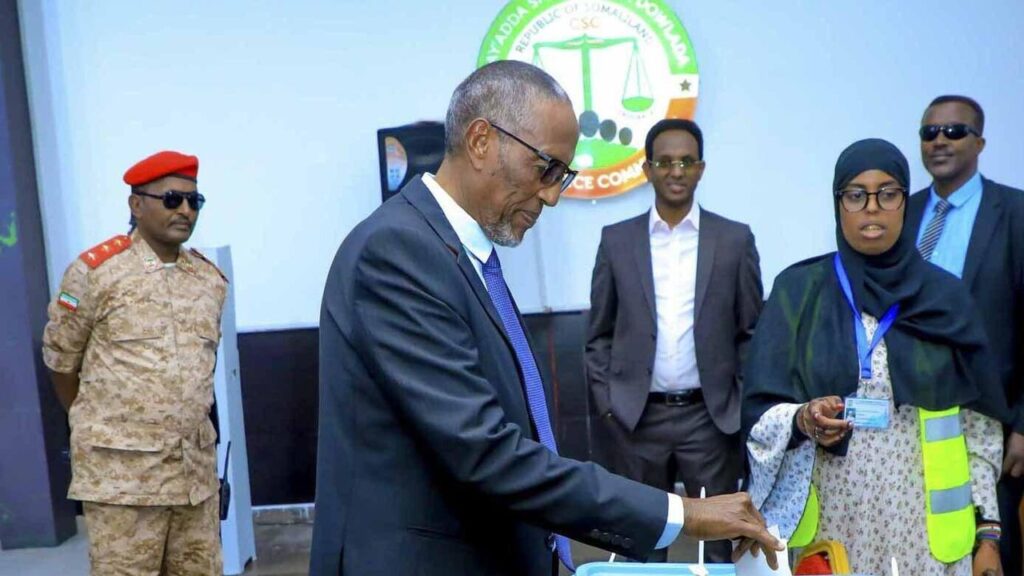
Election workers in Somaliland are counting ballots following Wednesday’s presidential election, the fourth since the region declared independence from Somalia three decades ago. The Somaliland Election Commission reported that the voting process went smoothly without incident. Incumbent President Muse Bihi is seeking a second term, facing challenges from opposition leader Abdirahman Mohamed Abdullahi of the Waddani Party and Faisal Ali Warabe of the UCID party. Preliminary results are expected by late Friday, with final tallies to be announced in about a week. The election has been overshadowed by a controversial deal granting Ethiopia access to 20 kilometers of the Gulf of Aden coastline in exchange for recognition. Somalia has condemned the agreement, calling it a violation of its sovereignty, and has sought support from Egypt and Eritrea to counter Ethiopia’s influence. Despite more than 30 years of de facto independence, Somaliland remains unrecognized by any country. Its leaders hope this election will bring the region closer to international recognition.
Somaliland holds presidential election Read More »
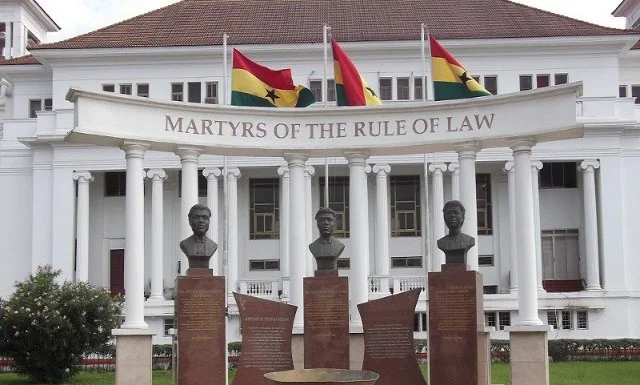
Ghana’s Supreme Court has overturned the Speaker’s decision to declare seats vacant, restoring the New Patriotic Party’s majority in parliament ahead of the December elections.
Ghana’s supreme court restores NPP’s majority Read More »

Deadly clashes between security forces and protesters have erupted in Mozambique following a controversial election.
Mozambique’s defence minister issues ultimatum to protesters Read More »

Election officials in Mozambique announced on Thursday that the ruling party, Frelimo, has won the country’s disputed elections, solidifying its grip on power for over five decades. Daniel Chapo, Frelimo’s candidate, will succeed President Filipe Nyusi, who is stepping down after two terms. Frelimo has governed Mozambique since its independence from Portugal in 1975, and the results were widely anticipated to favor the party. The electoral commission reported that Chapo received 70 percent of the vote, while his closest rival, Venancio Mondlane of the Podemos party, garnered 20 percent. Mondlane replaced the former opposition party, Renamo, which saw its candidate finish in third place. Following the announcement of the results, violent protests erupted in several towns amid allegations of fraud and vote rigging. European Union observers expressed concerns over the integrity of the elections, citing “irregularities during counting and unjustified alterations of results.” Opposition parties echoed these claims, leading to nationwide protests called by Podemos, which were met with police dispersing crowds using live rounds and tear gas. Mondlane has called for a nationwide strike on Thursday and Friday in response to the alleged electoral misconduct. Tensions escalated after the recent shootings of two prominent Podemos figures in Maputo. As fears grow that the protests could escalate into violence, Mondlane has until December to contest the election results. Chapo is set to be officially sworn in as president in January. The elections held on October 9 also included parliamentary and provincial contests, in which Frelimo secured a majority in the Assembly of the Republic, further entrenching its political dominance in Mozambique.
Frelimo wins Mozambique elections, extending Power Read More »

Election-related tensions and rising debt levels have contributed to the decline in Mozambique’s eurobond, as investors seek safer investments.
Mozambique’s dollar bond falls amid election tensions Read More »

An exit poll indicates that incumbent Tunisian President Kais Saied has won a second term in elections held Sunday, receiving 89.2% of the vote. “The estimated results indicate Kais Saied’s victory in the presidential election with 89.2%, totaling 2,194,150 votes, said Hassan Zargouni, the director of polling company Sigma Conseil, speaking on Tunisian public television. The electoral authority announced the final list of candidates on Sept. 2, including three contenders: incumbent President Kais Saied, opposition candidate Ayachi Zammel, secretary-general of the Azimoun movement, and Zouhair Maghzaoui, secretary-general of the People’s Movement – a supporter of Saied. Zargouni added that Zammel received 6.9% with 169,727 votes, while Maghzaoui received 3.9% with 95,933 votes. Earlier on Sunday, the Independent High Authority for Elections in Tunisia announced that the preliminary voter turnout in the elections was 27.7% by the time polling stations closed at 6 p.m. local time (1700GMT). Farouk Bouaskar, the president of the authority, said at a press conference in Tunis that “the electoral process went smoothly, and we did not record any incidents that marred this election day, with a respectable turnout from Tunisians at polling stations both domestically and abroad.” “A total of 2,704,155 voters participated in the voting process today, resulting in a preliminary turnout of 27.7%,” he added. Bouaskar said the official and final turnout rates will be announced alongside the preliminary election results on Monday evening. On Sunday morning, the voting process began in Tunisia to elect a president for a five-year term, while voting abroad commenced on Friday in 59 countries. Tunisia’s election is taking place amid political tensions, economic challenges and a polarized electorate.
Exit poll shows President Saied winning Tunisia’s presidential election Read More »

Algerians began casting ballots on Saturday in an early presidential election as polling stations opened at 8 a.m. (0700GMT). Over 23.4 million people are registered to vote within Algeria, while more than 865,000 Algerians living abroad began casting their votes earlier. Voting will continue until 7 p.m. (1800GMT), with the possibility of an extension for one additional hour if deemed necessary by the election authority. Besides the incumbent President Abdelmadjid Tebboune, Abdelaali Hassani Cherif from the Movement of Society for Peace and socialist Youcef Aouchiche are also competing. In June, President Tebboune announced the snap election, initially scheduled for December. Tebboune, 78, is widely expected to secure a second term in the North African country.
Algeria begins voting in snap presidential election Read More »

Algerians will head to the polls Saturday for an early presidential election featuring three candidates from diverse political backgrounds. The election is overseen by the Independent National Election Authority, a constitutional body established in 2019 to replace public authorities in a bid to ensure electoral integrity. President Abdelmadjid Tebboune decided March 21 to advance the elections from their original date in December, citing “purely technical reasons.” Polling stations will open at 8 a.m. local time and close at 8 p.m. – 3 political streams Nearly 24.4 million voters will choose from three candidates representing different political streams. President Abdelmadjid Tebboune, 78, running as an independent, claims to represent all Algerians, particularly the youth, middle class and disadvantaged. Tebboune, a graduate of the National School of Administration, has held high-level positions in the Interior Ministry and served as prime minister in 2017. He won the 2019 presidential election with 58% of the vote and is backed by numerous parties, including those in the parliamentary majority. Tebboune promises economic and social revitalization, aiming to achieve a GDP of $400 billion by 2027 and build 2 million housing units. Abdelaali Hassani Cherif, 58, is the leader of the Movement of Society for Peace — Algeria’s largest Islamic party, often associated with the Muslim Brotherhood. Cherif, an engineer and former journalist, was elected party president in 2023. His platform emphasizes deep constitutional reforms, expanded parliamentary powers and making Algeria a “central state” in the coming years. He enjoys support from factions of the Islamic stream, such as the Renaissance Party. Youcef Aouchiche, 42, the First Secretary of the Socialist Forces Front, Algeria’s oldest opposition party that was founded in 1963, represents the leftist opposition. Aouchiche, a political science graduate and former journalist, was elected by his party to run in the election. His program includes constitutional reforms to enhance freedoms, decentralize power and promises to increase salaries and wages, dissolve parliament and organize legislative elections in early 2025. – Shared themes and challenges Despite their differing political affiliations, all the candidates have referenced the Nov. 1, 1954, Declaration as a foundational element in their campaigns. The declaration marks the start of the Algerian revolution against French colonial rule. They agree on continuing strong support for the Palestinian cause and global issues, aiming to strengthen Algeria’s international position. All three candidates have urged voters to actively participate in the election to ensure success. The election has been marked by strict judicial interventions against the illegal use of money by some candidates. Last month, the Algiers Court announced the detention of 68 individuals involved in a bribery scandal related to candidate endorsements, with three candidates placed under judicial supervision for violating election laws. During the election campaign, the candidates have maintained a calm tone, focusing on promises and commitments without significant incidents of verbal conflict or hate speech. Campaigns for Cherif and Aouchiche, however, have expressed dissatisfaction with what they perceive as media bias in favor of Tebboune and lodged complaints with the election authority. More than 865,000 Algerians living abroad began casting ballots Monday. Voting will also commence for nomadic voters in designated mobile polling stations, with 116,064 registered voters spread across 134 voting offices.
Algeria heads to presidential election with 3 candidates Read More »