Featured

Italy’s foreign minister warns of new migration crisis in Syria

Italy’s foreign minister warned of a new migration crisis in Syria amid renewed fighting between the Bashar al-Assad regime forces and armed opposition groups in the country. “Lebanon is already hosting one million Syrian refugees. The risk here is the emergence of a new migration crisis as the result of an internal conflict that could last long,” Antonio Tajani told reporters on the sidelines of the international humanitarian aid conference for Gaza in Cairo on Monday. He also warned that this conflict, which directly impacts Lebanon, could also affect Europe. The opposition forces, engaged in clashes with regime forces for the past six days, have made significant territorial gains, taking control of the regional hub of Aleppo as well as areas south of Idlib province toward regime-held Hama.

Italy’s foreign minister warns of new migration crisis in Syria Read More »

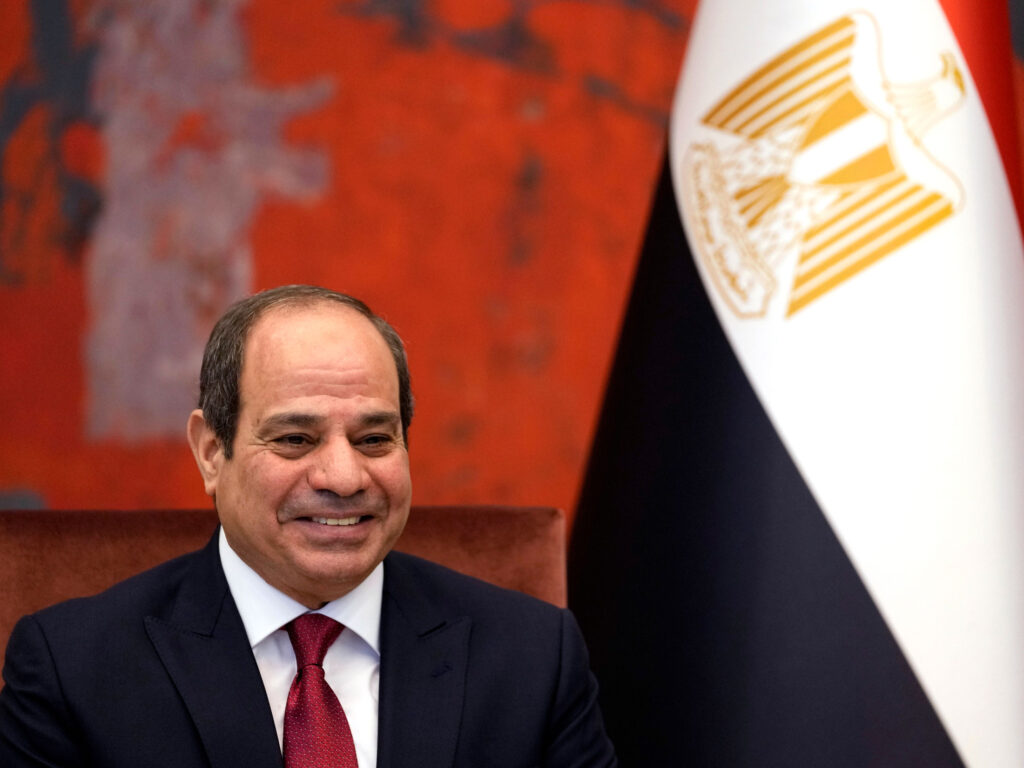
Egypt hosts conference on Gaza’s humanitarian crisis

On Monday, Egypt hosted an international conference in Cairo to garner humanitarian support for Gaza, which has been devastated by over a year of conflict between Hamas and Israel. The event was attended by numerous senior regional and Western officials, as well as UN Deputy Secretary-General Amina J. Mohammed and other top UN representatives, according to Egypt’s Foreign Ministry. The conference was convened amid a rapidly worsening humanitarian crisis in Gaza, particularly in the northern regions, which have been nearly cut off from the rest of the Strip for almost two months. Discussions at the conference focused on the political, security, and humanitarian challenges in Gaza, with a particular emphasis on supporting the operations of UNRWA, the UN agency responsible for Palestinian refugees. On Sunday, UNRWA announced it would suspend aid deliveries through the Kerem Shalom crossing, Gaza’s main cargo entry point, due to the threat of armed groups looting aid convoys. The agency cited the breakdown of law and order in Gaza, which it attributed to Israel’s policies. This move by UNRWA could exacerbate Gaza’s already dire humanitarian situation, as a second cold and rainy winter approaches. Hundreds of thousands of Palestinians remain in overcrowded and unsanitary tent camps, heavily dependent on international aid. Experts have warned of the potential for famine in Gaza’s northern regions, which have been almost entirely isolated by Israeli forces since early October. In response, Israel’s military body responsible for coordinating humanitarian aid to Gaza stated on X (formerly Twitter) that it would continue to work with the international community to increase aid deliveries through Kerem Shalom and other crossings. It also claimed that in November, UNRWA coordinated less than 10% of the aid that entered Gaza.

Egypt hosts conference on Gaza’s humanitarian crisis Read More »

9 killed in shooting at snack bar in Mexico

Nine people were killed and five others were injured in a shooting at a snack bar in northern Mexico, local media reported on Sunday. The shooting took place in the town of Apaseo del Grande in Guanajuato state. Nine people were killed at the scene and five others were injured in the attack. According to eyewitnesses, the assailants first fired at the people inside the snack bar, and then opened fire randomly on the customers nearby. A large number of police were deployed to the area where the attack took place, and a massive operation was launched to capture the fleeing assailants.

9 killed in shooting at snack bar in Mexico Read More »

UK reiterates call for ‘Syrian-led political solution’ in Syria

The UK has reiterated its “call for a Syrian-led political solution” in Syria. “Following recent developments in Syria, we urge all parties to protect civilian lives and infrastructure to prevent further suffering, the displacement of vulnerable people, and disruption to essential humanitarian aid,” a Foreign, Commonwealth and Development Office spokesperson said in a statement on Sunday. “We reiterate our call for a Syrian-led political solution to the conflict,” the spokesperson said, adding that the Bashar al-Assad regime created the “conditions for the current escalation through its ongoing refusal to engage in a political process and its reliance on Russia and Iran.” “The regime and all actors in Syria’s conflict must support and engage with negotiations as called for in UNSCR (UN Security Council Resolution) 2254,” the statement stressed. After opposition armed groups launched an operation against the regime forces in Aleppo on Nov. 27, the Syrian regime forces allied with the PKK/YPG and ceded certain areas to the terrorist group. The PKK/YPG, reinforced by additional forces from eastern Syria, began fortifying these areas. To counter the PKK/YPG’s move to establish a terrorist corridor between Tel Rifaat and Manbij, the Syrian National Army (SNA) initiated Operation Dawn of Freedom. Following the siege of Tel Rifaat district, the district center was liberated from terrorist control. Syria has been embroiled in a vicious civil war since early 2011 when the Assad Syrian regime cracked down on pro-democracy protests with unexpected ferocity.

UK reiterates call for ‘Syrian-led political solution’ in Syria Read More »

France acknowledges Thiaroye massacre amid ongoing disputes

Rewriting the Thiaroye Massacre and the Shifting Historical Narrative The massacre at Thiaroye, which took place on December 1, 1944, remains one of the darkest chapters in the history of French colonialism in West Africa. The victims were soldiers of the “Tirailleurs Sénégalais,” a corps of colonial infantry drawn from West Africa to fight in both World Wars. Tensions had been building among the soldiers over unpaid wages in the days leading up to the massacre, and on that fateful day, French troops turned their guns on unarmed African soldiers, killing many. For years, French authorities downplayed the incident, labeling it as a “mutiny.” Early French military reports suggested that only 35 soldiers were killed, while later reports increased the death toll to 70. But recent research, including estimates based on the number of soldiers stationed at the camp, suggests the true toll could have been in the hundreds, with some historians estimating up to 400 deaths. On Thursday, French President Emmanuel Macron officially acknowledged the event as a massacre for the first time, in a letter to Senegal’s President Diomaye Faye, which was seen by The Associated Press. “France must recognize that on that day, the confrontation between soldiers and riflemen who demanded their full legitimate wages be paid, triggered a chain of events that resulted in a massacre,” Macron wrote. However, many historians reject the notion of a “confrontation” between the French soldiers and the African riflemen. Martin Mourre, a French historian and author of Thiaroye 1944: History and Memory of a Colonial Massacre, argues that the events were nothing less than the execution of unarmed soldiers. He points to the absence of any mention of weapons in the trial of the accused African soldiers and the lack of injuries among the French troops as evidence that there was no violent uprising, but rather a cold-blooded massacre. While Macron’s letter recognizes the event as a massacre, it avoids specifying the exact number of casualties, which remains a source of contention. The lack of transparency in the historical record has compounded the controversy. In 2014, French President François Hollande handed over archives on Thiaroye to Senegal’s then-president, Macky Sall. However, key documents—such as those detailing the location of mass graves and the precise number of soldiers present—remain elusive. It is unclear whether these documents still exist or if they have been lost or withheld. Senegalese efforts to uncover the truth have also been hampered. Under President Sall, historical investigations into the massacre were often delayed or obstructed, with some historians blaming diplomatic sensitivities toward France. “The archives remained inaccessible until this year for obscure reasons,” says Mourre. Mamadou Diouf, a Senegalese historian, notes that Sall’s reluctance to confront the painful history was likely aimed at avoiding tensions with the French government. However, Senegal’s newly elected President Bassirou Diomaye Faye has vowed to take control of the country’s historical narrative, with a focus on Thiaroye. Since his election in March, Faye has emphasized the importance of recognizing the massacre as a crucial part of Senegal’s national story. The government has organized extensive commemorations from December 1 to April 2025 to raise awareness and educate the public about the massacre. These efforts are part of a broader attempt to address the colonial past and reclaim Senegal’s historical voice. “The authorities’ goal behind these major commemorations is to integrate Thiaroye into Senegal’s national identity,” says Babacar Ndiaye, a political analyst at the Wathi think tank. “This is not just about remembering the massacre but ensuring the younger generation, many of whom may not know the full story, are exposed to it through television, media, and social media.” The 80th anniversary of the Thiaroye massacre occurs amid a shift in France’s influence in West Africa, where former colonies are increasingly distancing themselves from Paris. In recent years, countries like Mali, Burkina Faso, and Niger have expelled French forces, while Chad has ended its military cooperation agreement with France. Senegal remains one of the few countries where French troops are still present, although they play a more limited, supportive role. President Faye has made clear that he does not view the continued French military presence favorably. “Historically, France enslaved, colonized, and stayed here,” he remarked. “It would be difficult to imagine another country, like China or Russia, having a military base in France.” At a ceremony on Sunday at the Thiaroye military cemetery, Faye announced several initiatives to honor the victims. These include the construction of a memorial, the creation of a research center to house the massacre’s archives, and the addition of history lessons on the event to the national school curriculum. December 1 will now be officially recognized as “National Day of the Tirailleur.” “We are doing this to fulfill our duty of remembrance, to reveal the truth, and to discharge a moral debt to the riflemen and their families,” Faye said, addressing an audience that included France’s Foreign Minister Jean-Noël Barrot, as well as heads of state from neighboring countries. Macron did not attend the ceremony. The official narratives continue to differ. While the French foreign minister referred to the events as a “cry of anger” from the riflemen, which France “repressed in a bloodshed,” President Faye characterized the killings as “a premeditated act”—a clear sign of the ongoing tension between the two countries over how to reckon with this painful chapter of history.

France acknowledges Thiaroye massacre amid ongoing disputes Read More »

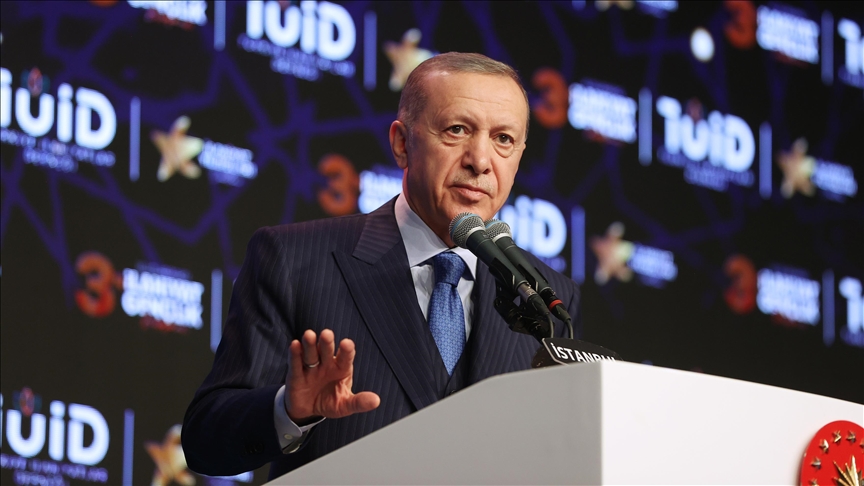
Turkish president urges Muslim unity to stop Israeli attacks on Palestine

 Turkish President Recep Tayyip Erdogan on Friday emphasized the importance of unity and joint action for Islamic countries in response to Israel’s ongoing onslaught in Gaza. President Erdogan said the latest developments in the Gaza Strip and occupied Palestinian territories since Oct. 7, 2023, have once again demonstrated the critical importance of Islamic nations’ unity and solidarity. He made these remarks in a video message to the International Humanitarian Summit on “The Future of Gaza,” which was organized in Istanbul by Türkiye’s Diyanet Foundation and Al Khair Foundation. “In full view of the world, nearly 50,000 of our Palestinian sisters and brothers, most of them children and women, have been martyred,” he said, adding: “As a result of Israel’s bombardments directly targeting civilians, over 100,000 innocent Palestinians have been injured.” He lamented that Israel’s attacks on Lebanon have resulted in over 3,500 deaths and that “places of worship, schools, hospitals, and all aspects of civilian infrastructure have been targets of Israel’s assaults.” “In the face of these attacks, Türkiye stands in full solidarity with our Palestinian brothers and sisters,” he vowed. “Over the past year, we have especially sought to extend a helping hand to our sisters and brothers in Gaza and Lebanon,” Erdogan stressed, recalling: “With over 86,000 tons of aid delivered, we are among the countries providing the most support to Palestine.” He pointed out that the amount of aid delivered to Lebanon has exceeded 1,300 tons, adding: “We are continuing our diplomatic efforts to ensure that Islamic countries respond collectively to the oppression in Gaza and act together.” “Our struggle will continue until the occupation and massacres in Palestine come to an end and an independent, sovereign, and territorially unified Palestinian state, with East Jerusalem as its capital, is established based on the 1967 borders,” he underlined, expressing his belief that “the international humanitarian aid summit will support us in this struggle.” Israel has launched a genocidal war on the Gaza Strip following a cross-border attack by the Palestinian group Hamas in October last year, killing over 44,300 people, most of them women and children, and injuring over 104,900. The second year of genocide in Gaza has drawn growing international condemnation, with officials and institutions labeling the attacks and blocking of aid deliveries as a deliberate attempt to destroy a population. Last week, the International Criminal Court (ICC) issued arrest warrants for Israeli Prime Minister Benjamin Netanyahu and former Defense Minister Yoav Gallant for war crimes and crimes against humanity in Gaza. Israel also faces a genocide case at the International Court of Justice for its deadly war on Gaza.

Turkish president urges Muslim unity to stop Israeli attacks on Palestine Read More »

Scroll to Top