Featured

UN warns developing regions may fall behind in digital progress

UN officials have warned that as the digital landscape evolves, developing regions risk being left behind. While celebrating progress in digital government, UN Assistant Secretary-General for Economic Development, Navid Hanif, noted ongoing disparities between regions. “The development of digital government is on the rise globally, enhancing government services and public engagement,” Hanif stated. However, he emphasized that 1.37 billion people still lack access, remaining on the wrong side of the digital divide. The UN also presented data highlighting the world’s top digital performers, with Denmark leading the pack. Vincenzo Aquaro, Chief of the UN Department of Economic and Social Affairs Digital Government Branch, pointed out that Germany, Spain, and Saudi Arabia are also among the top 18 countries. The UN is urging increased support for developing nations, particularly in Africa, to help bridge digital inequalities.

UN warns developing regions may fall behind in digital progress Read More »

US confirms completion of military withdrawal from Niger

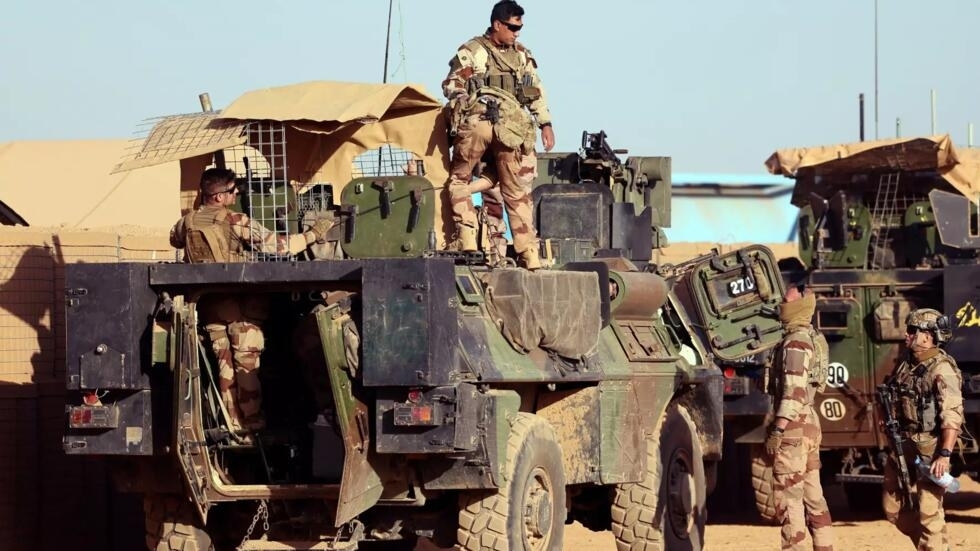
The United States military on Monday said it had completed the withdrawal of its troops and assets from Niger, meeting a 15 September deadline. Its pull-out took place in phases, starting in May, after Niger’s new leaders scrapped a military cooperation deal with Washington. They seized power in a coup last year and in recent months, Niamey has pulled away from its Western partners, turning instead to Russia for security. The withdrawal of the US’ nearly 1,000 military personnel is seen as a major setback for Washington. Prior to the coup, Niamey had been a key partner in its battle against Islamist insurgents operating in the region. Together with France and other European countries, Washington had invested hundreds of millions of dollars in military assistance and training to Niger. The US had handed over its last military bases to local authorities last month, but about two dozen soldiers had remained, largely to oversee the withdrawal. Their departure comes amid concerns about the growing number of extremist groups operating in the West Africa region. Groups linked to al-Qaeda and the Islamic State organisation operate in the vast region south of the Sahara desert. One of them, Jama’a Nusrat ul-Islam wa al-Muslimin, known as JNIM, is active in Mali, Burkina Faso, and Niger, and is looking to expand into Benin and Togo.

US confirms completion of military withdrawal from Niger Read More »

Dangote refinery starts gasoline sales to NNPC

Nigeria’s Dangote refinery, with a capacity of 650,000 b/d, has started selling gasoline domestically, exclusively to the state-owned NNPC. For September deliveries, NNPC is paying Dangote in US dollars, but a crude-for-gasoline swap will begin in October, settled in naira. The refinery’s ex-refinery price for gasoline is set at $736 per tonne, equivalent to 898.78 naira per litre ($0.55/l), while the retail price in Lagos is N950.22/l, reflecting recent increases due to reduced government subsidies. Gasoline pricing is negotiated directly between parties under Nigeria’s Petroleum Industry Act. NNPC has traditionally relied on imports to meet domestic gasoline needs but anticipates that Dangote’s operations will help reduce this dependency. Currently, the refinery is ramping up production, supplying 16 million litres over the weekend, which is still below its full capacity of 57 million litres per day. Full operations are expected to commence by October or November once the residual fluid catalytic cracker (RFCC) is fully operational. Starting in October, NNPC will supply Dangote with 385,000 b/d of crude, with gasoline sold exclusively to NNPC for domestic distribution, while diesel will be available to other buyers.

Dangote refinery starts gasoline sales to NNPC Read More »

Consultations underway on Gabon’s future constitution

Gabon’s parliamentarians have less than a week to submit proposed amendments to the country’s future constitution ahead of the September 22 deadline. A draft of the document was delivered to transitional president General Brice Oligui Nguema earlier this month, following last year’s military ousting of President Ali Bongo, who had ruled for over 50 years. Civil society groups have proposed key amendments, including reducing the presidential term from seven to five years and relaxing what they describe as “discriminatory rules” for presidential candidates. They are also concerned about a provision allowing the head of state to dissolve the National Assembly and have called for the abolition of the vice presidency, along with clearer criteria for removing a president. Presidential candidate Daniel Mengara has openly rejected the draft, criticizing its “hyper-presidentialism” and advocating for a return to a parliamentary system to balance power. He has applied for official recognition of his party, the Congress of Free Citizens. While discussions on the draft constitution continue, the ruling military will have the final decision, with a referendum expected by the end of the year.

Consultations underway on Gabon’s future constitution Read More »

Tanzanian president accuses US, West of interfering in country’s affairs

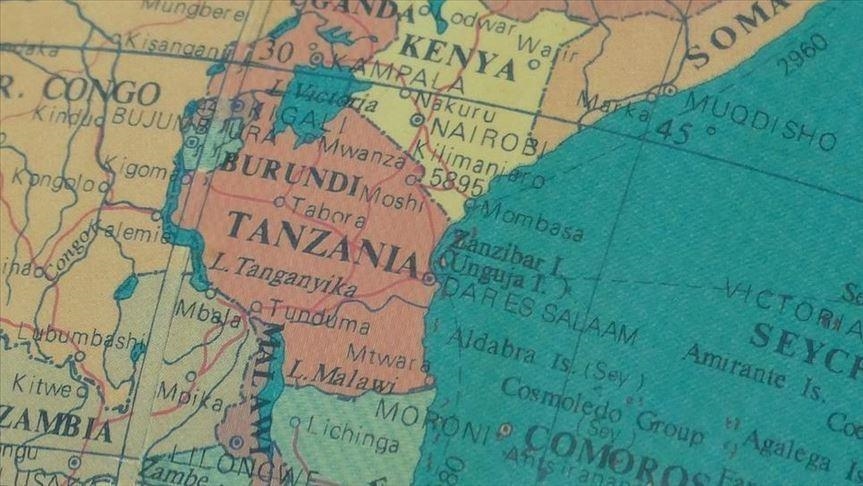
Tanzania’s president rebuked several Western nations on Tuesday, including the US, for criticizing the country’s handling of internal affairs, including murder and kidnapping. “We’re not here to be told how to run our country,” Samia Suluhu Hassan said in the Moshi area of the northeastern Kilimanjaro region. Without directly naming any embassies, Samia alluded to gun violence in the US, noting that incidents “happen in every country” yet Tanzania has “never directed its ambassadors to interfere in other nations’ internal affairs.” Hassan was responding to a US Embassy statement on Sept. 9 that urged an independent investigation into the murder of Ali Mohamed Kibao, the former leader of Tanzania’s main opposition CHADEMA party, whose mutilated body was discovered and dumped in Dar es Salaam the previous day. And a joint statement released Sept. 10 by the EU head of mission, the British and Canadian high commissions, and the Norwegian and Swiss embassies addressed concerns about “recent reports or acts of violence, disappearances and deaths or political and human right activists.” Reaffirming her government’s commitment to protect and defend the Constitution without external pressure, Samia urged foreign diplomats to “not act as technicians guiding” Tanzania on its governance. “We have sworn to protect the security of Tanzania and defend the constitution of Tanzania and we will do everything possible to enhance the protection and security of Tanzania because it is our responsibility, and on this responsibility, we need no direction from anyone,” she said.

Tanzanian president accuses US, West of interfering in country’s affairs Read More »

Algerian president sworn in for 2nd term

Algerian President Abdelmadjid Tebboune was sworn in Tuesday for a new five-year term following his victory in the Sept. 7 presidential election. Tebboune, who secured 84.30% of the vote, tasked Prime Minister Nadir Larbaoui’s government with continuing its duties after it submitted its resignation following the election.​​​​​​​ Larbaoui submitted the government’s resignation as part of a “mandatory constitutional procedure” following the inauguration of the newly-elected president, according to a statement from the presidency.

Algerian president sworn in for 2nd term Read More »

Russian, North Korean foreign ministers meet in Moscow

Russia’s Foreign Ministry announced Tuesday that Foreign Minister Sergey Lavrov met with his North Korean counterpart Choe Son-hui in Moscow. The top North Korean diplomat stopped over in the Russian capital on her way to St. Petersburg to participate in the first BRICS Women’s Forum to be held Sept. 18-20 on the sidelines of the Fourth Eurasian Women’s Forum, the ministry said in a statement. “The foreign ministers of Russia and the Democratic People’s Republic of Korea took this opportunity to exchange opinions on ways to promote bilateral relations in keeping with the comprehensive strategic partnership between our countries,” the statement said. “Sergey Lavrov extended warm wishes to his colleague on the occasion of the traditional Korean harvest festival Chuseok, which is celebrated in Korea today, and wished her a productive and fulfilling trip to St Petersburg,” it said.

Russian, North Korean foreign ministers meet in Moscow Read More »

42 years after Sabra and Shatila, no justice as Gaza attacks continue

It has been 42 years since the Sabra and Shatila massacre in Beirut, Lebanon, where right-wing Christian Phalangist militias under the protection of the Israeli army killed more than 3,000 defenseless people. After Israel declared its independence on May 14, 1948 on the Palestinian territories it occupied, Palestinian refugees who were forced to migrate and sought refuge in Lebanon were subjected to a new attack by Israel on Sept. 16, 1982. The attack, launched by Christian Phalangist militias on the refugee camp where Palestinian refugees were staying, lasted for three days and was “justified” by the assassination of Bachir Gemayel, the leader of the Kataeb Party, shortly after he was elected president during the country’s ongoing civil war from 1975–1990. Palestinians, who had suffered greatly since the onset of the Israeli occupation project, lost thousands of women and children during the bloody assault. The perpetrators of the massacre, which left a painful mark in the collective memory of Lebanon and the Middle East, have neither been brought to justice nor held accountable to this day. -Streets filled with bodies During the assault on the Sabra and Shatila refugee camps, the streets were filled with the bodies of more than 3,000 Palestinians. After the Israeli army surrounded the camps to prevent Palestinian refugees from escaping, the Christian Phalangist militias brutally massacred them using heavy weapons and bombardments as well as axes and cutting tools. Their bodies were later buried in mass graves. The attack was managed by Ariel Sharon, who was then Israel’s defense minister and later became prime minister. Soldiers under Sharon’s command used flares throughout the night to facilitate the work of the perpetrators. – Sharon found guilty Following the massacre, the UN condemned the events on Dec. 16, 1982, declaring that they were an act of genocide. However, no judicial proceedings have been conducted. In a report published in February 1983, the commission that Israel was forced to set up to investigate the massacre identified Sharon as one of those responsible for the atrocity. The Sabra and Shatila camps, squeezed into approximately one square kilometer, are currently home to around 12,000 Palestinian refugees according to unofficial figures. On June 18, 2001, 23 survivors of the Sabra and Shatila massacre filed a lawsuit in Belgium against then-Israeli Prime Minister Sharon, accusing him of committing crimes against humanity. Due to pressure from the US and Israel, Belgium was forced to change the law that allowed for this lawsuit, and on May 15, 2002, the case was dismissed for lack of jurisdiction. Before the case was dismissed, Elie Hobeika, one of the leaders of the Phalangist Lebanese Forces who played a key role in the massacre, was killed in Beirut a few days after announcing that he would testify against Sharon when a bomb placed in his car exploded. Sharon died in January 2014 without any trial or accountability. While the deep wounds inflicted by the massacre remain fresh in the memories of Palestinians, Israel’s attacks on Gaza, which began on Oct. 7, 2023, continue unabated. Since then, at least 41,226 Palestinians have been killed, including 16,795 children and 11,378 women, and 95,413 people injured.

42 years after Sabra and Shatila, no justice as Gaza attacks continue Read More »

Scroll to Top