Featured

CrowdStrike lowers revenue estimate after global IT outage

CrowdStrike lowered its annual revenue estimate after a software update caused a major global IT outage in July, according to its financial results statement released Wednesday. The American cybersecurity technology company forecasts annual revenue to come in between $3.89 billion to $3.9 billion for the full year of the 2025 fiscal year. The forecast is lower than the firm’s prior estimate of between $3.98 billion to $4.01 billion. “Working with customers to recover from the July 19th incident, we emerge as an even more resilient and even more customer-obsessed CrowdStrike, continuing to aggressively invest in innovation,” CrowdStrike CEO George Kurtz said in the statement. The global outage hit thousands of computers around the world and caused interruptions in devices using the Windows operating system. The company posted total revenue of $963.9 million in the second quarter for the 2025 fiscal year, a 32% increase from $731.6 million in the second quarter of fiscal 2024. Net income attributable to CrowdStrike came in at $47 million, up from $8.5 million, during that period. CrowdStrike shares were up 3.99% on the Nasdaq in after-hours trading.

CrowdStrike lowers revenue estimate after global IT outage Read More »

Spain to unveil new strategy for African relations

Spanish Prime Minister Pedro Sánchez announced on Wednesday that Spain will introduce a new strategy for its relations with Africa in the coming weeks, with West Africa and the Sahel as priority regions. Further details were not provided. Sánchez, who began his three-day West Africa tour in Mauritania, where he announced an expansion of Spain’s circular migration program and increased cooperation against human trafficking, is now in Senegal. This marks the first visit by a Spanish prime minister to the small country of 2.7 million inhabitants. On Wednesday, Sánchez visited Gambia and is scheduled to meet with Senegal’s president and prime minister on Thursday. These three coastal nations have become major departure points for migrants heading to the Canary Islands, a Spanish archipelago near the African coast used by migrants and refugees en route to Europe. Spain’s Interior Ministry reports that over 22,000 people have arrived on the Canaries since January, more than double the number from the same period last year. Sánchez emphasized during a conference in Senegal that while he strongly supports regular migration for its economic and cultural benefits, ensuring security remains a top priority. He acknowledged the complexities of the current migration context and reaffirmed Spain’s commitment to strengthening bilateral relations with African countries. The Canary Islands have seen an increase in arrivals, including many Malian refugees escaping violence, as well as young people from Senegal, Mauritania, and other West African nations seeking better opportunities. There is also a growing number of unaccompanied minors, which has strained local resources.

Spain to unveil new strategy for African relations Read More »

400,000 at risk of flooding and landslides in Ethiopia

Due to ongoing heavy rains in northern Ethiopia, approximately 400,000 people are at risk of flooding and landslides. Tesfaw Batable, an official from the Amhara Region, highlighted the risks of floods and landslides in an interview with Amhara TV. He noted that continuous rains in 32 districts of Amhara have placed around 400,000 people in danger from landslides and floods. Batable described the situation as critical in the affected areas of North Gondar, South Gondar, and Wag Hemra, and mentioned that efforts are being made to prepare for potential disasters. The Ethiopian Meteorological Institute has also warned of an increased risk of landslides due to the heavy rains. On August 27, 23 people were killed in a landslide caused by heavy rains in Amhara.

400,000 at risk of flooding and landslides in Ethiopia Read More »

Algerian fuel tanker arrives in energy-starved Lebanon

An Algerian tanker loaded with 30,000 tons of fuel arrived at the port of Tripoli in northern Lebanon on Tuesday, marking the first installment of aid from Algeria to help restart power plants that have been shut down for about 10 days.
Currently, Lebanon relies on private generators to provide electricity for public institutions and homes.
Sonatrach, Algeria’s state-owned oil company, said in a statement: “Our fuel-laden ship is preparing to offload at Tripoli Port in Lebanon.”
“In accordance with the directive of President Abdelmadjid Tebboune to support Lebanon with energy and help it overcome its current crisis, Sonatrach announces the arrival of a fuel shipment to Tripoli Port in Lebanon which departed from Skikda oil port on August 22,” the statement added.
Sonatrach said that this initial shipment consists of 30,000 tons of fuel, intended to restart power generation plants and restore electricity in Lebanon.
On Aug. 17, Electricité du Liban (EDL), a state-owned electricity company, announced a nationwide power outage in Lebanon following a complete shutdown of all power stations.
The next day, the North African country announced that it would immediately supply Lebanon with fuel to help the country overcome the electricity outage.
The power outage has affected essential facilities, including Rafic Hariri International Airport, Beirut Port, prisons, wastewater treatment plants, and drinking water pumping stations, EDL said.
Two years ago, the frequency of power outages in Lebanon significantly increased as the country faced a severe financial crisis, leaving it unable to secure the foreign currency needed to import fuel.Previously, Lebanon’s electricity production ranged between 1,600 and 2,000 megawatts daily, but fuel shortages in recent years have gradually reduced production to unprecedentedly low levels.


Algerian fuel tanker arrives in energy-starved Lebanon Read More »

Southwest Pacific sea temperatures rise faster than global average

 Sea surface temperatures in the Southwest Pacific have risen three times faster than the global average since 1980 as marine heat waves have roughly doubled in frequency since then, said a report released Tuesday by the UN and the World Meteorological Organization (WMO). “State of the Climate in the South-West Pacific 2023,” released at the Pacific Islands Forum in Tonga by UN Secretary-General Antonio Guterres and WMO Secretary-General Celeste Saulo, was prepared in cooperation with National Meteorological and Hydrological Services, the UN Economic and Social Commission for Asia and the Pacific (ESCAP) and other UN agencies and international partners. It details how the sea level rise in the region is above the global average and also examines the climate factors in 2023, including the recent El Nino event as well as temperature, rainfall and extreme occurrences such as tropical cyclones, droughts and intense heat in the region. “Sea surface temperatures have risen three times faster than the global average since 1980,” the report said, noting “during that time, marine heat waves have approximately doubled in frequency since 1980 and are more intense and are lasting longer.” “Despite accounting for just 0.02 per cent of global emissions – the Pacific islands are uniquely exposed,” it said. “Their average elevation is just one to two meters above sea level; 90 percent of the population lives within 5 kilometers (3.1 miles) of the coast and half the infrastructure is within 500 meters of the sea,” it pointed out. The document further highlighted that “early warning systems facilitate proactive measures such as evacuation plans, resource allocation and infrastructure reinforcement.” “Even though they are a lifeline, they are available in only one third of Small Island Developing States globally,” it added. The El Nino weather phase is characterized by warmer-than-usual sea surface temperatures along the eastern Pacific Ocean coast and above-usual atmospheric pressure that span across the western and central Pacific. An El Nino, which can occur every two to seven years, started in June last year and ended in April. The La Nina phase manifests as the opposite of El Nino, as regions that get hotter during an El Nino cool down during a La Nina, since the surface temperature of the Pacific Ocean stays below minus 0.5C (31.1F) for three months.

Southwest Pacific sea temperatures rise faster than global average Read More »

African countries pledge over $45M to WHO

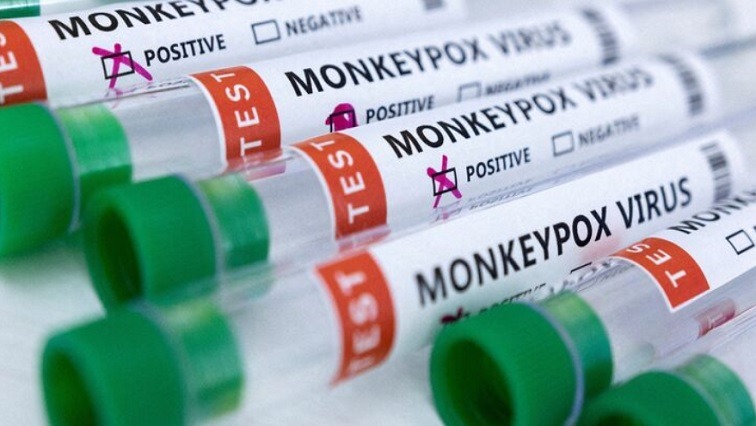
Jean Kaseya, Director of the Africa CDC, stated that the Mpox outbreak is a global issue, not just Africa’s problem. In a press briefing, Kaseya reported on the developments related to Mpox, noting that as of August 26, there were 22,863 cases and 622 deaths in 13 African Union member countries. He emphasized that Mpox is a significant health concern both in Africa and globally. Kaseya added that efforts to combat the outbreak are ongoing, with Central Africa being the most affected region. Mpox virus is transmitted through contact with infected animals like rodents or from contaminated individuals. Key transmission methods include touching lesions, using contaminated clothing or bedding, and contact with body fluids. Symptoms can appear 5 to 21 days after infection and include high fever, headaches, back and muscle pain, swollen lymph nodes, fatigue, chills, and rash similar to chickenpox. There is no specific treatment for Mpox; antiviral medications are used, and most cases are mild, with recovery occurring within a few weeks. In 2022, the WHO renamed “monkeypox” to “mpox” to address concerns about racism and discrimination.

African countries pledge over $45M to WHO Read More »

African Union: Mpox is a global issue, not just Africa’s

The 74th session of the WHO Regional Committee for Africa began on Monday, August 26, in Brazzaville, Congo. Over the next five days, nearly 1,000 delegates, including WHO Director-General Tedros Adhanom Ghebreyesus and health ministers from 47 member countries, will convene. A key topic is the global Mpox epidemic. WHO Regional Director for Africa emphasized the commitment to addressing Mpox differently from past responses and noted extensive support for member states to develop effective plans. The session will focus on several critical health issues, including: Africa has long dealt with high mortality from diseases like malaria, meningitis, and cholera. Joy Phumaphi, executive secretary of the African Leaders Malaria Alliance, highlighted the continent’s expertise in managing epidemics, including Mpox. The WHO recently declared a global emergency due to a new and more deadly strain of the Mpox virus. The Democratic Republic of Congo, the epicenter of the crisis, is participating in the Brazzaville meeting. On August 26, the WHO launched a Strategic Preparedness and Response Plan to tackle human-to-human Mpox transmission, requiring $135 million in funding through February 2025. Key international health organizations have pledged additional support to combat Mpox outbreaks in Africa. At least 14 African countries and health partners pledged over $45 million Tuesday toward the World Health Organization (WHO) Investment Round, a three-month-old initiative aimed at generating sustainable financing for the global health organization. The pledges were made during the 74th session of the WHO Regional Committee for Africa taking place in the Republic of Congo. In a statement, the WHO said the funding will enable it to more effectively fulfill its mandate and advance key objectives to promote, provide and protect health and well-being for all. “I thank our African Region Member States for actively supporting WHO’s first Investment Round to mobilize predictable and flexible resources needed for our core work over the next four years,” said WHO Director-General Tedros Adhanom Ghebreyesus. “Full, sustainable funding will enable WHO to support countries better in their work to build healthier, more resilient and more prosperous populations.” The countries included Botswana, Cabo Verde, Chad, Congo, Ethiopia, Mauritius, Namibia, Niger, Rwanda, Senegal, Seychelles, South Africa, Tanzania and Gambia. Matshidiso Moeti, the WHO regional director for Africa, noted that a strong, predictable and sustainably financed organization is essential for the region and the world to meet multiple health threats and support the prevention of disease based on vast evidence. “Every pledge and every partnership counts. Together, we can achieve a future where health and well-being are accessible to all,” she said. The WHO officials believe with a fully and sustainably funded operating budget over the next four years, the organization will be better positioned to tackle emergencies and outbreaks that threaten lives and jeopardize global health security. Meanwhile, delegates at the forum on Tuesday nominated Tanzania’s Faustine Engelbert Ndugulile as the next WHO regional director for Africa. He beat candidates from Niger, Senegal and Rwanda in closed voting. He is set to replace Moeti, whose second five-year term is nearing an end. Ndugulile’s nomination will be submitted for appointment by the 156th session of the WHO executive board which will take place in February 2025 in Geneva, Switzerland.

African Union: Mpox is a global issue, not just Africa’s Read More »

At least 100 people killed in central Burkina Faso in terror attack

At least 100 villagers and soldiers were killed in central Burkina Faso during a weekend attack by al-Qaida-linked jihadis. The assault on Barsalogho, 80 kilometers from the capital, was described by regional experts as one of the deadliest of the year. The attackers, affiliated with the al-Qaida-linked JNIM group, targeted villagers who were helping security forces build defensive trenches. Al-Qaida claimed responsibility, stating they took control of a militia position in Barsalogho. Videos of the attack showed numerous bodies and the scene was reviewed by the Associated Press, though the exact casualty count could not be independently verified. Burkina Faso’s security minister reported that both soldiers and civilians were among the casualties, and the government has responded with increased support and protection efforts. The escalating violence has resulted in significant parts of Burkina Faso being outside government control, contributing to two coups in 2022. The junta, despite seeking new security partnerships, continues to struggle against the increasing jihadi attacks.

At least 100 people killed in central Burkina Faso in terror attack Read More »

Germany to donate Mpox vaccine to combat outbreak in Africa

Germany will donate 100,000 mpox vaccine doses from its military reserves to help address the outbreak in Africa, a government spokesperson announced on Monday. The donation aims to provide immediate assistance to the affected countries. In addition, Germany will offer financial support to the World Health Organization (WHO) through various mechanisms to combat mpox and assist its African partners via the GAVI vaccine alliance, the spokesperson stated. Germany currently has about 117,000 doses of the Jynneos vaccine, which were acquired in 2022 and are being stored by the military.

Germany to donate Mpox vaccine to combat outbreak in Africa Read More »

Scroll to Top