
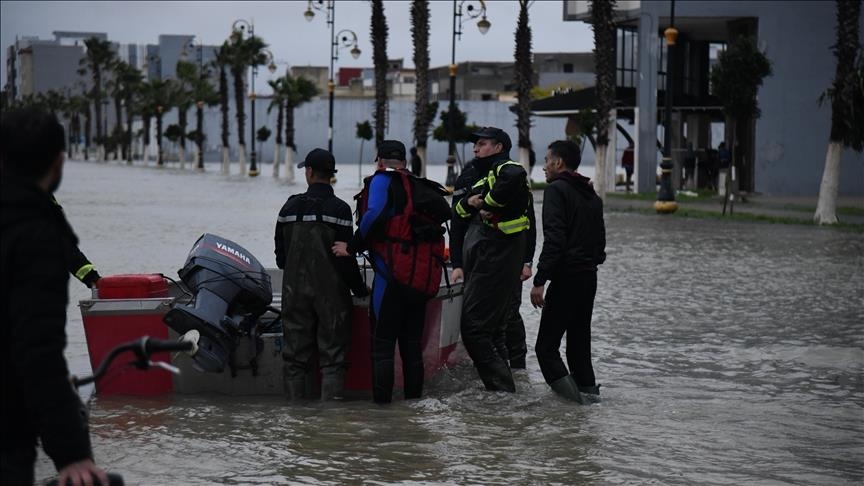
Floods force evacuations across northern Morocco
Moroccan authorities are evacuating tens of thousands as floods overwhelm northern provinces following unusually heavy rainfall
Floods force evacuations across northern Morocco Read More »
Moroccan authorities are evacuating tens of thousands as floods overwhelm northern provinces following unusually heavy rainfall
Floods force evacuations across northern Morocco Read More »

Traders drowned in Kogi State when their overloaded boat sank on the Niger River amid heavy rainfall and flood warnings in Nigeria.
Boat accident on Niger River claims 26 lives amid heavy rains Read More »
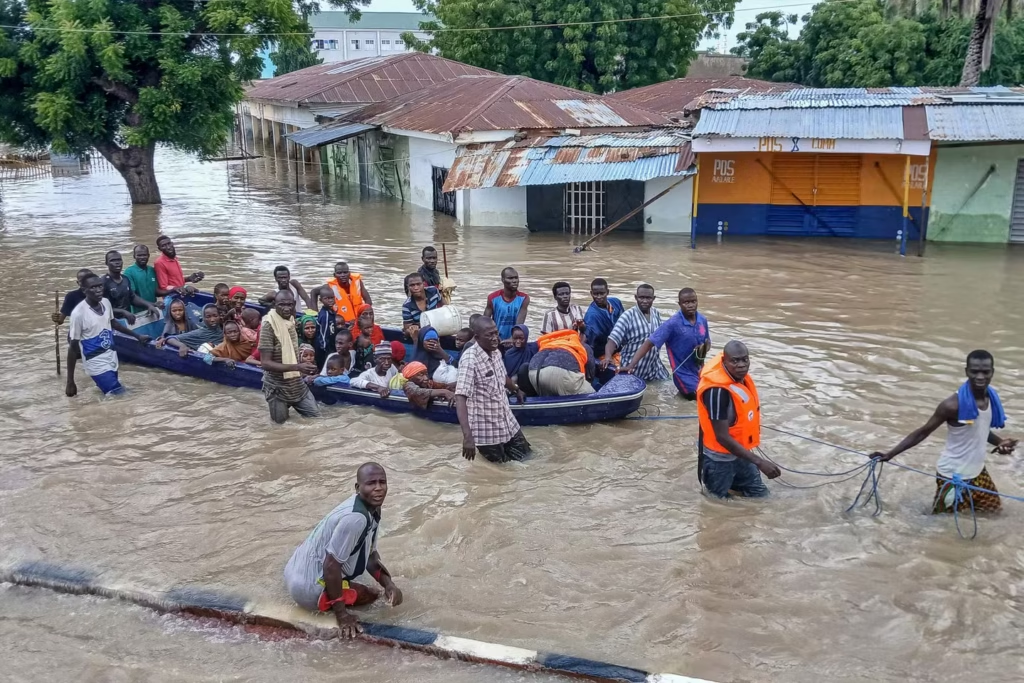
Heavy rains in Conakry killed at least 10 people and left 3 missing amid flooding blamed on poor infrastructure and uncontrolled urban development.
Residents trapped as heavy rains wreak havoc across Guinea Read More »
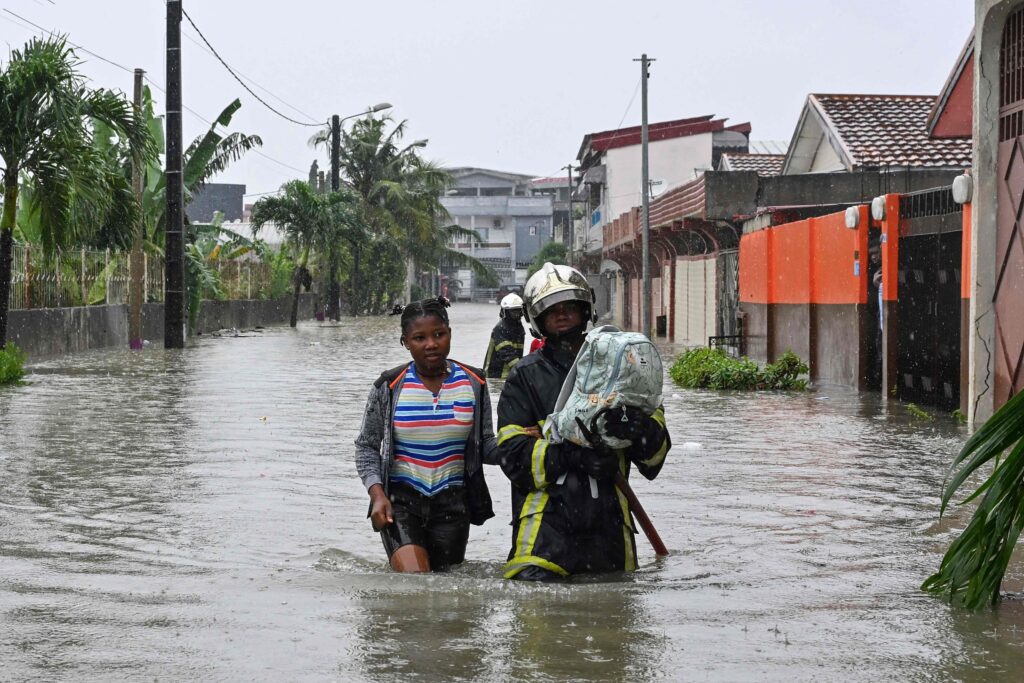
Torrential rain in Abidjan triggered a landslide resulting in six deaths and multiple injuries.
Heavy rain causes landslide killing six in Ivory Coast Read More »

President Tshisekedi visits Kinshasa flood survivors, who criticize him for poor city infrastructure and sanitation in the wake of deadly flooding.
DR Congo president visits Kinshasa flood victims after deadly disaster Read More »

Severe flash floods have devastated Botswana, leaving at least seven dead, including three children. Thousands have been displaced as days of relentless rainfall caused widespread destruction across the country. President Duma Boko addressed the nation on Saturday, confirming the casualties and the scale of the disaster. In a somber televised statement, he assured citizens that efforts would continue to prevent further damage. “The situation remains critical, but we are working tirelessly to reduce the impact,” Boko said. Over 1,700 people have been evacuated from flood-affected areas, seeking safety from the rising waters. In the capital city, Gaborone, a local dam overflowed, leading to the destruction of homes and businesses. Cars were swept away, and the streets were submerged, prompting a swift response from emergency crews bracing for more heavy rain in the coming days. Authorities have shut down schools and blocked major roads to safeguard the public. Disaster management officials pointed to inadequate drainage systems as a significant factor in the flooding, particularly in the low-lying areas most affected. Boko emphasized the need for long-term solutions to prevent such tragedies. “We must reevaluate our infrastructure to ensure it can withstand both floods and droughts,” he stated, urging national-level reforms to better prepare for future challenges.
Heavy rains in Botswana kill seven, displace many Read More »

South Africa has temporarily closed the Grobler’s Bridge border crossing with Botswana due to heavy rainfall and flooding, urging travelers to use alternative routes.
Floods shut down key South Africa-Botswana trade route Read More »

Climate change has intensified flooding across Africa, displacing millions and causing widespread destruction.
Climate change intensifies flooding in Africa Read More »
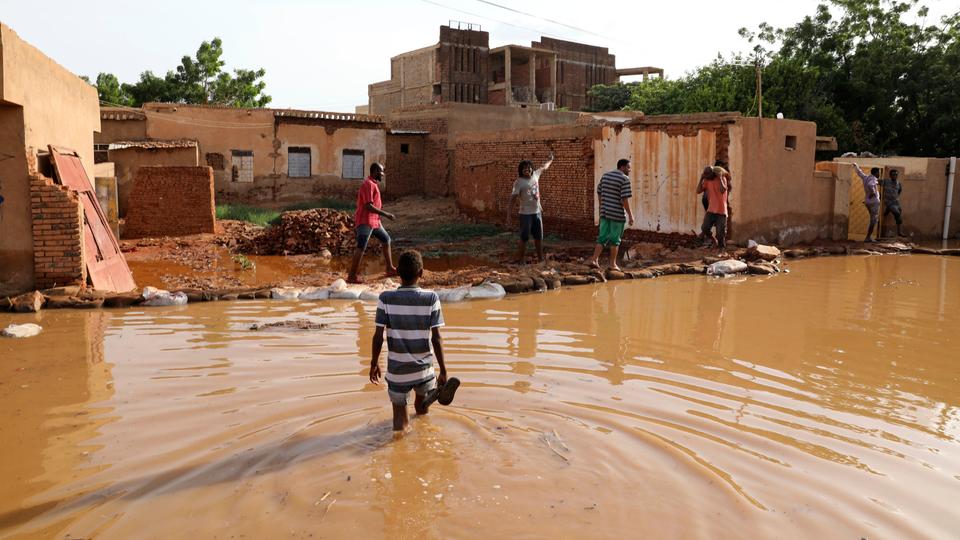
Human-caused climate change has intensified seasonal rains across the Niger and Lake Chad basins this year, leading to catastrophic flooding, according to a study released by international scientists on Wednesday. Researchers from the World Weather Attribution (WWA) initiative reported that floods in Chad, Cameroon, Niger, Nigeria, and Sudan have resulted in over 2,000 deaths and displaced millions. The heavy rains also overwhelmed dams in Nigeria and Sudan. The study found that rainfall this year was 5 to 20 percent more intense in the affected regions, which encompass four of the five countries. Scientists indicated that such extreme rainfall patterns are becoming the new normal due to climate change and are likely to continue annually if global warming persists. Factors such as poverty, rapid urbanization, and poor water management have worsened the impact of these floods. Ongoing conflict has further complicated the situation, displacing millions in Chad, Nigeria, and Sudan, who now live in makeshift shelters with heightened vulnerability to flooding. The WWA noted that the severe flooding from June to September exacerbated an already critical humanitarian crisis in Sudan, overwhelming the response capabilities of aid organizations and governments. The scientists emphasized the need for the region to prepare for even heavier rainfall in the future and to urgently improve water management systems. They called for increased investment in early warning systems and dam upgrades, as well as meaningful financial contributions from wealthier nations. Additionally, they urged delegates attending the upcoming COP29 climate summit in Azerbaijan to act decisively in reducing reliance on fossil fuels, which are responsible for over 75 percent of greenhouse gas emissions and nearly 90 percent of carbon dioxide emissions.
Climate change triggers deadly flooding in Africa Read More »

The governor of capital Kinshasa has urged residents to take precautions and avoid littering to mitigate the risks.
Death as DR Congo capital faces heavy rains Read More »