
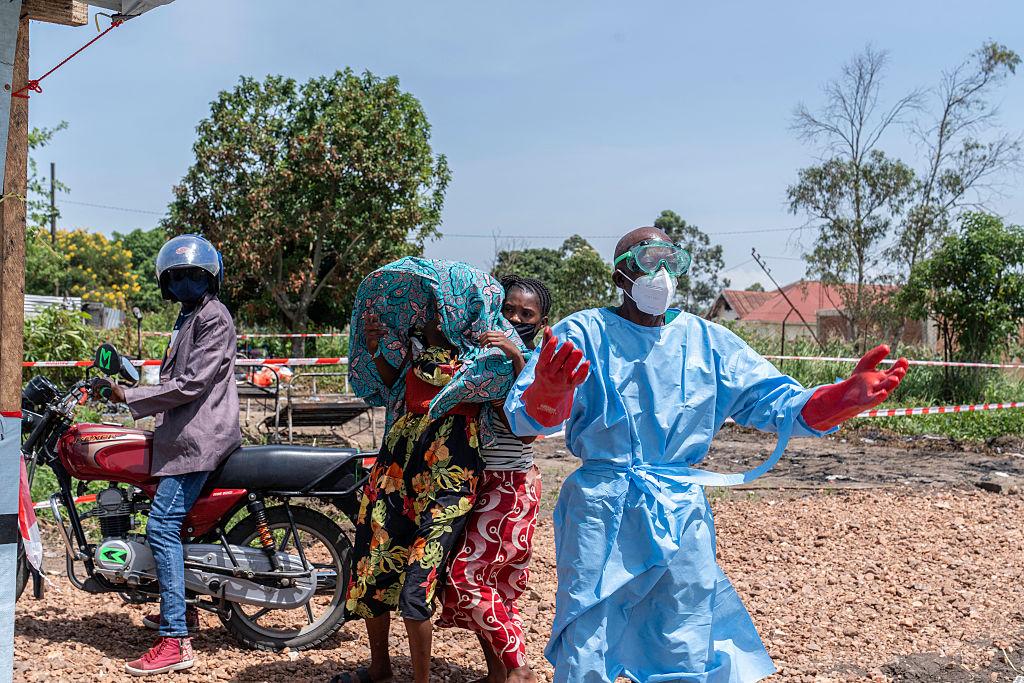
G7 urges global action as Ebola outbreak spreads in DR Congo, Uganda
G7 calls for coordinated Ebola response in DR Congo, Uganda
G7 urges global action as Ebola outbreak spreads in DR Congo, Uganda Read More »
G7 calls for coordinated Ebola response in DR Congo, Uganda
G7 urges global action as Ebola outbreak spreads in DR Congo, Uganda Read More »
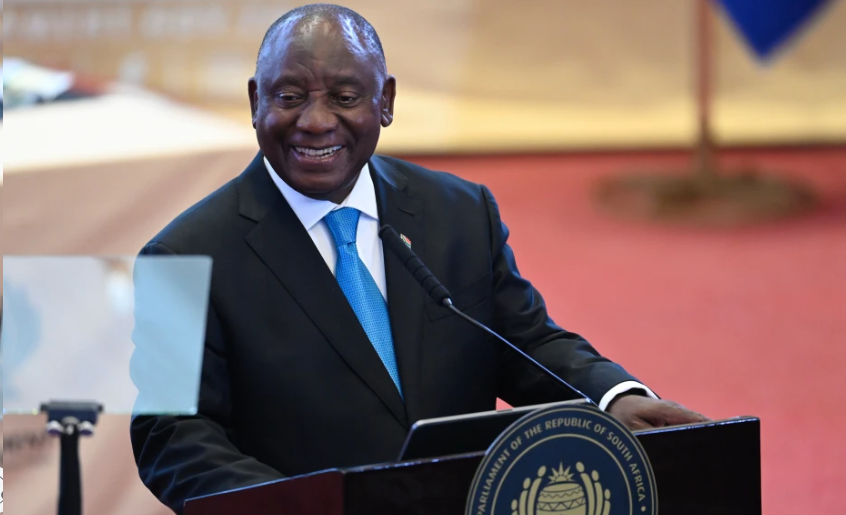
Ramaphosa says South Africa’s absence from G7 no surprise
Ramaphosa downplays South Africa’s absence from G7 summit Read More »

They call ‘for immediate, unconditional ceasefire,’ urge both Sudanese army, Rapid Support Forces to engage ‘meaningfully in serious, constructive negotiations’
G7, EU condemn Sudan atrocities as war enters third year Read More »

Heightened tensions in the Middle East risk a broader regional conflict, foreign ministers of the Group of Seven (G7) industrialized nations warned Sunday. “We, the G7 Foreign Ministers of Canada, France, Germany, Italy, Japan, the United Kingdom and the United States of America and the High Representative of the European Union express our deep concern at the heightened level of tension in the Middle East, which threatens to ignite a broader conflict in the region,” their joint statement said. Urging all involved parties to refrain from “perpetuating the current destructive cycle of retaliatory violence, to lower tensions and engage constructively toward de-escalation,” they said that “no country or nation stands to gain from a further escalation in the Middle East.” Commenting on the video conference by the G7 ministers, Italian Foreign Minister Antonio Tajani, who presided over it, said on X that “we called for a de-escalation and to end all violence.” Tajani said the countries also reaffirmed their commitment to an immediate cease-fire in Gaza and to humanitarian assistance to the besieged Palestinian enclave, adding “our priority is to restore peace in the Middle East.” Tensions have escalated between Lebanon’s Hezbollah and Israel since Tel Aviv assassinated the group’s senior military commander Fuad Shukr in an airstrike on a suburb of Beirut on July 30. Hamas political chief Ismail Haniyeh was assassinated in the Iranian capital Tehran the following day in an attack blamed on Israel, although Tel Aviv has not confirmed or denied its responsibility. Hamas and Iran have vowed to retaliate for Haniyeh’s assassination, while Hezbollah has pledged to respond to Shukr’s killing. Fears have grown over a full-blown war between Israel and Hezbollah amid a months-long exchange of cross-border fire. The escalation comes against the backdrop of an Israeli onslaught on Gaza which has killed nearly 39,600 people since last October following an attack by the Palestinian group Hamas.
G7: Heightened tensions in Middle East risk broader regional conflict Read More »

Wars to dominate G7 talks as foreign ministers seek path to peace
African issues to be discussed as foreign ministers of G7 Read More »

UN raises alarm over Iran-Israel tensions; G7 discusses restraint, possible sanctions amidst missile strikes on Israel.
UN chief warns of brink of conflict amid Iran-Israel tensions Read More »