

Kenya’s climate champion calls for urgent global action
As the COP29 climate summit continues, a Kenyan climate scientist pleads for global solidarity to address the climate crisis.
Kenya’s climate champion calls for urgent global action Read More »
As the COP29 climate summit continues, a Kenyan climate scientist pleads for global solidarity to address the climate crisis.
Kenya’s climate champion calls for urgent global action Read More »
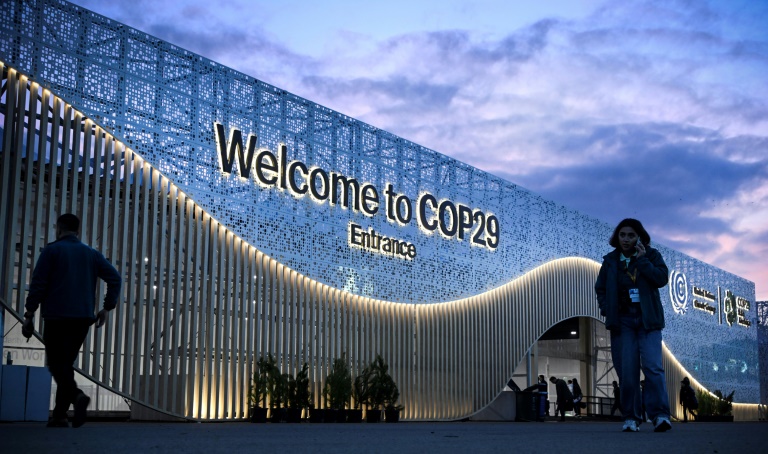
African leaders at the COP29 summit in Baku called for increased climate financing from wealthier nations to help them adapt to climate change and reduce emissions.
Africa calls for climate action, funding at summit Read More »

Climate change is disproportionately affecting Africa, leading to massive humanitarian crises and hindering socio-economic development.
WMO warns Africa’s rapid warming and extreme weather Read More »

Sea surface temperatures in the Southwest Pacific have risen three times faster than the global average since 1980 as marine heat waves have roughly doubled in frequency since then, said a report released Tuesday by the UN and the World Meteorological Organization (WMO). “State of the Climate in the South-West Pacific 2023,” released at the Pacific Islands Forum in Tonga by UN Secretary-General Antonio Guterres and WMO Secretary-General Celeste Saulo, was prepared in cooperation with National Meteorological and Hydrological Services, the UN Economic and Social Commission for Asia and the Pacific (ESCAP) and other UN agencies and international partners. It details how the sea level rise in the region is above the global average and also examines the climate factors in 2023, including the recent El Nino event as well as temperature, rainfall and extreme occurrences such as tropical cyclones, droughts and intense heat in the region. “Sea surface temperatures have risen three times faster than the global average since 1980,” the report said, noting “during that time, marine heat waves have approximately doubled in frequency since 1980 and are more intense and are lasting longer.” “Despite accounting for just 0.02 per cent of global emissions – the Pacific islands are uniquely exposed,” it said. “Their average elevation is just one to two meters above sea level; 90 percent of the population lives within 5 kilometers (3.1 miles) of the coast and half the infrastructure is within 500 meters of the sea,” it pointed out. The document further highlighted that “early warning systems facilitate proactive measures such as evacuation plans, resource allocation and infrastructure reinforcement.” “Even though they are a lifeline, they are available in only one third of Small Island Developing States globally,” it added. The El Nino weather phase is characterized by warmer-than-usual sea surface temperatures along the eastern Pacific Ocean coast and above-usual atmospheric pressure that span across the western and central Pacific. An El Nino, which can occur every two to seven years, started in June last year and ended in April. The La Nina phase manifests as the opposite of El Nino, as regions that get hotter during an El Nino cool down during a La Nina, since the surface temperature of the Pacific Ocean stays below minus 0.5C (31.1F) for three months.
Southwest Pacific sea temperatures rise faster than global average Read More »

African nations are calling for a significant increase in global climate financing to tackle the continent’s growing climate challenges.
Africa demands bigger climate funding share at COP Read More »

Climate crisis activists disrupted air traffic at Germany’s major airports on Thursday morning by gluing themselves to the tarmac. Activists from the Last Generation group gained access to the tarmacs of Berlin, Cologne-Bonn, Nuremberg and Stuttgart airports, forcing authorities to temporarily suspend flight operations for several hours for safety reasons. The group shared photos and videos of the action on X, showing several activists in orange safety vests sitting on the tarmac with banners saying “Oil kills” and “Sign the treaty.” The protests were part of the global “Oil kills” campaign. “Together with allied protest movements, including in the US and Canada, the Last Generation is calling for the signing of a fossil fuel phase-out treaty,” the group said in a statement. “The German government should commit to international negotiations with the aim of signing an intergovernmental treaty to phase out fossil fuels by 2030,” the statement said.
Climate crisis activists halt traffic at major German airports Read More »

Urgent action is needed to protect vulnerable children from the escalating climate crisis, the global body has said.
UNICEF: Heatwaves surge, killing children in Africa Read More »

The UN climate summit president warns rich nations must act fast to help developing countries tackle climate change.
UN Climate talks: Time running out for poorer countries Read More »

A new report reveals nearly 5 billion people endured a brutal heatwave in June, linked to climate change.
Extreme heat scorches millions as climate change takes toll Read More »
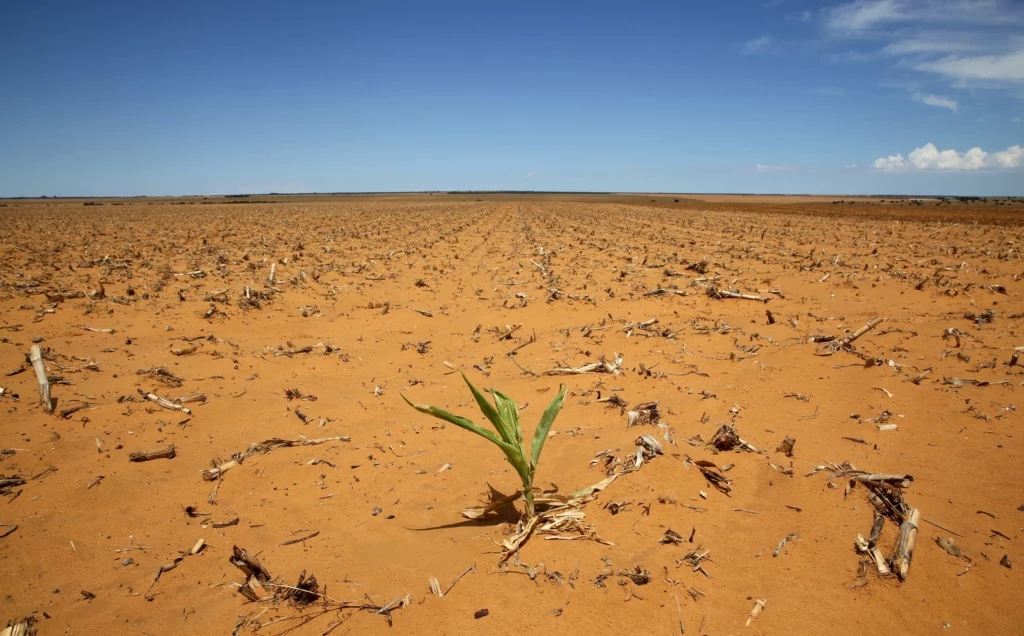
Earth warming rate hit an all time high in 2023 with 92% of last year’s surprising record
Earth warming at record rate Read More »