Kenya

Kenyan farmers find relief from witchweed with new bioherbicide

In western Kenya, small-scale farmers like Catherine Wanjala have long struggled with the devastating effects of witchweed, or striga, which drains essential nutrients from crops like maize, leading to stunted growth and poor yields. This parasitic plant has left families with limited food supplies and disrupted children’s education due to reduced income. Wanjala’s fortunes changed when she began using Kichawi Kill, a bioherbicide that targets only the invasive witchweed without affecting surrounding plants. Developed by the social enterprise Toothpick, Kichawi Kill has helped Wanjala increase her maize harvest by 675%, allowing her to keep her children fed and in school. Launched in Kenya in 2023 with support from the World Food Programme, Kichawi Kill is a groundbreaking solution crafted from a naturally occurring fungus. Unlike chemical pesticides, it does not accumulate in the soil or harm local ecosystems, offering a sustainable alternative to traditional weed control. David Sands, a plant pathologist and Toothpick co-founder, notes, “Using biology to solve biological problems is a far better way than using chemicals.” With nearly 12,000 farmers benefiting and almost a million dollars’ worth of crops saved, Kichawi Kill has shown promise across sub-Saharan Africa, where witchweed infestation affects 1.4 million hectares and causes billions in crop losses each year. Trials are underway for expansion into Uganda, Nigeria, Ethiopia, Cameroon, and Ghana, with hopes that this eco-friendly approach can transform farming for countless others.

Kenyan farmers find relief from witchweed with new bioherbicide Read More »

Kenya’s court blocks $740 million Adani energy contract

Kenya’s High Court has halted the government’s plans to award a major electricity transmission contract to India’s Adani Energy Solutions Limited, citing concerns over the procurement process. On Friday, the court issued an order blocking the Sh95.68 billion ($740 million) deal after the Law Society of Kenya (LSK) petitioned against it, highlighting issues of public participation and constitutional compliance. Justice Bahati Mwamuye ruled for a conservatory order, suspending any project agreements related to the development of transmission lines and substations. The project, designed to enhance Kenya’s electricity infrastructure, has been controversial since its signing on October 11 as a 30-year public-private partnership with the Kenya Electricity Transmission Company (KETRACO). It aimed to finance several high-voltage transmission lines. This court decision is seen as a win for local contractors who argued they were unfairly excluded from the bidding process. Adani Group’s recent attempt to secure a management lease at Nairobi’s Jomo Kenyatta International Airport has also faced public protests, with critics expressing concerns over potential threats to local jobs and sovereignty. Both the airport project and the transmission line deal have faced scrutiny over transparency and public involvement, with opponents warning of economic risks tied to foreign control of critical infrastructure.

Kenya’s court blocks $740 million Adani energy contract Read More »

African Union, SADC urge lifting of US sanctions on Zimbabwe

The Chairperson of the African Union Commission Moussa Faki Mahamat, and the Southern African Development Community (SADC) on Friday called for the unconditional lifting of all sanctions imposed against Zimbabwe. “The Chairperson remains concerned by the negative impact of continued sanctions against the Republic of Zimbabwe on the country’s socio-economic development and recovery efforts,” his office stated in a message marking SADC’s Anti-Sanctions Day, observed annually on Oct. 25. “In solidarity, the SADC community today joins Zimbabwe in calling for the immediate and unconditional removal of these unwarranted and cruel sanctions, which violate the basic tenets of international law and the Charter of the United Nations,” stated Zimbabwe’s President and current SADC chairperson, Emmerson Dambudzo Mnangagwa. Mnangagwa emphasized that the imposition of sanctions undermines the collective efforts toward regional integration and sustainable development. “May this message transcend our borders and reach the ears and rattle the conscience of those perpetuating these cruel sanctions. They must realize the extent of harm their reprehensible actions inflict on the generality of the people of Zimbabwe, on the SADC region, and Africa at large,” he said. – March to US Embassy in Harare In Zimbabwe, Anti-Sanctions Day was marked under the banner of the Broad Alliance against Sanctions, with a small group of citizens gathering outside the US Embassy to call for the removal of US-imposed sanctions on Zimbabwe. The Broad Alliance Against Sanctions is a group of supporters of Zimbabwe’s ruling party who have protested outside the US Embassy for about five years, making headlines with their near-daily picketing in the capital Harare. The anti-sanctions demonstrators have blamed the sanctions for harming Zimbabwe’s economy, asserting that the embargoes are responsible for the challenges the country faces, including difficulties in obtaining credit, medicine, and educational opportunities. “The sanctions must go. Every ordinary Zimbabwean is suffering because of these sanctions,” Edwin Mbewe, a protester, said. However, the US Embassy refuted claims that the sanctions are to blame for the country’s economic struggles, instead attributing Zimbabwe’s economic crisis to government corruption. “The notion that U.S. sanctions are the cause of Zimbabwe’s difficulties does not align with reality. This false narrative diverts attention from the real issues plaguing Zimbabwe. According to reports by Zimbabwe’s own Prosecutor General, Zimbabwe loses $1.8 billion to corruption annually,” said Pamela Tremont, the US ambassador to Zimbabwe, in a statement. Further commenting on its page on X, formerly Twitter, the US Embassy stated, “there are no sanctions on the 16 million people in Zimbabwe. We urge the Government to deal with economic mismanagement and corrupt actors who are the root causes of Zimbabwe’s economic troubles.” Ambassador Tremont also indicated that Zimbabwe’s economic problems are largely due to mismanagement, which she attributed to corruption costing the country about $2 billion annually. The US Embassy concluded, “sanctions affect only 11 individuals and 3 companies in Zimbabwe, preventing them from using the U.S. financial and banking systems for their personal affairs and traveling to the United States.”

African Union, SADC urge lifting of US sanctions on Zimbabwe Read More »

Africa looks to BRICS for UN security council membership

African Union Chair and Mauritanian President Mohamed Ould Ghazouani stated that Africa is counting on BRICS countries for support in obtaining permanent membership in the UN Security Council. Speaking at the “Expanded BRICS+” meeting during the BRICS Leaders Summit in Kazan, Russia, Ghazouani highlighted that the delays in achieving sustainable development goals and the current inadequacies in addressing serious global security, economic, and environmental challenges stem from political and economic imbalances in the international system. He emphasized the need for Africa to foster a new dynamic of multilateral cooperation, international solidarity, and assistance. For this to happen, he argued, the financial and political rules of international governance must be reformulated. Ghazouani pointed out that Africa’s ability to leverage development opportunities and unlock its growth potential is hindered by debt issues. He also noted that Africa’s weak representation in multilateral financial institutions has led to urgent development needs—particularly in infrastructure, technology transfer, and education—not being prioritized on the international agenda. He called for the establishment of a new development finance agreement that ensures equitable access to financing aligned with the priorities of least developed countries. Ghazouani underscored the importance of granting Africa permanent membership in the UN Security Council to ensure its voice is heard and its priorities are considered globally, expressing trust in BRICS countries for this support.

Africa looks to BRICS for UN security council membership Read More »

African leaders condemn Terror attack on Turkish defense facility

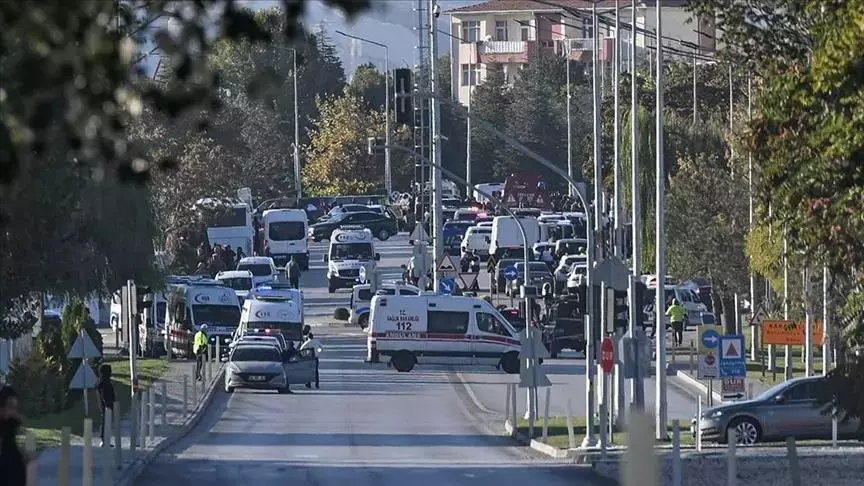
Mali, Senegal, and Somalia condemned a “heinous” terrorist attack on a defense industry facility in Turkey’s capital on Wednesday. Mali’s transitional government president, Col. Assimi Goita, expressed “total solidarity” with Turkey, a key defense partner, and extended condolences to the victims’ families. The attack on Turkish Aerospace Industries (TAI) resulted in at least five deaths and 22 injuries, according to Turkish Interior Minister Ali Yerlikaya. Senegal’s President Bassirou Diomaye Faye labeled the attack “cowardly,” expressing compassion for the Turkish people and condolences to President Recep Tayyip Erdogan. Somalia condemned the incident as a “heinous” act, noting it poses a threat to global peace. The Foreign Ministry commended the swift response of Turkish security forces and expressed confidence that the perpetrators would be brought to justice. Somalia reiterated its commitment to fighting terrorism alongside Turkey and the international community, calling for strengthened cooperation against such threats.

African leaders condemn Terror attack on Turkish defense facility Read More »

African leaders at BRICS Summit urge reforms and cooperation

African leaders at the ongoing BRICS summit in Russia highlighted key international issues on Wednesday. Originally consisting of Brazil, Russia, India, China, and South Africa, the coalition has expanded to include Iran, Egypt, Ethiopia, the United Arab Emirates, and Saudi Arabia. Turkey, Azerbaijan, and Malaysia have applied for membership, with many other nations also expressing interest. Egyptian President Abdel Fattah el-Sisi noted that the current international system’s shortcomings extend beyond political and security concerns to economic and development challenges. He emphasized the “escalation of the debt problem and the lack of necessary funding” as barriers to rapid economic growth for developing countries. He stressed Cairo’s commitment to raising awareness about its role in fostering development. South African President Cyril Ramaphosa called for reform of the World Trade Organization, advocating for updated trade rules to facilitate industrialization. He urged BRICS members to enhance cooperation by launching joint development programs in exports, industrial collaboration, and technology exchange. Ramaphosa also expressed concern over the ongoing crisis in Gaza and the Middle East, demanding an immediate ceasefire and recognition of Palestinian self-determination. Ethiopian Prime Minister Abiy Ahmed suggested reforms for the UN Security Council, asserting that developing nations must have their voices heard in global governance. “This is not just about representation; it’s about justice, equity, and allowing all nations to contribute,” he stated. The three-day summit marks the largest gathering of world leaders in Russia in decades, occurring as the West seeks to isolate Moscow over its actions in Ukraine.

African leaders at BRICS Summit urge reforms and cooperation Read More »

Kenya’s impeached deputy president says his life is in danger

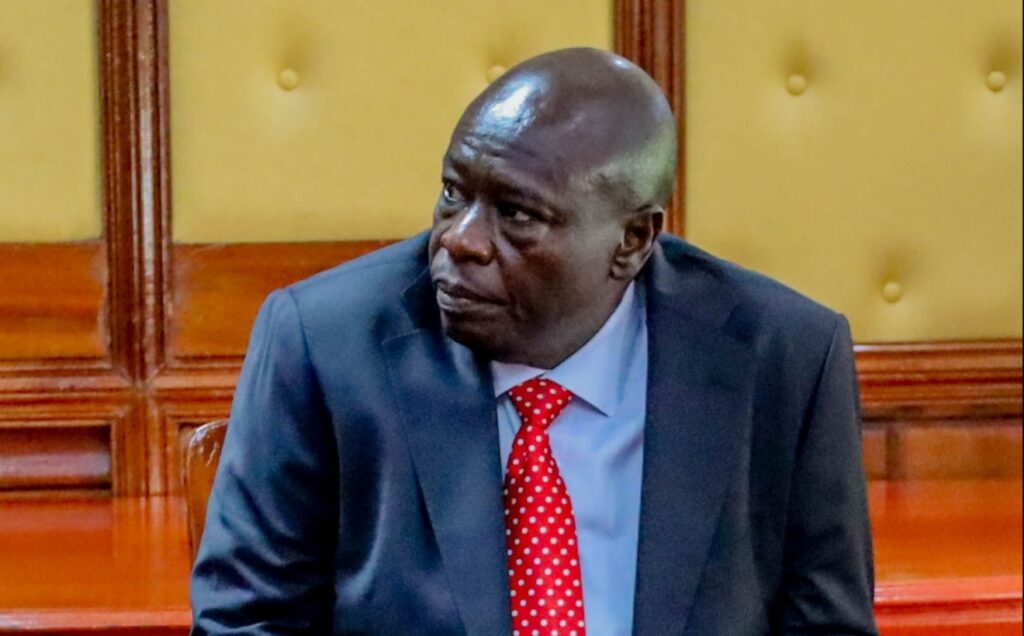
Lorem ipsum dolor sit amet, consectetur adipiscing elit, sed do eiusmod tempor incididunt ut labore et dolore magna aliqua. Ut enim ad minim veniam, quis nostrud exercitation ullamco laboris nisi ut aliquip ex ea  Kenya’s impeached deputy president, Rigathi Gachagua, said Sunday that his life is in immediate danger, accusing President William Ruto of orchestrating efforts to harm him. Gachagua, who is facing charges of corruption, abuse of office and inciting ethnic tensions, told reporters Sunday that assassination attempts had been made against him and his security detail had been suddenly withdrawn. In a statement following his impeachment, Gachagua expressed deep concern for his safety and that of his family. “I don’t feel safe…There have been two attempts to poison me,” he said, referencing incidents in Kisumu and Nyeri, where he said undercover agents tried to tamper with his food. He also said that security personnel assigned to protect him were disarmed and ordered to stay away, leaving him vulnerable. “Don’t kill us. Don’t kill my children,” he pleaded, calling for President Ruto to “leave me alone.” Gachagua is preparing for a legal battle to challenge his impeachment. Legal proceedings will begin soon and scrutinize whether due process was followed during the impeachment. Ruto has nominated Interior Minister Kithure Kindiki as his deputy. Despite lawmakers confirming Kithure Kindiki as Kenya’s new deputy president on Friday, the High Court in Nairobi has temporarily halted his appointment. The court issued the order in response to an urgent petition challenging Kindiki’s nomination by President Ruto, effectively freezing the process until a hearing scheduled for Thursday. The petition claims that the appointment process violated constitutional provisions.  All proceedings regarding Kindiki’s assuming office are on hold until the case is heard. consequat. Duis aute irure dolor in reprehenderit in voluptate velit esse cillum dolore eu fugiat nulla pariatur. Excepteur sint occaecat cupidatat non proident, sunt in culpa qui officia deserunt mollit anim id est laborum.

Kenya’s impeached deputy president says his life is in danger Read More »

Scroll to Top