Niger

Pope Francis renews appeal to avoid escalation in Middle East

Pope Francis on Wednesday renewed his appeal to avoid escalation of conflict in the Middle East, Vatican News reported. “I reiterate my appeal to all parties involved to ensure that the conflict does not spread and to immediately cease fire on all fronts, starting from Gaza where the humanitarian situation is extremely serious and unsustainable,” the pontiff said while addressing the weekly general audience. “I pray that the sincere search for peace will extinguish strife, love will overcome hatred and revenge will be disarmed by forgiveness,” he added. Israel has killed nearly 40,000 Palestinians in Gaza since the Oct. 7, 2023 Hamas incursion. The relentless military campaign has levelled much of the territory and left most of the people homeless, and hungry.  Tensions have grown after the assassination of Hamas leader Ismail Haniyeh in Iran’s capital Tehran on July 31. Iran and Hamas have blamed Israel, which has neither confirmed nor denied responsibility. The pope also asked the faithful to join his prayers for the “war-torn peoples” of Ukraine, Myanmar and Sudan.

Pope Francis renews appeal to avoid escalation in Middle East Read More »

Cholera death toll in Nigeria rises to 156

The cholera outbreak in Nigeria has now claimed 156 lives, according to the Nigeria Center for Disease Control (NCDC). Between July 15 and 21, the country reported 170 new cases and three deaths. Since January, there have been 4,809 reported cholera cases. In response, medical supplies for case management and infection control have been distributed to health centers nationwide. Nigeria declared a national emergency on June 26 due to the outbreak. Last year, Nigeria recorded over 3,000 cholera cases and more than 100 deaths. Cholera, caused by the bacterium Vibrio cholerae and spread through contaminated food and water, can lead to severe diarrhea and dehydration, which can be fatal if untreated. The country’s challenges with clean water access and medical resources exacerbate the risk of disease. Additionally, Nigeria frequently contends with outbreaks of malaria, polio, typhoid, and monkeypox.

Cholera death toll in Nigeria rises to 156 Read More »

Africa feels climate change effects more severely

The impacts of climate change on livelihoods are varying significantly across regions, with the most vulnerable areas, including many African countries, experiencing severe daily disruptions. According to the Intergovernmental Panel on Climate Change (IPCC), African countries, despite contributing minimally to greenhouse gas emissions, are among the hardest hit by human-induced climate change. Factors such as high dependence on rain-fed agriculture, inequitable access to financial resources, and weak adaptation capacity contribute to the heightened impact. The ND-GAIN index highlights that nine out of the ten most vulnerable and least resilient countries to climate change are in Africa, including Chad, the Central African Republic, Guinea-Bissau, Eritrea, the Democratic Republic of the Congo, Sudan, Niger, Zimbabwe, and Liberia. Climate change is causing rising ocean levels that threaten Africa’s coastal metropolises with reduced land area, increased coastal flooding, and stronger storm surges. The African coastline has been experiencing a steady rise in sea levels for the past four decades. Experts predict that if this trend continues, sea levels could rise by 0.3 meters by 2030, affecting 117 million Africans. The survival of Africa’s coastal ports, which handle an estimated 90% of the continent’s import and export trade, is at risk. This poses a concern for Africa’s rapidly growing population and urbanization in coastal areas. Rising sea levels reveal the stark and destructive impact of global warming on a continent already facing rapid population growth and land pressure. Coastal cities are also facing increased public health risks due to rising groundwater levels and the transformation of urban areas into wetlands. In addition, rising sea levels are causing severe flooding and erosion. The World Bank estimates that erosion, flooding, and pollution are causing approximately $3.8 billion in annual damage along 56% of the coastline in Benin, Ivory Coast, Senegal, and Togo. Alexandria, located in the Nile Delta, is among the densely populated coastal cities at risk of being submerged within 30 years. A sensitivity assessment for Alexandria, Rosetta, and Port Said predicts that a 0.5-meter rise in sea levels by 2050 could displace over 2 million people, result in 214,000 job losses, and cause over $35 billion in damages. A 1-meter rise could lead to $50 billion in damage solely in Alexandria. In Lagos, Nigeria, a city of over 20 million people, the total annual cost of river and water flooding is estimated at $4 billion. Some forecasts suggest that a 3-degree increase in global warming could force one-third of Lagos’s population to relocate due to rising sea levels. The World Bank reports that Dakar, Senegal, has $39 billion worth of economic assets vulnerable to flooding. The city of St. Louis in Senegal is disappearing under rising waters, displacing many residents. Mozambique’s coastal cities are also at risk, situated along a cyclone path that is expanding and intensifying due to rising sea surface temperatures.


Africa feels climate change effects more severely Read More »

Nigeria court convicts 125 Boko Haram militants in mass trial

A Nigerian court has convicted 125 Boko Haram militants and financiers on various terrorism-related charges. According to the Attorney General’s office, the convictions include charges of terrorism, terrorism financing, material support for terrorism, and International Criminal Court-related crimes. The two-day trial was conducted by five Federal High Court judges at a military detention facility in Kanji, Niger State. Boko Haram’s insurgency, which began in 2009, has caused thousands of deaths and displaced millions, creating a severe humanitarian crisis in northeastern Nigeria. Of those convicted, 85 were found guilty of terrorism financing, 22 of ICC-related crimes, and the rest for terrorism offenses, receiving various prison sentences. The last major trials of Boko Haram suspects occurred between 2017 and 2018, resulting in 163 convictions and 887 acquittals. The 2014 kidnapping of over 270 girls from Chibok by Boko Haram drew global attention, including the #BringBackOurGirls campaign supported by former U.S. First Lady Michelle Obama. While more than 180 girls have since been freed or escaped, many remain missing, and those who have returned face ongoing challenges in their communities.

Nigeria court convicts 125 Boko Haram militants in mass trial Read More »

French company reports major losses due to challenges in Niger

The French nuclear fuel specialist reported a loss of 133 million euros for the first half of the year, a sharp decline from the 117 million euros net profit in Q1 2023. The company’s difficulties this year include Niger’s decision in June to revoke its rights to the Imouraren mine, the world’s largest with estimated reserves of 200,000 tons. Additionally, its subsidiary Somair, which is 63% owned by Orano, is facing issues exporting uranium from its Arlit operations in northern Niger due to an export ban imposed by the military government in Niamey. As a result, the company had to sell its uranium production, which was initially intended to finance the site’s closure.

French company reports major losses due to challenges in Niger Read More »

Activists urge action to address global food crisis

Activists and chefs worldwide joined a new campaign on Thursday (July 25) to spotlight the global food crisis. In Rio de Janeiro, Brazil, where G20 leaders were meeting for a two-day summit, campaigners staged a demonstration. Members of various NGOs distributed empty plates from a mock food truck. The CEO of Sustainable Development Goal 2 Advocacy explained the symbolism behind the empty plates: “We use these plates to represent the 733 million people worldwide who face hunger. We need urgent action and commitment to drive change, building on Brazil’s and the G20’s promises to create an alliance for this cause.” The protest came after Brazil committed to partially funding the global alliance against hunger and poverty.

Activists urge action to address global food crisis Read More »

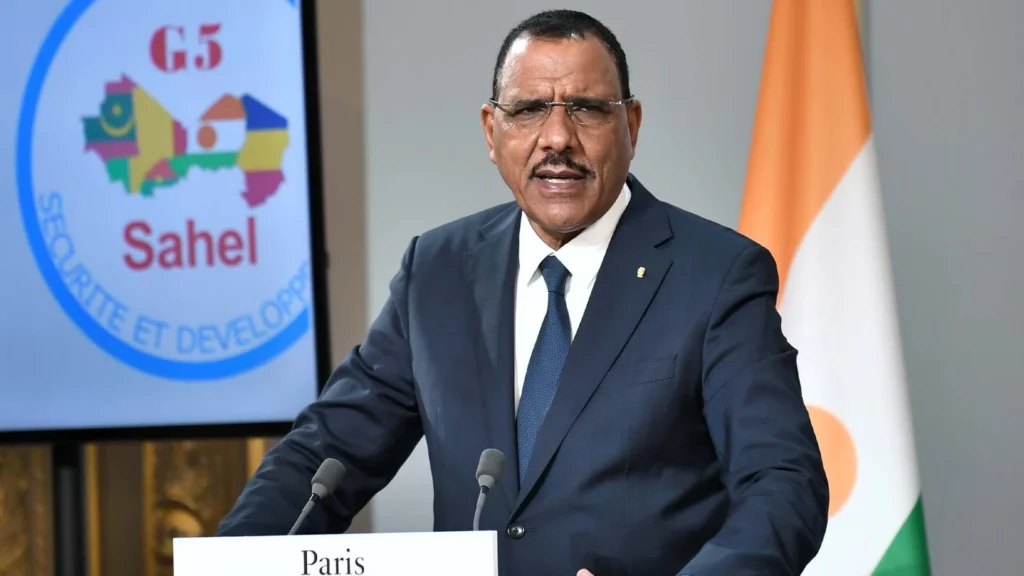
Mohamed Bazoum remains defiant despite detention

A year ago, Mohamed Bazoum was ousted in a military coup led by General Tiani, who seized control of Niger with army backing. Since then, the military has entrenched its authority by curbing freedoms, suspending political parties, and silencing dissent. There is no set timeline for restoring civilian rule, and Niger has distanced itself from Western allies while aligning more closely with Russia. Bazoum and his wife, Hadiza, have been under detention at the presidential residence since October, cut off from the outside world except for regular visits from his doctor. He has no phone and is under constant guard, with his doctor bringing him food and books. Despite these harsh conditions, Bazoum remains resolute in refusing to resign. A former philosophy professor, he finds solace in reading extensively, from classic authors like Shakespeare and Tolstoy to contemporary figures like Romain Gary. He also reads political texts, including Dominique Moïsi’s “The Triumph of Emotions.” Even after a bout of malaria weakened him in the spring, Bazoum remains determined. He refuses to step down, despite the recent lifting of his presidential immunity, which could lead to a trial.

Mohamed Bazoum remains defiant despite detention Read More »

UN: 733 million people globally faced hunger in 2023

Around 733 million people faced hunger in 2023, according to the latest State of Food Security and Nutrition in the World (SOFI) report published on Wednesday by five United Nations specialised agencies. Hunger affected one out of every eleven people in the world and one out of five in Africa, with the number rising on that continent. The report highlights that access to adequate food remains elusive for billions with around 2.33 billion people globally faced moderate or severe food insecurity in 2023. It add that this number that has not changed significantly since the sharp upturn in 2020, amid the Covid-19 pandemic. David Laborde, the Food and Agriculture Organization’s director of agri-food economics, says solving the problem is a political choice, and also depends on “how much money we are ready to put on the table”. “Today we produce enough food on this planet to feed everyone. So if we want to solve the position by 2030, it’s technically feasible,” he says. While there has been some progress in specific areas, hunger in places like Sudan and the Gaza Strip has been dramatically worsened by ongoing conflicts. And the report predicts that if current trends continue, about 582 million people will be “chronically undernourished by 2030″, half of them in Africa. Laborde said chronic hunger was a crisis impacting people not only right now, because its impact would still be felt in the future. “Pregnant women, kids that face malnutrition problem today, will pay the price all of their life. So by not solving the problem today, we are basically impoverishing these countries in the future,” he says. The report says food insecurity and malnutrition are worsening due to a combination of factors, including persisting food price inflation that continues to erode economic gains for many people in many countries. And major drivers like conflict, climate change, and economic downturns are becoming more frequent and severe. These issues, along with underlying factors such as unaffordable healthy diets, unhealthy food environments and persistent inequality, are now coinciding simultaneously, amplifying their individual effects. Achieving the Sustainable Development Goal of Zero Hunger, it says, requires a multi-faceted approach and targeted interventions. This includes transforming and strengthening agrifood systems, addressing inequalities, and ensuring affordable and accessible healthy diets for all. The UN agencies are calling for increased and more cost-effective financing, with a clear and standardised definition of financing for food security and nutrition.

UN: 733 million people globally faced hunger in 2023 Read More »

Scroll to Top