

Nigeria’s Durbar festival recognized by UNESCO
The Durbar festival is not only a cultural celebration but also an important economic activity for the region.
Nigeria’s Durbar festival recognized by UNESCO Read More »
The Durbar festival is not only a cultural celebration but also an important economic activity for the region.
Nigeria’s Durbar festival recognized by UNESCO Read More »
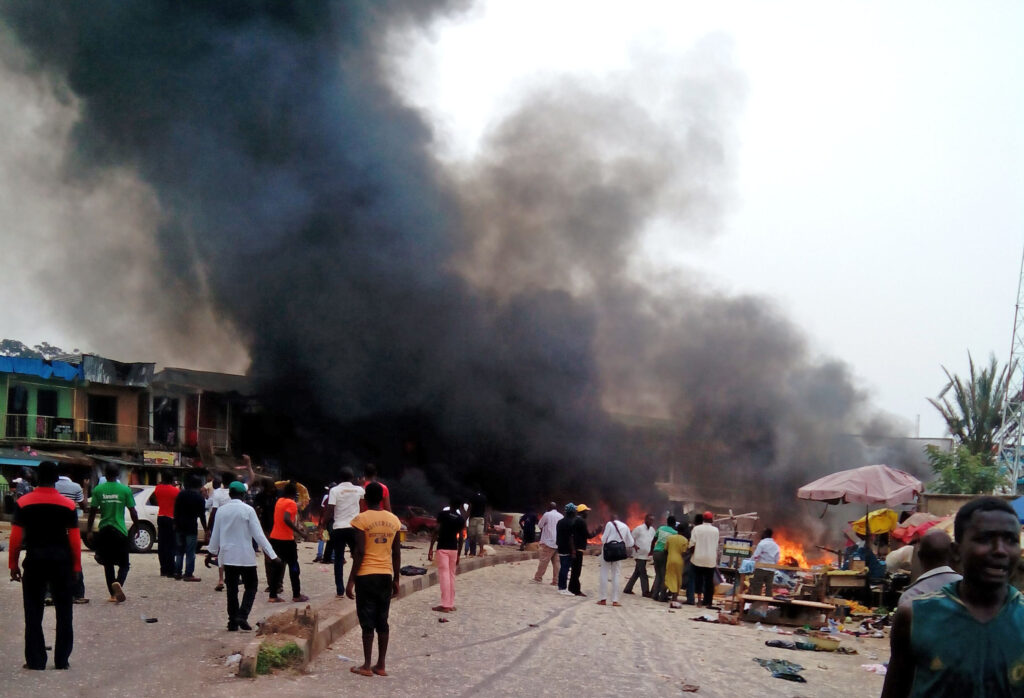
The incident occurred when a commercial bus triggered an improvised explosive device (IED) planted under a road.
Bomb blast kills 12 in Nigeria bus Read More »

Young Burundians are fleeing to Tanzania in search of work, but many face harsh treatment upon arrival. Accused of being illegal migrants, they are often hunted down, arrested, beaten, and imprisoned before being deported back to Burundi. Once home, many are taken in by families in Mabanda, southern Burundi. Habimana Domatien, a 23-year-old from Kayanza in northern Burundi, recalls his traumatic experience in Kasulu Prison. “We were surrounded, arrested, and taken to a station. We were beaten at night, slapped, and severely mistreated. It was very hard,” he says. Host families in Burundi are calling on Tanzanian authorities to stop the mistreatment of these young migrants. “We ask Tanzania not to harm them. Some return traumatized, depressed, and almost beyond recovery. The Tanzanian government should treat our youth with kindness, as we do when they come to us,” says Olive Sindayihebura, a representative of host families. NGOs report that around 300 children have been expelled from Tanzania in the past two months. Ferdinand Simbaruhije, spokesperson for the National Federation of Associations for Children’s Welfare in Burundi (FENADEB), states that between July and September of this year, 149 children were expelled—147 boys and two girls. An additional 182 children returned voluntarily, bringing the total to 291. FENADEB attributes the migration of Burundian youth to widespread poverty, with many falling prey to human trafficking networks operated by Burundians in collaboration with Tanzanian traffickers.
Burundian youth flee to Tanzania for Work, face abuse and deportation Read More »

The UN’s International Fund for Agricultural Development (IFAD) is urgently calling for increased investments to support small-scale farmers in combating land degradation and desertification. These efforts are critical to safeguarding global food security, climate stability, and ecosystems, as the sixteenth Conference of the Parties (COP16) to the United Nations Convention to Combat Desertification (UNCCD) takes place this week in Riyadh, Saudi Arabia. IFAD President Alvaro Lario, who is attending COP16 in Riyadh, is advocating for small-scale farmers and producers who are grappling with the devastating effects of drought and desertification—challenges that threaten the livelihoods of approximately 1.5 billion people worldwide. The drought in East Africa, which has been the worst in over 40 years, and the worsening conditions in North Africa underscore the urgency of addressing these issues. In the Sahel region, which forms a barrier to the Sahara Desert, desertification has advanced up to 200 kilometers southward over the past 30 years. This year, Zimbabwe has experienced its worst drought in living memory, leading President Emmerson Mnangagwa to declare a nationwide state of disaster. Many small-scale farmers in Zimbabwe rely on rainfed agriculture, and the ongoing drought—driven by El Niño—has led to widespread crop failure. An estimated 40% of farmers have lost their entire harvest, and poor infrastructure, including broken irrigation systems, is further hampering efforts to grow crops. The situation is expected to leave 6 million people in Zimbabwe food insecure during the 2024-2025 lean season (January to March). In response, IFAD has been supporting initiatives such as the Smallholder Irrigation Revitalization Programme (SIRP), which is helping thousands of farmers maintain crop production despite limited rainfall. This project, benefiting over 27,000 rural households, aims to restore irrigation systems and improve climate resilience and food security across Zimbabwe. At COP16, IFAD will emphasize the urgent need for greater investment in small-scale farmers, who produce 40% of the world’s food, and 60% of Africa’s food. “The world’s 500 million small farms are the backbone of global food systems,” said IFAD President Lario. “They are the most vulnerable to climate change and the least prioritized for investment. Supporting them is essential if we want to ensure long-term food security.” IFAD will also stress that neglecting investment in food security, poverty reduction, and stability has dire consequences. In addition to the human and economic toll, land degradation and climate change could drive as many as 700 million people to migrate by 2050, further exacerbating global challenges. Small-scale farmers play a pivotal role in economic stability, particularly in many developing countries where agriculture is a key driver of GDP.
IFAD urges investment in small farmers at COP16 Read More »

Rewriting the Thiaroye Massacre and the Shifting Historical Narrative The massacre at Thiaroye, which took place on December 1, 1944, remains one of the darkest chapters in the history of French colonialism in West Africa. The victims were soldiers of the “Tirailleurs Sénégalais,” a corps of colonial infantry drawn from West Africa to fight in both World Wars. Tensions had been building among the soldiers over unpaid wages in the days leading up to the massacre, and on that fateful day, French troops turned their guns on unarmed African soldiers, killing many. For years, French authorities downplayed the incident, labeling it as a “mutiny.” Early French military reports suggested that only 35 soldiers were killed, while later reports increased the death toll to 70. But recent research, including estimates based on the number of soldiers stationed at the camp, suggests the true toll could have been in the hundreds, with some historians estimating up to 400 deaths. On Thursday, French President Emmanuel Macron officially acknowledged the event as a massacre for the first time, in a letter to Senegal’s President Diomaye Faye, which was seen by The Associated Press. “France must recognize that on that day, the confrontation between soldiers and riflemen who demanded their full legitimate wages be paid, triggered a chain of events that resulted in a massacre,” Macron wrote. However, many historians reject the notion of a “confrontation” between the French soldiers and the African riflemen. Martin Mourre, a French historian and author of Thiaroye 1944: History and Memory of a Colonial Massacre, argues that the events were nothing less than the execution of unarmed soldiers. He points to the absence of any mention of weapons in the trial of the accused African soldiers and the lack of injuries among the French troops as evidence that there was no violent uprising, but rather a cold-blooded massacre. While Macron’s letter recognizes the event as a massacre, it avoids specifying the exact number of casualties, which remains a source of contention. The lack of transparency in the historical record has compounded the controversy. In 2014, French President François Hollande handed over archives on Thiaroye to Senegal’s then-president, Macky Sall. However, key documents—such as those detailing the location of mass graves and the precise number of soldiers present—remain elusive. It is unclear whether these documents still exist or if they have been lost or withheld. Senegalese efforts to uncover the truth have also been hampered. Under President Sall, historical investigations into the massacre were often delayed or obstructed, with some historians blaming diplomatic sensitivities toward France. “The archives remained inaccessible until this year for obscure reasons,” says Mourre. Mamadou Diouf, a Senegalese historian, notes that Sall’s reluctance to confront the painful history was likely aimed at avoiding tensions with the French government. However, Senegal’s newly elected President Bassirou Diomaye Faye has vowed to take control of the country’s historical narrative, with a focus on Thiaroye. Since his election in March, Faye has emphasized the importance of recognizing the massacre as a crucial part of Senegal’s national story. The government has organized extensive commemorations from December 1 to April 2025 to raise awareness and educate the public about the massacre. These efforts are part of a broader attempt to address the colonial past and reclaim Senegal’s historical voice. “The authorities’ goal behind these major commemorations is to integrate Thiaroye into Senegal’s national identity,” says Babacar Ndiaye, a political analyst at the Wathi think tank. “This is not just about remembering the massacre but ensuring the younger generation, many of whom may not know the full story, are exposed to it through television, media, and social media.” The 80th anniversary of the Thiaroye massacre occurs amid a shift in France’s influence in West Africa, where former colonies are increasingly distancing themselves from Paris. In recent years, countries like Mali, Burkina Faso, and Niger have expelled French forces, while Chad has ended its military cooperation agreement with France. Senegal remains one of the few countries where French troops are still present, although they play a more limited, supportive role. President Faye has made clear that he does not view the continued French military presence favorably. “Historically, France enslaved, colonized, and stayed here,” he remarked. “It would be difficult to imagine another country, like China or Russia, having a military base in France.” At a ceremony on Sunday at the Thiaroye military cemetery, Faye announced several initiatives to honor the victims. These include the construction of a memorial, the creation of a research center to house the massacre’s archives, and the addition of history lessons on the event to the national school curriculum. December 1 will now be officially recognized as “National Day of the Tirailleur.” “We are doing this to fulfill our duty of remembrance, to reveal the truth, and to discharge a moral debt to the riflemen and their families,” Faye said, addressing an audience that included France’s Foreign Minister Jean-Noël Barrot, as well as heads of state from neighboring countries. Macron did not attend the ceremony. The official narratives continue to differ. While the French foreign minister referred to the events as a “cry of anger” from the riflemen, which France “repressed in a bloodshed,” President Faye characterized the killings as “a premeditated act”—a clear sign of the ongoing tension between the two countries over how to reckon with this painful chapter of history.
France acknowledges Thiaroye massacre amid ongoing disputes Read More »
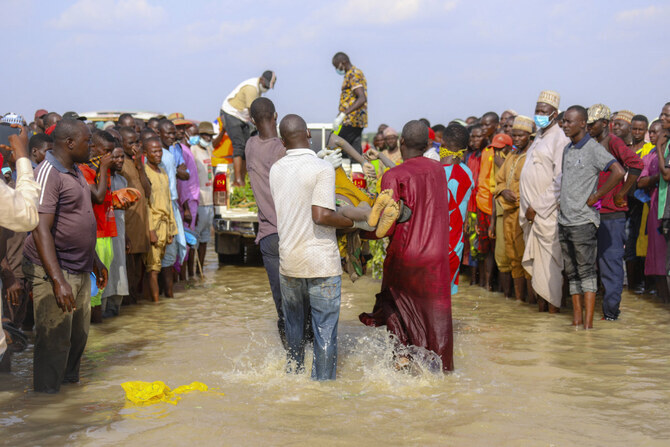
Authorities confirmed 24 survivors, some hospitalized, as divers continue searching, though hopes of finding more survivors are fading
Over 50 dead, dozens missing after boat tragedy on Nigeria’s River Niger Read More »

A boat capsized on the Niger River in central Nigeria, resulting in the tragic loss of at least 27 lives.
Boat capsizes in Nigeria, killing dozens Read More »

France remains Nigeria’s largest trading partner in Africa, underscoring the importance of this diplomatic engagement
France seeks stronger ties with Nigeria during Tinubu’s Paris visit Read More »

France’s changing Africa strategy is highlighted by President Tinubu’s visit, as Nigeria and France explore new economic opportunities through the Franco-Nigerian Business Council.
Tinubu visits France, signals new direction for Africa ties Read More »

Nigeria’s state-owned oil firm, NNPC Ltd, has successfully restarted operations at the Port Harcourt refinery, a significant step towards reducing the country’s reliance on fuel imports.
Nigeria’s port Harcourt refinery resumes operations Read More »