South Africa

Over 600 million women and girls affected by war, U.N. warns

Over 600 million women and girls are now affected by war, marking a 50% increase in a decade, and they fear being forgotten amid a global backlash against women’s rights, according to top U.N. officials. U.N. Secretary-General Antonio Guterres highlighted in a recent report that progress in women’s rights is eroding amid escalating armed conflicts. He noted that the goals of equal participation in peace negotiations, outlined in a Security Council resolution from 2000, remain largely unmet. Guterres pointed out that women’s leadership in peace efforts is being undermined, with decision-making predominantly male-dominated. He warned that as long as patriarchal structures persist, achieving peace will remain challenging. The report revealed alarming statistics: the proportion of women killed in armed conflicts doubled in 2023, cases of conflict-related sexual violence rose by 50%, and the number of girls affected by serious violations increased by 35%. Sima Bahous, head of UN Women, echoed these concerns, emphasizing the lack of attention to women’s voices in peace initiatives. She highlighted the dire situations faced by women in places like Afghanistan, Gaza, Sudan, and Myanmar, expressing that 612 million affected women and girls wonder if they have been forgotten by the international community. Bahous stressed the urgent need for action, noting that many women in conflict zones face severe food insecurity and high maternal mortality rates. Women’s participation in peace negotiations remains low, with less than 10% involvement in peace processes overall. To address these issues, U.N. Deputy Secretary-General Amina Mohammed announced a “Common Pledge on Women’s Participation in Peace Processes,” calling for concrete commitments to include women as mediators and ensure their meaningful involvement in peace negotiations. Ambassadors at the meeting highlighted a persistent lack of political will to support women’s roles in peace processes, underscoring the need for renewed commitment from member states.

Over 600 million women and girls affected by war, U.N. warns Read More »

African Union, SADC urge lifting of US sanctions on Zimbabwe

The Chairperson of the African Union Commission Moussa Faki Mahamat, and the Southern African Development Community (SADC) on Friday called for the unconditional lifting of all sanctions imposed against Zimbabwe. “The Chairperson remains concerned by the negative impact of continued sanctions against the Republic of Zimbabwe on the country’s socio-economic development and recovery efforts,” his office stated in a message marking SADC’s Anti-Sanctions Day, observed annually on Oct. 25. “In solidarity, the SADC community today joins Zimbabwe in calling for the immediate and unconditional removal of these unwarranted and cruel sanctions, which violate the basic tenets of international law and the Charter of the United Nations,” stated Zimbabwe’s President and current SADC chairperson, Emmerson Dambudzo Mnangagwa. Mnangagwa emphasized that the imposition of sanctions undermines the collective efforts toward regional integration and sustainable development. “May this message transcend our borders and reach the ears and rattle the conscience of those perpetuating these cruel sanctions. They must realize the extent of harm their reprehensible actions inflict on the generality of the people of Zimbabwe, on the SADC region, and Africa at large,” he said. – March to US Embassy in Harare In Zimbabwe, Anti-Sanctions Day was marked under the banner of the Broad Alliance against Sanctions, with a small group of citizens gathering outside the US Embassy to call for the removal of US-imposed sanctions on Zimbabwe. The Broad Alliance Against Sanctions is a group of supporters of Zimbabwe’s ruling party who have protested outside the US Embassy for about five years, making headlines with their near-daily picketing in the capital Harare. The anti-sanctions demonstrators have blamed the sanctions for harming Zimbabwe’s economy, asserting that the embargoes are responsible for the challenges the country faces, including difficulties in obtaining credit, medicine, and educational opportunities. “The sanctions must go. Every ordinary Zimbabwean is suffering because of these sanctions,” Edwin Mbewe, a protester, said. However, the US Embassy refuted claims that the sanctions are to blame for the country’s economic struggles, instead attributing Zimbabwe’s economic crisis to government corruption. “The notion that U.S. sanctions are the cause of Zimbabwe’s difficulties does not align with reality. This false narrative diverts attention from the real issues plaguing Zimbabwe. According to reports by Zimbabwe’s own Prosecutor General, Zimbabwe loses $1.8 billion to corruption annually,” said Pamela Tremont, the US ambassador to Zimbabwe, in a statement. Further commenting on its page on X, formerly Twitter, the US Embassy stated, “there are no sanctions on the 16 million people in Zimbabwe. We urge the Government to deal with economic mismanagement and corrupt actors who are the root causes of Zimbabwe’s economic troubles.” Ambassador Tremont also indicated that Zimbabwe’s economic problems are largely due to mismanagement, which she attributed to corruption costing the country about $2 billion annually. The US Embassy concluded, “sanctions affect only 11 individuals and 3 companies in Zimbabwe, preventing them from using the U.S. financial and banking systems for their personal affairs and traveling to the United States.”

African Union, SADC urge lifting of US sanctions on Zimbabwe Read More »

At BRICS, South Africa’s stance on Palestine welcomed

South Africa’s President Cyril Ramaphosa said many countries have welcomed the position his country took on the Palestinian issue, including its genocide case against Israel at the top UN court. Ramaphosa made the remarks in his BRICS media wrap-up late Thursday, saying he got an opportunity to have bilateral discussions with countries such as Egypt, Congo, as well as Iran, and the UAE. ‘‘All of them welcomed the stance that has been taken by South Africa in relation to Palestine,’’ he said, a video of which was posted on his official X account. Ramaphosa attended the Oct. 22-24 BRICS summit in the Russian city of Kazan. Ramaphosa said he informed the countries that in a few days South Africa will be submitting its full genocide case against Israel at the International Court of Justice (ICJ). South Africa filed a case with the ICJ tribunal based in The Hague in late 2023, accusing Israel, which has bombed Gaza since last October, of failing to uphold its commitments under the 1948 Genocide Convention. Several countries, including, Türkiye, Nicaragua, Palestine, Spain, Mexico, Libya and Colombia, have all joined the case which began public hearings in January. In May, the ICJ ordered Israel to halt its offensive in the southern Gaza city of Rafah. It was the third time the 15-judge panel issued preliminary orders seeking to rein in the death toll and alleviate humanitarian suffering in the blockaded enclave, where the death toll nears 43,000. Ramaphosa said the expansion of BRICS strengthens the Global South, calling it a platform that promotes multilateralism and development. He said during bilateral talks, leaders wished South Africa well for its upcoming G20 presidency in December. Ramaphosa said Pretoria will be promoting the interests of Africa and the Global South, promoting the concept of solidarity, equality and sustainable development.

At BRICS, South Africa’s stance on Palestine welcomed Read More »

Africa looks to BRICS for UN security council membership

African Union Chair and Mauritanian President Mohamed Ould Ghazouani stated that Africa is counting on BRICS countries for support in obtaining permanent membership in the UN Security Council. Speaking at the “Expanded BRICS+” meeting during the BRICS Leaders Summit in Kazan, Russia, Ghazouani highlighted that the delays in achieving sustainable development goals and the current inadequacies in addressing serious global security, economic, and environmental challenges stem from political and economic imbalances in the international system. He emphasized the need for Africa to foster a new dynamic of multilateral cooperation, international solidarity, and assistance. For this to happen, he argued, the financial and political rules of international governance must be reformulated. Ghazouani pointed out that Africa’s ability to leverage development opportunities and unlock its growth potential is hindered by debt issues. He also noted that Africa’s weak representation in multilateral financial institutions has led to urgent development needs—particularly in infrastructure, technology transfer, and education—not being prioritized on the international agenda. He called for the establishment of a new development finance agreement that ensures equitable access to financing aligned with the priorities of least developed countries. Ghazouani underscored the importance of granting Africa permanent membership in the UN Security Council to ensure its voice is heard and its priorities are considered globally, expressing trust in BRICS countries for this support.

Africa looks to BRICS for UN security council membership Read More »

African leaders condemn Terror attack on Turkish defense facility

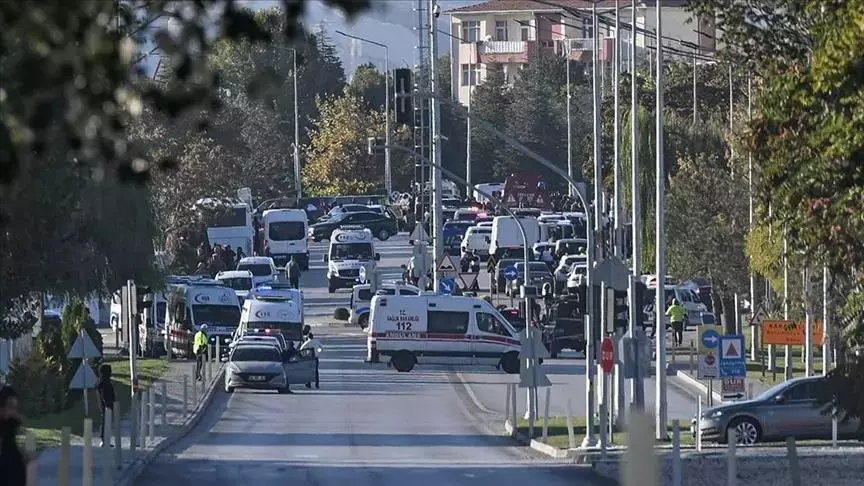
Mali, Senegal, and Somalia condemned a “heinous” terrorist attack on a defense industry facility in Turkey’s capital on Wednesday. Mali’s transitional government president, Col. Assimi Goita, expressed “total solidarity” with Turkey, a key defense partner, and extended condolences to the victims’ families. The attack on Turkish Aerospace Industries (TAI) resulted in at least five deaths and 22 injuries, according to Turkish Interior Minister Ali Yerlikaya. Senegal’s President Bassirou Diomaye Faye labeled the attack “cowardly,” expressing compassion for the Turkish people and condolences to President Recep Tayyip Erdogan. Somalia condemned the incident as a “heinous” act, noting it poses a threat to global peace. The Foreign Ministry commended the swift response of Turkish security forces and expressed confidence that the perpetrators would be brought to justice. Somalia reiterated its commitment to fighting terrorism alongside Turkey and the international community, calling for strengthened cooperation against such threats.

African leaders condemn Terror attack on Turkish defense facility Read More »

African leaders at BRICS Summit urge reforms and cooperation

African leaders at the ongoing BRICS summit in Russia highlighted key international issues on Wednesday. Originally consisting of Brazil, Russia, India, China, and South Africa, the coalition has expanded to include Iran, Egypt, Ethiopia, the United Arab Emirates, and Saudi Arabia. Turkey, Azerbaijan, and Malaysia have applied for membership, with many other nations also expressing interest. Egyptian President Abdel Fattah el-Sisi noted that the current international system’s shortcomings extend beyond political and security concerns to economic and development challenges. He emphasized the “escalation of the debt problem and the lack of necessary funding” as barriers to rapid economic growth for developing countries. He stressed Cairo’s commitment to raising awareness about its role in fostering development. South African President Cyril Ramaphosa called for reform of the World Trade Organization, advocating for updated trade rules to facilitate industrialization. He urged BRICS members to enhance cooperation by launching joint development programs in exports, industrial collaboration, and technology exchange. Ramaphosa also expressed concern over the ongoing crisis in Gaza and the Middle East, demanding an immediate ceasefire and recognition of Palestinian self-determination. Ethiopian Prime Minister Abiy Ahmed suggested reforms for the UN Security Council, asserting that developing nations must have their voices heard in global governance. “This is not just about representation; it’s about justice, equity, and allowing all nations to contribute,” he stated. The three-day summit marks the largest gathering of world leaders in Russia in decades, occurring as the West seeks to isolate Moscow over its actions in Ukraine.

African leaders at BRICS Summit urge reforms and cooperation Read More »

Scroll to Top