
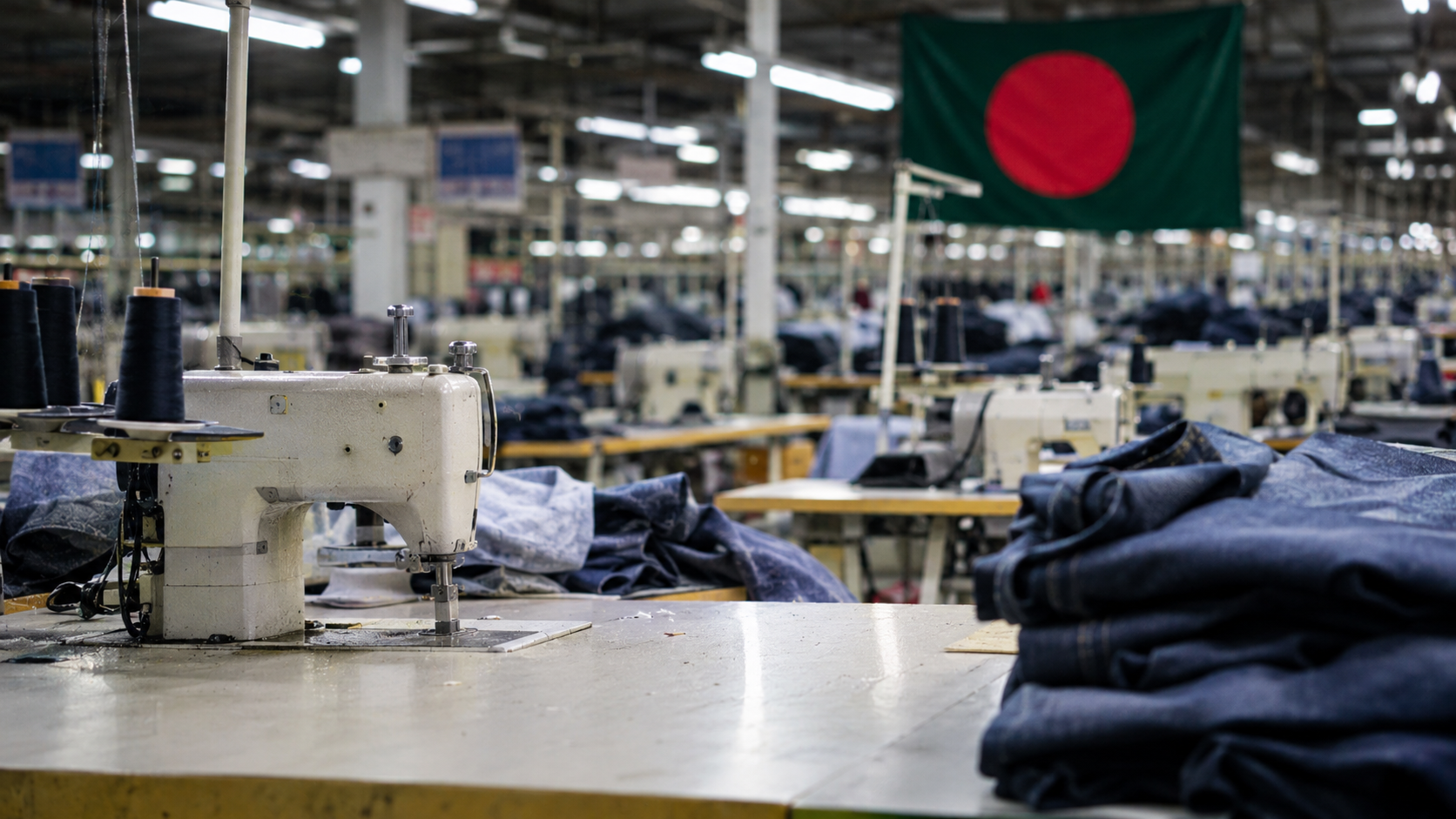
Thousands of Bangladesh garment workers continued protesting on Sunday despite the government’s announcement of a new wage board to review minimum salaries.
Workers are demanding higher wages as rising food, housing and transport costs put pressure on household incomes.
The demonstrations have disrupted production in major industrial areas around Dhaka, the country’s capital.
According to Al Jazeera and Reuters, clashes broke out between protesters and police, who used tear gas and sound grenades to disperse crowds.
The unrest has also forced dozens of garment factories to suspend operations.
Bangladesh garment workers demand higher minimum wage
Garment workers are calling for a minimum monthly salary of 30,000 taka, approximately $242.
The current minimum wage stands at 12,500 taka, or around $101.
Workers say their existing salaries are no longer enough to cover essential living expenses.
In particular, rising prices for food, rent, healthcare and transportation have reduced their purchasing power.
The proposed increase would more than double the current minimum wage.
However, employers face their own financial pressures, including higher production costs and energy shortages.
These competing concerns have complicated efforts to reach an agreement.
Government forms new wage board
Bangladesh announced the formation of a six-member wage board on Sunday, November 1.
The board will include representatives from the government, garment workers and factory owners.
Its main responsibility will be to review existing wages and determine a new minimum salary.
Labour and Employment adviser M Sakhawat Hossain Chowdhury urged workers to return to their jobs following the announcement.
He said the establishment of the board should help resolve the dispute.
However, protesters continued demonstrating despite the government’s decision.
The authorities have not announced when the board will complete its review or what wage increase it might recommend.
As a result, uncertainty remains over whether the measure will satisfy workers’ demands.
Protests disrupt garment factories near Dhaka
The demonstrations began on Saturday and spread across industrial areas surrounding the capital.
Ashulia, one of Bangladesh’s major garment manufacturing centres, has experienced significant disruption.
According to Mohammad Mominul Islam Bhuiyan, superintendent of the Ashulia Industrial Police, approximately 30 factories declared temporary holidays.
Clashes between protesters and police also left several people injured, including officers, according to police.
Security forces used tear gas and sound grenades during confrontations with demonstrators.
Images from the protests also showed a police vehicle on fire.
The unrest has raised concerns about further factory closures if negotiations fail.
Bangladesh garment industry faces export risks
Bangladesh’s garment industry is a major source of employment and export revenue.
The sector employs millions of people and generates much of the country’s foreign earnings.
It is also among the world’s largest garment manufacturing industries.
According to the report, the sector contributes approximately 10% of Bangladesh’s gross domestic product.
However, manufacturers are already facing difficult operating conditions.
These include rising production expenses, electricity shortages and disruptions to gas supplies.
Uncertainty in international energy markets has created additional pressure.
Labour and Employment Minister Ariful Haque Chowdhury warned that prolonged factory closures could delay export shipments.
Such delays could also affect payments from international buyers.
Consequently, further disruption could create financial difficulties for both businesses and employees.
Workers and employers face growing economic pressure
The wage dispute highlights the challenges facing Bangladesh’s export-driven economy.
For workers, higher salaries are increasingly important as living costs rise.
Meanwhile, manufacturers must manage international competition and rising operating expenses.
Factory owners also face pressure to meet delivery schedules for overseas buyers.
These competing demands make negotiations particularly sensitive.
The newly formed wage board will therefore need to consider workers’ living costs alongside the industry’s financial conditions.
However, no final agreement has been announced.
What happens next in Bangladesh?
The government hopes the new wage board will reduce tensions and encourage workers to return to factories.
Yet demonstrations have continued, suggesting that workers want concrete salary increases rather than assurances alone.
The board’s recommendations will be central to determining whether the dispute can be resolved.
For now, Bangladesh’s garment industry faces continued uncertainty.
The outcome could affect millions of workers, factory owners and international businesses that depend on the country’s clothing exports.