
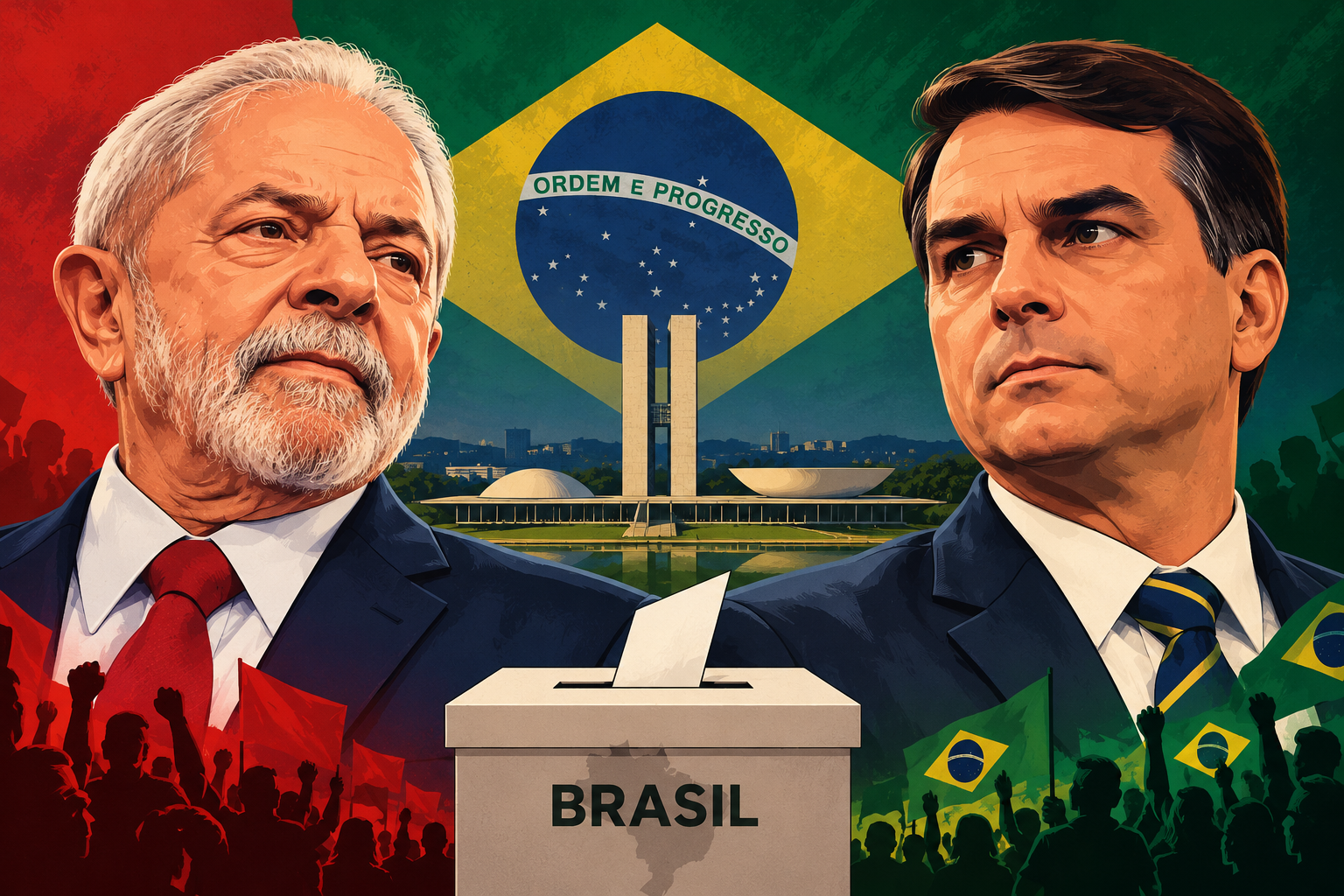
Millions of Brazilians are voting in a closely contested presidential runoff as incumbent President Luiz Inácio Lula da Silva faces Senator Flávio Bolsonaro in a race that could shape the country’s political future.
Polling stations opened across Brazil on Sunday, October 25, at 8 a.m. local time and are scheduled to close at 5 p.m.
Nearly 160 million citizens are eligible to vote in the election.
According to Al Jazeera, Bolsonaro enters the runoff with a narrow advantage after defeating Lula in the first round earlier this month.
However, opinion polls suggest the contest remains extremely close, with both candidates competing for undecided voters.
Bolsonaro enters runoff with narrow lead
Flávio Bolsonaro finished ahead of Lula in the first round of voting on October 4.
However, his margin of victory was less than two percentage points.
Neither candidate secured the majority required to win outright, forcing the election into a second round.
Under Brazil’s electoral system, a presidential candidate must receive more than half of valid votes to avoid a runoff.
The two leading candidates therefore advanced to Sunday’s decisive contest.
According to Al Jazeera, recent opinion polls have shown Bolsonaro maintaining a slight advantage.
Meanwhile, Lula has gradually gained support, narrowing the gap between the candidates.
The small difference has made the election difficult to predict.
Lula seeks historic fourth presidential term
Lula is seeking an unprecedented fourth term as Brazil’s president.
The veteran left-wing politician previously governed the country from 2003 to 2010 before returning to office in 2023.
His political career has been closely associated with social welfare programmes, poverty reduction and a stronger role for the state in economic development.
Supporters view Lula as an experienced leader who can address inequality and protect social programmes.
However, his administration has also faced criticism over economic management and political divisions.
A victory would extend Lula’s political career and reinforce the influence of his Workers’ Party.
Meanwhile, defeat would mark a significant shift in Brazil’s leadership.
Flávio Bolsonaro challenges incumbent president
Senator Flávio Bolsonaro represents a competing political vision.
He is the son of former Brazilian President Jair Bolsonaro, whose presidency from 2019 to 2022 reshaped the country’s conservative political movement.
Flávio’s candidacy reflects the continued influence of the Bolsonaro family in Brazilian politics.
His campaign has attracted voters seeking a change in government.
Meanwhile, Lula is attempting to secure another mandate from voters who support his administration’s priorities.
The contest highlights the political divisions that have shaped Brazil’s recent elections.
Economy and political divisions shape election
Brazil’s presidential election carries major implications for Latin America’s largest economy.
Economic policy, household living standards and government spending are important concerns for voters.
The next administration will also face decisions involving public services, investment and international trade.
Brazil is a major agricultural exporter and an influential participant in global commodity markets.
Therefore, its economic policies can affect trade relationships beyond South America.
The election also takes place against a backdrop of political polarisation.
Both candidates must appeal to voters outside their established support bases to secure victory.
Why Brazil’s election matters internationally
Brazil plays an important role in international diplomacy.
It is a member of BRICS and the G20 and maintains significant relationships with countries across Africa, Asia and Europe.
The country is also home to much of the Amazon rainforest, making its environmental policies important to international climate discussions.
A change in leadership could influence Brazil’s approach to trade, diplomacy and environmental cooperation.
For African countries, Brazil remains a potential partner in agriculture, energy, investment and South-South cooperation.
As a result, the election’s outcome could have implications beyond Brazil’s borders.
Brazil awaits presidential election results
Voting is scheduled to conclude at 5 p.m. local time on Sunday.
The closely contested race means both candidates will be watching the results carefully.
According to Al Jazeera, Bolsonaro’s narrow polling advantage has been challenged by Lula’s recent gains.
However, opinion polls cannot determine the final result.
The outcome will depend on voter turnout and the choices made by millions of Brazilians.
For now, the country awaits the result of a presidential contest that could determine its political direction for the coming years.