
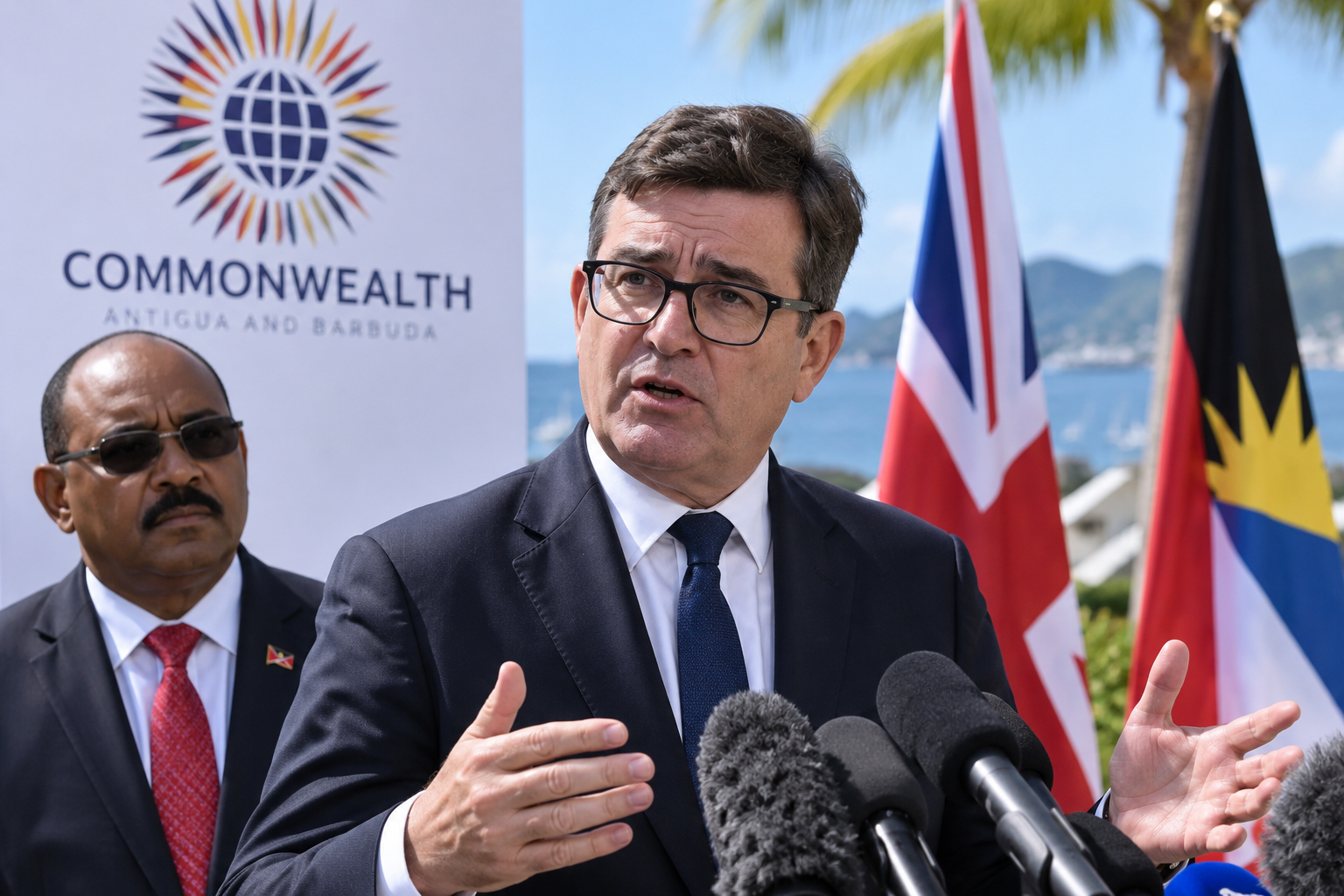
Commonwealth leaders have welcomed Britain’s decision to discuss the lasting harm caused by the transatlantic slave trade.
The agreement came during a Commonwealth summit in Antigua and Barbuda. Leaders called for formal talks between Britain and countries affected by slavery.
According to Africanews and AFP, the UK has agreed to take part in a structured dialogue on slavery’s historical impact.
However, Britain continues to reject financial reparations. The government is also considering whether to issue a formal apology.
Commonwealth leaders welcome UK agreement
Commonwealth leaders announced the agreement in a joint statement after the summit.
Commonwealth Secretary-General Shirley Botchwey welcomed Britain’s decision to join the discussions.
She said the talks would include countries affected by the transatlantic slave trade.
The discussions will focus on slavery’s lasting impact and the concerns of affected communities.
For many African and Caribbean countries, this issue remains important.
These countries have long called for greater recognition of slavery’s historical and economic consequences.
Slavery talks could begin within a year
Antigua and Barbuda Prime Minister Gaston Browne welcomed the agreement.
He said leaders hoped to establish a framework for the talks by late 2026 or early 2027.
The discussions could then take place within the following 12 months.
Browne also said Commonwealth countries would approach Britain with reasonable demands.
He stressed the importance of respectful dialogue and cooperation.
However, the countries have not yet agreed on the full scope of the talks.
As a result, the outcome remains uncertain.
King Charles addresses slavery’s history
King Charles III also spoke about slavery during the summit.
He described slavery as a shameful chapter in history.
However, the British monarch did not issue a formal apology.
Several Caribbean countries have repeatedly called for Britain to acknowledge its historical role in the slave trade.
Some governments also want financial reparations for the harm caused by slavery.
The issue remains sensitive because Britain played a major role in the transatlantic slave trade.
Although British leaders have expressed regret, they have not agreed to financial compensation.
Britain rejects financial reparations
British Prime Minister Andy Burnham has signalled a willingness to discuss slavery’s legacy.
He has also left open the possibility of a formal apology.
However, his government does not support financial reparations.
Foreign Secretary Ed Miliband said direct compensation was not a practical option for Britain.
Instead, he suggested that the UK could cooperate with Commonwealth countries in other areas.
These could include development projects and economic support.
Therefore, the discussions may focus on measures beyond direct financial payments.
UK proposes debt support for Commonwealth countries
Burnham also raised the possibility of debt relief for poorer Commonwealth countries.
His proposal could change interest rates and repayment terms for some countries.
Such measures could reduce financial pressure on governments struggling with debt.
However, Britain has not announced a formal debt relief agreement.
The proposal also remains separate from demands for slavery reparations.
Still, economic cooperation could become part of future discussions.
Why slavery’s legacy still matters
The transatlantic slave trade forced millions of Africans from their homes over several centuries.
Many were transported to the Americas and the Caribbean, where they faced enslavement and exploitation.
Britain played a major role in this trade before banning its participation in 1807.
It later passed legislation in 1833 to abolish slavery across most of its empire.
However, the consequences of slavery continue to shape discussions about inequality and development.
Many African and Caribbean countries believe Britain should take greater responsibility for this history.
They argue that meaningful action should go beyond expressions of regret.
Commonwealth talks face difficult questions
Britain’s agreement to join the discussions marks an important diplomatic step.
For the first time under the new arrangement, both sides have agreed to a structured process focused on slavery’s historical harms.
However, major differences remain.
Several Commonwealth countries support reparatory justice. Britain, meanwhile, continues to reject financial compensation.
The talks could therefore focus on apologies, development assistance and other forms of cooperation.
For now, Commonwealth leaders hope the dialogue will lead to greater understanding and practical progress.