
U.S. President Donald Trump has announced that his Board of Peace reached an agreement aimed at securing the complete disarmament of Hamas and other armed groups in Gaza, describing the development as a major step toward ending the conflict.
Trump said on Thursday that the agreement would establish a framework for removing armed groups from Gaza’s future administration, transferring weapons into storage and placing the enclave under a new Palestinian technocratic authority.
The announcement appeared to mark a breakthrough after months of stalled efforts to implement the ceasefire agreement reached last year in the Egyptian resort of Sharm el-Sheikh.
However, the details released by Hamas and Israeli officials on Friday showed that the two sides remain divided over the order in which the agreement must be implemented.
Senior Hamas official Ghazi Hamad said the group was prepared to accept what he described as a “difficult and painful” agreement, but insisted that Israel must first fulfil its existing commitments.
Hamas said Israel would have to halt its attacks, withdraw its forces to positions agreed under the Sharm el-Sheikh deal and allow a significant increase in humanitarian aid and commercial goods entering Gaza.
Only after those steps were completed would Hamas and other Palestinian factions place their weapons into storage under the supervision of the National Committee for the Administration of Gaza, or NCAG, the technocratic body established to govern the enclave.
“We insisted to the mediators that Israel must abide by the agreement,” Hamad said.
Hamas avoided describing the process as disarmament, instead presenting it as a comprehensive framework under which Palestinian weapons would be decommissioned and stored inside Gaza.
The NCAG later published what it described as a 15-point roadmap for implementing the agreement.
The plan called for Israel, Hamas and other Palestinian factions to fully implement the Sharm el-Sheikh ceasefire, including an end to military operations in Gaza.
It said the committee would gradually assume responsibility for Gaza’s civilian administration and oversee the decommissioning and storage of heavy weapons, weapons-production facilities, arms depots and tunnels.
The document linked the weapons process directly to a phased Israeli withdrawal from areas under its control.
It also stated that Palestinian weapons would not be transferred to Israel or to any non-Palestinian party.
The NCAG welcomed the progress announced by Trump and said it was prepared to assume its administrative responsibilities in Gaza.
Israel, however, rejected the sequencing demanded by Hamas.
An Israeli political source said Israeli forces would not withdraw from the current Yellow Line, a military demarcation established under the ceasefire, until Hamas had undergone what Israel considered genuine disarmament.
The conflicting positions raised questions over whether Trump’s announcement represented a final agreement or only a preliminary framework still requiring approval and implementation by both sides.
Previous Gaza negotiations have repeatedly collapsed because Israel and Hamas each demanded that the other side take the first step.
Hamas said on Friday that any implementation process must begin with an Israeli commitment to stop the killing and end its attacks.
Within hours of Trump’s announcement, Gaza medical officials said one Palestinian was killed and several others were wounded in Israeli airstrikes and gunfire across the enclave. The Israeli military did not immediately comment.
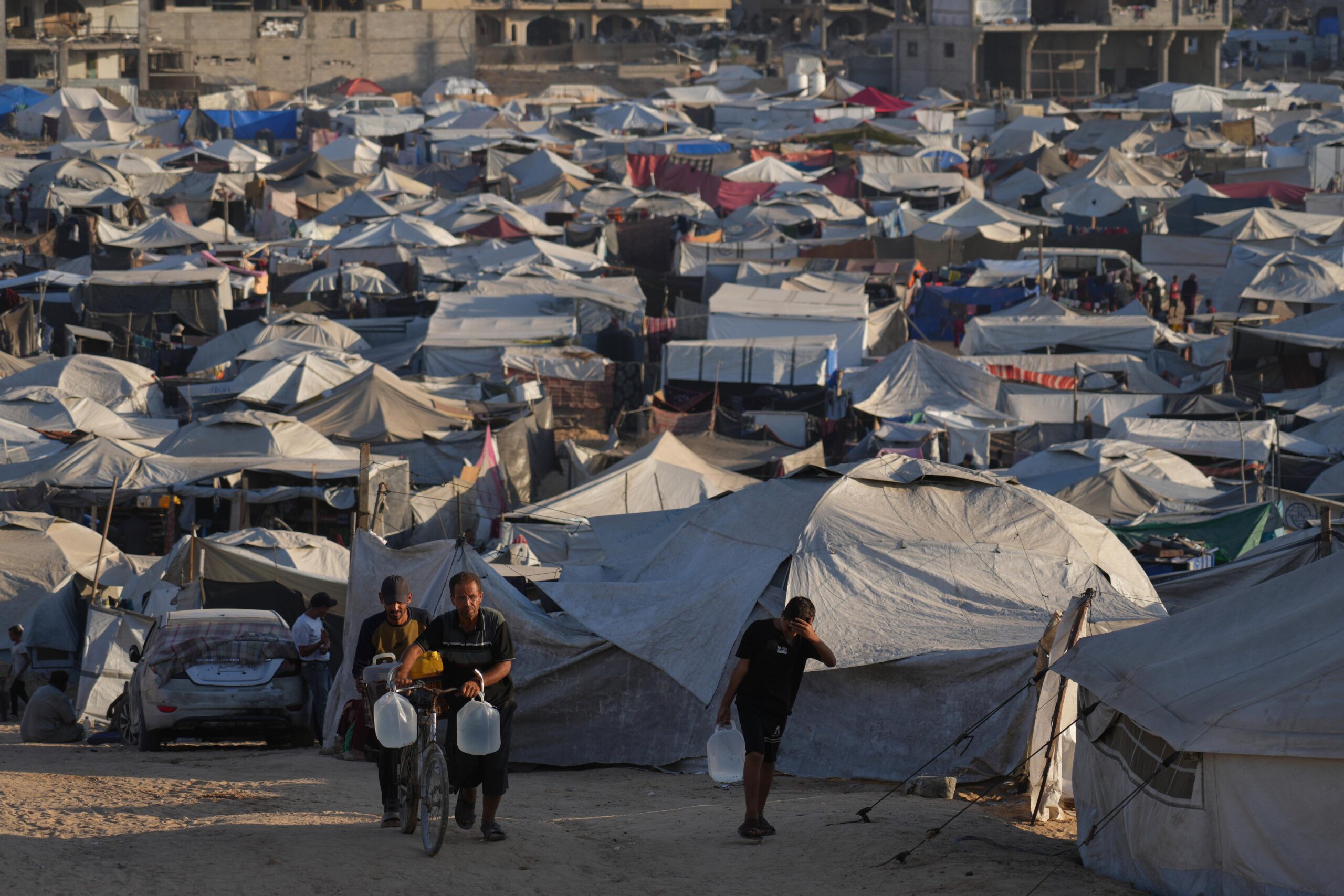
Displaced Palestinians in Gaza also reacted cautiously, saying they had yet to see any improvement on the ground.
Residents urged Trump to pressure Israel to enforce the ceasefire, stop targeted killings and complete the withdrawal of Israeli troops.
Trump announced the agreement two days after meeting Israeli Prime Minister Benjamin Netanyahu in Washington.
An Israeli source said Gaza was not discussed during the meeting, while Netanyahu continues to face pressure from right-wing allies who have opposed previous ceasefire and withdrawal proposals.
The emerging roadmap therefore remains dependent on resolving the central dispute over sequencing: Hamas says Israel must stop its attacks and withdraw before weapons are stored, while Israel says there will be no further withdrawal until Hamas disarms.