
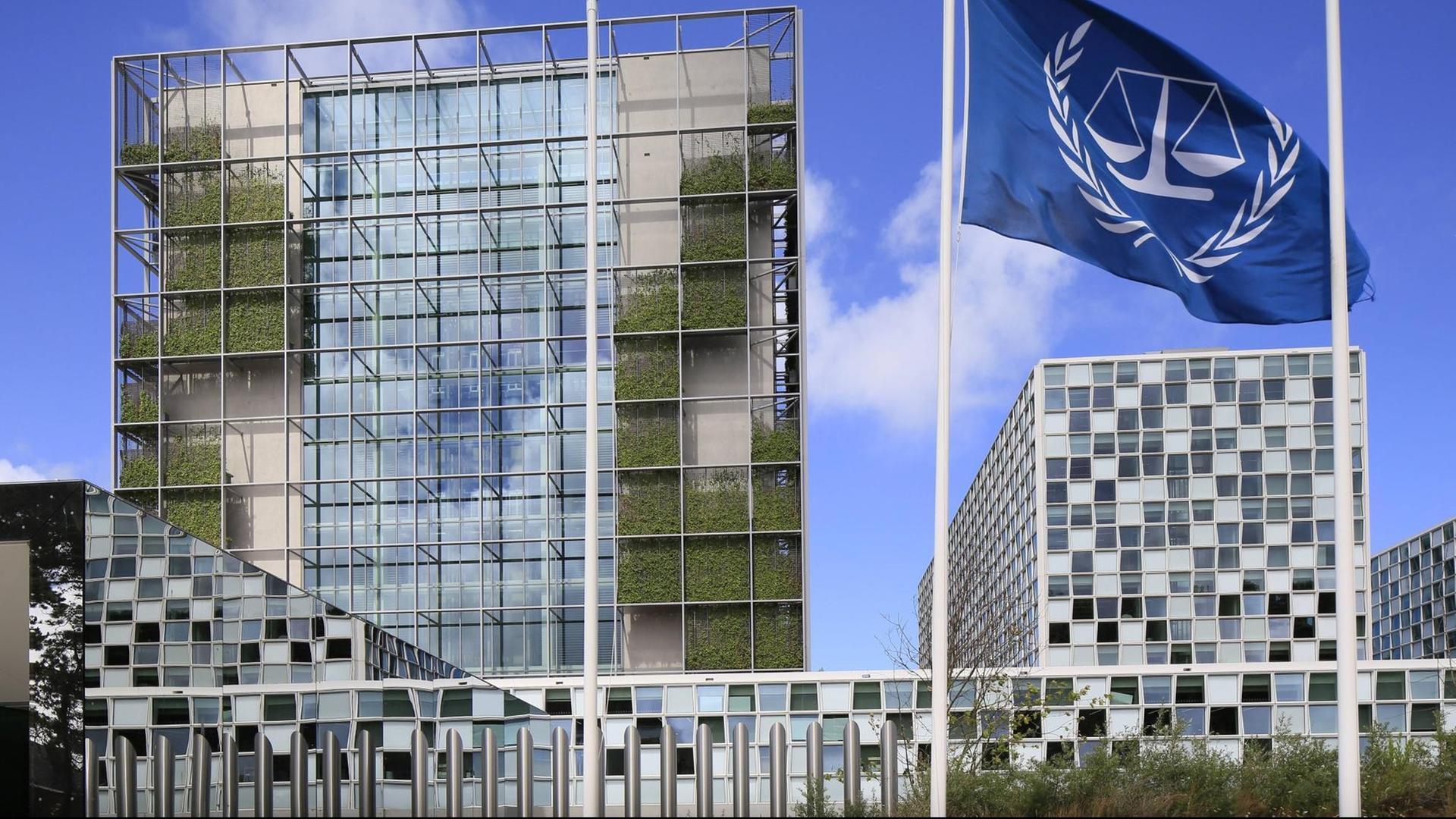
The International Criminal Court is facing a deepening diplomatic and political crisis after Chad and Venezuela began the process of withdrawing from the Rome Statute, intensifying a broader revolt against the Hague-based tribunal among governments in Africa and Latin America.
The announcements came within days of one another and followed similar moves by Mali, Niger and Burkina Faso, whose military-led governments have also initiated procedures to leave the court.
Together, the departures have renewed debate over whether the ICC can maintain its claim to universal legitimacy as a growing number of Global South states accuse it of political selectivity, institutional weakness and disproportionate scrutiny of African countries.
The withdrawals are also unfolding amid an explicit campaign by the United States to diplomatically isolate and dismantle the institution.
Venezuela alleges political and geographical bias
Venezuela formally notified the United Nations of what its government described as an “irrevocable” decision to withdraw from the ICC.
The administration of acting President Delcy Rodríguez accused the court of geographical and political bias, claiming it had become an instrument of pressure against countries in Africa and Latin America.
Caracas said the tribunal was increasingly serving the interests of powerful international actors rather than administering justice independently.
The decision followed an earlier vote by Venezuela’s National Assembly to repeal the legislation through which the country had ratified the Rome Statute.
The ICC has been investigating allegations that Venezuelan security forces and senior officials committed crimes against humanity during crackdowns on political opponents and protesters.
A United Nations fact-finding mission expressed grave concern over the withdrawal and urged Caracas to reconsider, warning that disengagement from the court would undermine accountability for alleged human rights violations.
Chad joins Sahel states in challenging the court
Chad announced several days later that it had formally notified the UN secretary-general of its intention to withdraw from the Rome Statute.
The Chadian Foreign Ministry said a review of the ICC’s performance had concluded that its effectiveness was “limited and uneven.”
N’Djamena also accused the court of selective justice and of concentrating disproportionately on African cases since the Rome Statute entered into force in 2002.
The government said it would increasingly rely on national and regional institutions to protect human rights and pursue accountability.
Chad’s decision places it alongside Burkina Faso, Mali and Niger, whose governments have similarly accused the ICC of failing to apply international justice consistently.
Washington publicly welcomed Chad’s announcement, portraying it as a step towards reclaiming national sovereignty from what US officials described as a deeply flawed institution.
Withdrawals do not immediately end ICC jurisdiction
Under Article 127 of the Rome Statute, a state’s withdrawal generally takes effect one year after formal notification is received by the United Nations.
Leaving the court does not erase legal obligations that arose while the country was a member. It also does not automatically terminate investigations into crimes allegedly committed during the period of membership.
The precedent was demonstrated when the Philippines withdrew from the ICC in 2019. The court maintained that it retained jurisdiction over alleged crimes committed before the withdrawal became effective.
Burundi became the first member state to leave the ICC in 2017, followed by the Philippines two years later.
South Africa and Gambia previously announced plans to withdraw but later reversed their decisions because of domestic judicial and political considerations.
The withdrawals by Chad and Venezuela could therefore reduce future ICC jurisdiction without necessarily blocking existing investigations or proceedings.
A widening legitimacy crisis
Supporters of the latest withdrawals argue that the ICC has failed to develop into a genuinely universal institution.
The United States, Russia and China are not members of the court, while Washington has repeatedly rejected efforts to apply ICC jurisdiction to American officials or those of close US allies.
This imbalance has fuelled accusations that officials from weaker countries face legal scrutiny that major military and political powers are frequently able to avoid.
African governments have long criticised the court’s early concentration on cases from the continent.
Supporters of the ICC respond that several African investigations were referred to the court by the governments concerned or by the United Nations Security Council.
They also point out that the court has expanded its attention beyond Africa, opening investigations or proceedings relating to Afghanistan, Ukraine, Venezuela, Palestine, Bangladesh and Myanmar.
Nevertheless, the latest withdrawals indicate that dissatisfaction with the tribunal is no longer confined to isolated governments.
Washington vows to dismantle the ICC “brick by brick”
The Global South backlash has received powerful political support from Washington, where the Trump administration has launched an explicit campaign to isolate and weaken the court.
US Secretary of State Marco Rubio announced a “whole-of-government” strategy in July aimed at dismantling what Washington describes as the ICC’s threat to American sovereignty.
“This is only the beginning,” Rubio wrote while outlining the campaign.
“Using all the tools at our government’s disposal, working beside every ally with whom we can make common cause, we will dismantle the ICC — brick by brick, if necessary.”
The line echoed the famous threat delivered by Denzel Washington’s character in the film Training Day, underscoring the openly confrontational tone of Washington’s campaign against the Hague tribunal.
The measures outlined by the administration include diplomatic pressure on ICC member states, expanded sanctions, travel restrictions and visa revocations targeting court personnel and affiliated organisations.
Washington has also threatened greater scrutiny of countries that continue to cooperate with the court while receiving US assistance.
American officials said Rubio and other senior figures were pressing governments to diplomatically isolate the ICC and prevent it from investigating or prosecuting US citizens.
The United States has further encouraged member states to reconsider their participation in the Rome Statute, giving additional momentum to the withdrawal campaign among governments already dissatisfied with the tribunal.
Rubio has portrayed the ICC as a supranational institution that has moved beyond its original mandate and threatens American military personnel, border officials, elected leaders and citizens with prosecution before judges whose authority Washington does not recognise.
The Trump administration has previously sanctioned ICC judges and prosecutors over cases involving US personnel and Israeli officials.
Rubio described the court as a national-security threat and an instrument of “lawfare” against the United States and Israel.
The convergence between Washington and dissatisfied Global South governments is politically significant.
The United States opposes the court primarily on sovereignty and national-security grounds. Chad, Venezuela and the Sahel states, by contrast, accuse it of selectivity, ineffectiveness and institutional bias against weaker countries.
Although their motivations differ, both camps are contributing to the ICC’s increasing diplomatic isolation.
Human rights organisations warn that the US campaign could obstruct investigations into war crimes and crimes against humanity, weaken international accountability and leave victims with fewer avenues for justice.
Washington’s policy now extends far beyond its longstanding refusal to join the Rome Statute. It amounts to a declared strategy to reduce the court’s membership, restrict its finances, punish cooperation with its investigations and dismantle its international authority.
Regional courts proposed as alternatives
Governments supporting withdrawal have increasingly called for stronger regional judicial institutions to replace reliance on the Hague court.
Within Africa, attention has focused on expanding the authority of bodies such as the African Court on Human and Peoples’ Rights and developing continental mechanisms capable of prosecuting genocide, crimes against humanity and war crimes.
Similar proposals have emerged in Latin America, where some governments argue that regional institutions would be more representative and less vulnerable to pressure from powerful Western states.
Supporters of this approach maintain that regional courts would better reflect local political, historical and legal circumstances while reducing dependence on institutions based in Europe.
However, existing regional courts continue to face substantial limitations, including restricted jurisdiction, inadequate funding, uneven cooperation by member states and political interference.
Critics therefore warn that withdrawing from the ICC without creating credible and independent alternatives could leave victims with fewer routes to justice rather than strengthening national accountability.
Internal turmoil adds to pressure
The withdrawals and US campaign come as the ICC confronts its own internal crisis following the dismissal of chief prosecutor Karim Khan.
ICC member states voted to remove Khan over allegations of serious misconduct involving a junior lawyer. Khan denied the allegations and indicated that he would challenge the decision.
His removal has triggered the process of selecting a replacement and has added to uncertainty at a time when the court is already facing sanctions, political hostility and difficulties securing cooperation from governments.
Some observers argue that Khan’s dismissal demonstrates that the institution is capable of holding its own senior officials accountable.
Others contend that replacing the prosecutor will not be sufficient to resolve wider concerns over the court’s structure, enforcement powers and perceived political selectivity.
Court remains operational despite shrinking reach
The ICC does not face an immediate legal threat to its continued existence.
More than 120 countries remain parties to the Rome Statute, well above the 60 ratifications required for the treaty to enter into force.
The greater danger is a gradual contraction of the court’s geographical reach, diplomatic influence and moral authority.
The tribunal relies heavily on member states to arrest suspects, gather evidence, enforce warrants and provide financial support. It has no police force of its own and cannot implement many of its decisions without government cooperation.
A sustained wave of withdrawals would therefore make it increasingly difficult for the court to conduct investigations and enforce its rulings, even if the institution remained legally operational.
Unless member states address concerns over equality, consistency, enforcement and political influence, the decisions by Chad and Venezuela could encourage additional governments to reconsider their membership.
The emerging struggle is consequently about more than the number of countries remaining in the Rome Statute.
It concerns whether the ICC can continue presenting itself as a universal court while some of the world’s strongest powers remain outside its jurisdiction, Washington openly promises to dismantle it “brick by brick,” and an expanding group of Global South governments rejects its authority.