
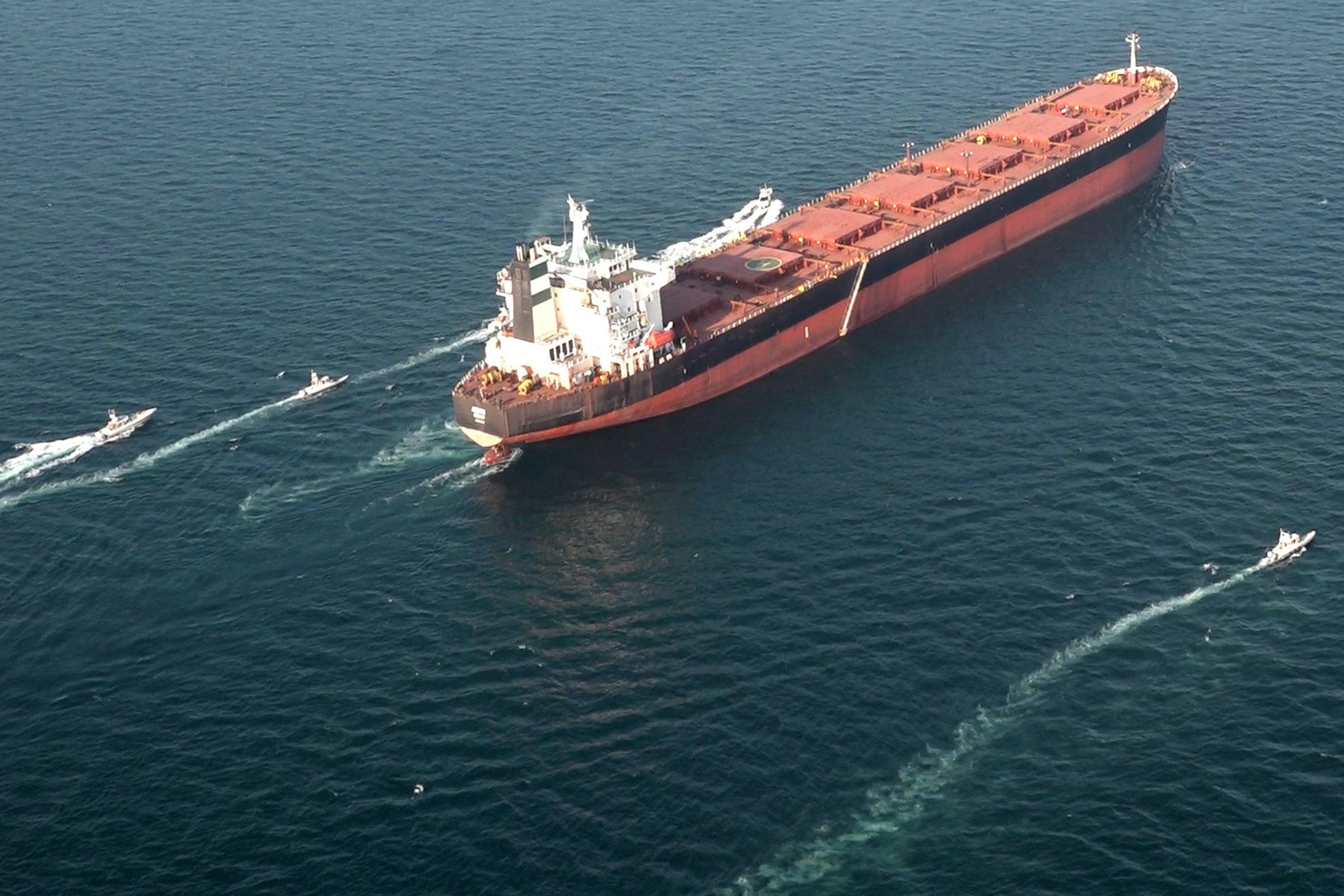
A proposed agreement being negotiated between Iran and Oman could give Tehran authority over vessels entering the Gulf through the Strait of Hormuz, according to a senior Iranian source and two regional officials familiar with the talks.
Such an arrangement would represent a major concession to Iran and a significant shift in control over one of the world’s most important energy shipping routes.
However, the sources rejected claims by U.S. President Donald Trump that an agreement to fully reopen the strait was close, saying key questions over inspections, fees and the extent of Iranian authority remained unresolved.
“The concession has already been made regarding some form of control over Hormuz,” one regional source said.
A second regional official said Gulf negotiators were pressing for regional states to supervise any ship inspections and for transit fees to remain voluntary. The precise meaning of Iranian “control” was still under discussion, the official added.
The senior Iranian source said the draft agreement currently under consideration would give Iran authority over vessels entering the Gulf. One of the main disputes concerned whether Tehran would also have a role in overseeing ships leaving the region through the strait.
Washington did not immediately respond to the reported details of the proposal.
U.S. officials have previously said they would not accept an arrangement allowing Iran to control access to the vital waterway. Trump and senior members of his administration, however, have repeatedly suggested in recent days that an agreement could soon be reached to end the conflict launched in February.
Oil prices edged higher on Wednesday after Yemen’s Iran-aligned Houthi movement said it had attacked a Saudi-flagged tanker in the Red Sea, adding to concerns over disruptions to Middle Eastern shipping and global energy supplies.
Crude prices nevertheless remained near their lowest levels since early July after falling sharply over the previous two days. The decline followed Trump’s decision to cancel planned attacks on Iran, citing diplomatic efforts that he said could end the conflict.
Tehran and Washington are not holding direct negotiations. Iran has instead been discussing the strait with Oman, which controls the waterway’s opposite shore. Tehran rejected an earlier Omani proposal last week, arguing that it offered Iran insufficient influence.
Trump told Fox News that negotiations were “moving along nicely” and said an all-day round of discussions had taken place on Tuesday.
The Strait of Hormuz would reopen “very soon,” Trump said, while warning that Iran would face severe military action if it withdrew from the talks.
Trump said over the weekend that the negotiations had persuaded him to cancel plans for what he described as massive attacks on Iran.
Iranian officials, however, played down expectations of a rapid breakthrough.
“Talks are continuing, but it is too early to say that a deal with Oman has been finalised,” the senior Iranian source said, noting that Foreign Minister Abbas Araqchi was on holiday.
Another Iranian source warned that the negotiations remained fragile, saying a single social-media post from Trump could derail the process.
Any agreement granting Iran authority over access to the strait would mark a significant regional gain for Tehran following the war launched by the United States and Israel. Before the conflict, vessels were generally able to pass through the waterway without paying transit fees.
Iran is seeking charges equivalent to between 5% and 7% of the value of cargo transported through the strait, according to the senior Iranian source. Oman has discussed a lower rate of around 3%, while Washington has opposed any fees.
Negotiators have considered describing the payments as voluntary, although shipping companies could still feel compelled to pay because of the potential threat of Iranian attacks.
Months of U.S. military operations, including a two-week bombing campaign in July, have failed to loosen Iran’s grip on the strait. U.S. commanders also warned Trump in July that stocks of some munitions were running low.
American military escalation has repeatedly been met with stronger responses from Iran and its regional allies, including the Houthis, who control much of Yemen and operate near the Bab al-Mandab Strait at the entrance to the Red Sea.
The Houthis said on Wednesday that they had again struck a Saudi tanker as part of what they describe as a blockade of Saudi oil shipments using the Red Sea route to bypass Hormuz.
A projectile also sank an Indian-flagged vessel near Yemen on Tuesday, according to Indian officials. All 14 crew members, including 13 Indian nationals, were rescued. Yemen’s internationally recognised government blamed the attack on the Houthis.