
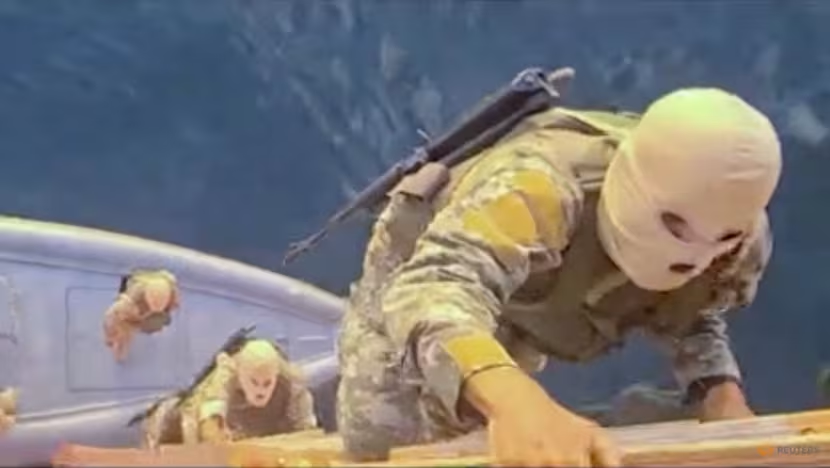
Iran has escalated its control over the Strait of Hormuz, releasing footage of commandos storming cargo ships after the collapse of U.S.-backed talks aimed at reopening the critical oil route.
State media showed masked forces boarding vessels identified as MSC Francesca and Epaminondas, accusing them of attempting to cross the strait without authorization. The footage, filmed in a cinematic style, underscored Tehran’s growing confidence in asserting dominance over the world’s most vital energy corridor.
The escalation comes just days after negotiations broke down, leaving Iran effectively in control of a chokepoint that normally carries around a fifth of global oil and liquefied natural gas supplies.
Washington, meanwhile, said it boarded another tanker in the Indian Ocean, identified by shipping sources as a supertanker carrying roughly 2 million barrels of crude off Sri Lanka, highlighting the expanding scope of the maritime confrontation.
Iranian officials signaled they may return to talks, but only if the United States lifts its blockade and releases seized vessels — conditions Washington has so far refused.
In a sharp escalation of rhetoric, Donald Trump said he had ordered the navy to “shoot and kill” Iranian boats suspected of laying mines in the strait, while intensifying demining operations.
Tehran, however, appears to be relying less on mines and more on asymmetric tactics, including swarms of speedboats, missiles and marine drones reportedly operating from coastal hideouts, according to Iranian officials.
Iranian authorities also claimed they have begun collecting tolls from vessels using the strait, suggesting a shift toward formalizing control over the passage, though no details were provided.
With no ceasefire extension agreed and no new talks scheduled, the standoff has left the region in what residents describe as a state of “neither peace nor war,” amid fears of renewed conflict.
The fallout has rattled global markets, with oil prices climbing amid uncertainty over the worst energy disruption in modern history, even as equities fluctuate on mixed signals.
Despite weeks of conflict, Washington has yet to achieve key war objectives, including curbing Iran’s missile capabilities or forcing major political change in Tehran, while Iran retains both military leverage and control over the strait.