
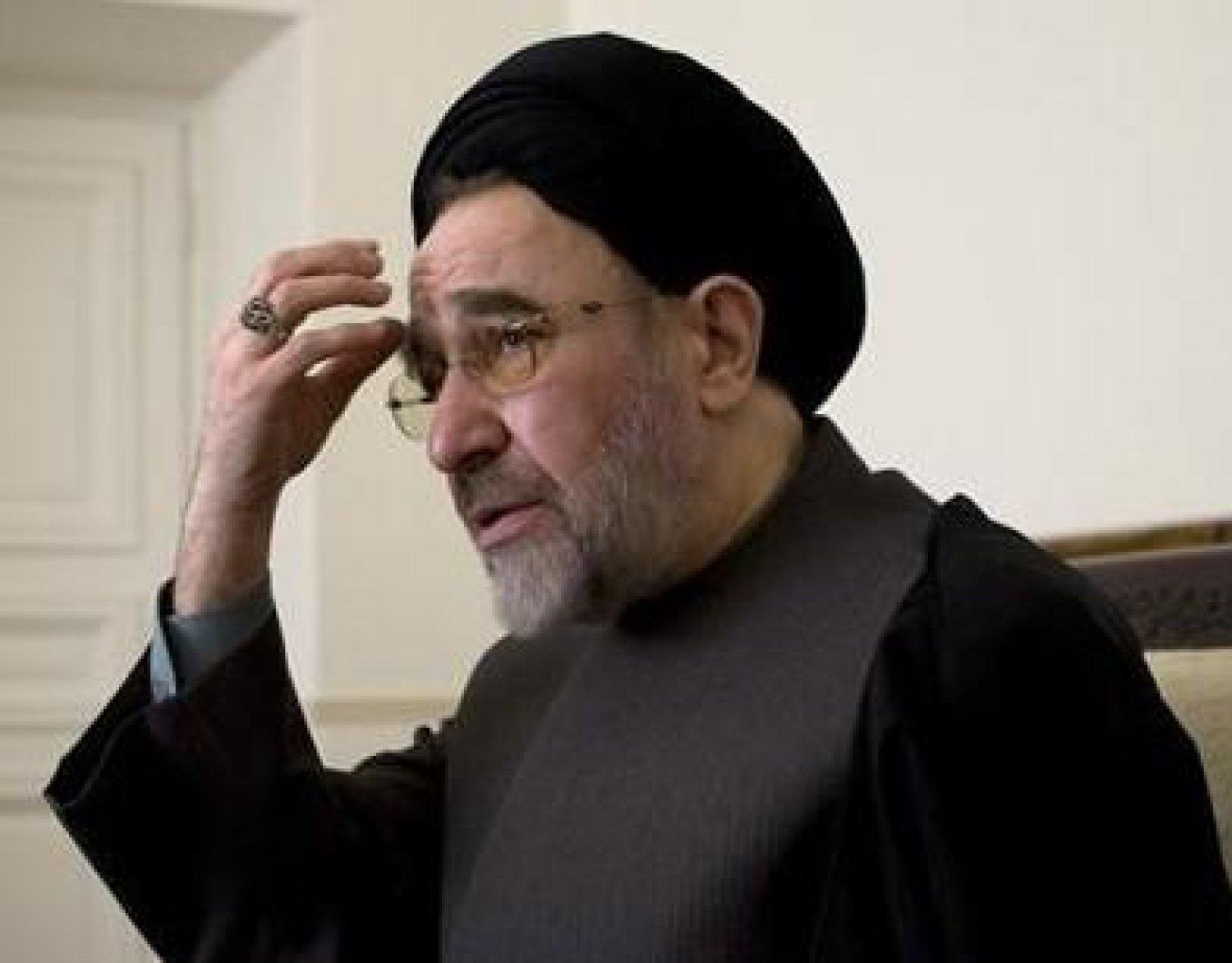
Former Iranian President Mohammad Khatami has called for an end to the war and urged support for negotiations with the United States, triggering a sharp backlash from media affiliated with the Islamic Revolutionary Guard Corps.
Khatami, a leading figure in Iran’s reformist movement, said during a meeting with advisers on Wednesday that reaching a “dignified peace” would serve Iran’s national interests and that removing the threat of war should be a top priority.
“Peace is not betrayal, nor is it inconsistent with the path of Imam Hussein,” Khatami said, adding that most Iranians want an end to war, conflict and prolonged regional tensions.
He praised Iran’s president and the Supreme National Security Council for what he described as a major step toward reaching an agreement with Washington. He called for broad political support for the deal, full compliance with its provisions and backing for the Iranian negotiating team.
Khatami also urged political figures, intellectuals, media outlets and civil society organisations to help ensure the agreement succeeds, warning that the opportunity should not be squandered or allowed to develop into another crisis.
The former president described Israel as the “most active and influential opponent” of the agreement, accusing it of seeking to derail efforts to achieve a lasting peace and deepen divisions between Iran and the United States.
He said Iran’s national interests required eliminating the risk of war and called on state institutions to place the country’s interests above political disputes.
IRGC-linked media attacks Khatami
Tasnim News Agency, which is affiliated with the Revolutionary Guard, responded with a strongly worded article accusing Khatami of being detached from the realities of the ongoing military escalation.
The article, titled “Mr Khatami, which parallel universe are you living in?”, questioned the basis for his description of the understanding with the United States as an opportunity that could be developed further.
Tasnim claimed Washington had violated every element of the understanding, including by reimposing what it described as a naval blockade on Iran.
The agency argued that Khatami’s calls to preserve the agreement ignored what it described as continued US aggression. It said the current circumstances did not represent an opportunity for reconciliation but rather a continuation of the confrontation.
Tasnim also criticised Khatami’s appeal to move away from the language of revenge, arguing that calls for retaliation against attacks were not an attempt to prolong the war but a means of preventing future strikes and defending Iran’s security and sovereignty.
According to the article, opposing a military response would amount to accepting and normalising attacks against Iran. It described retaliation as a national right rather than a personal or political position.
Tasnim concluded that Khatami’s defence of negotiations and the agreement could weaken the Iranian negotiating team’s position.
It said negotiations should proceed alongside what it called continued resistance, rather than being treated as an alternative to military confrontation.