
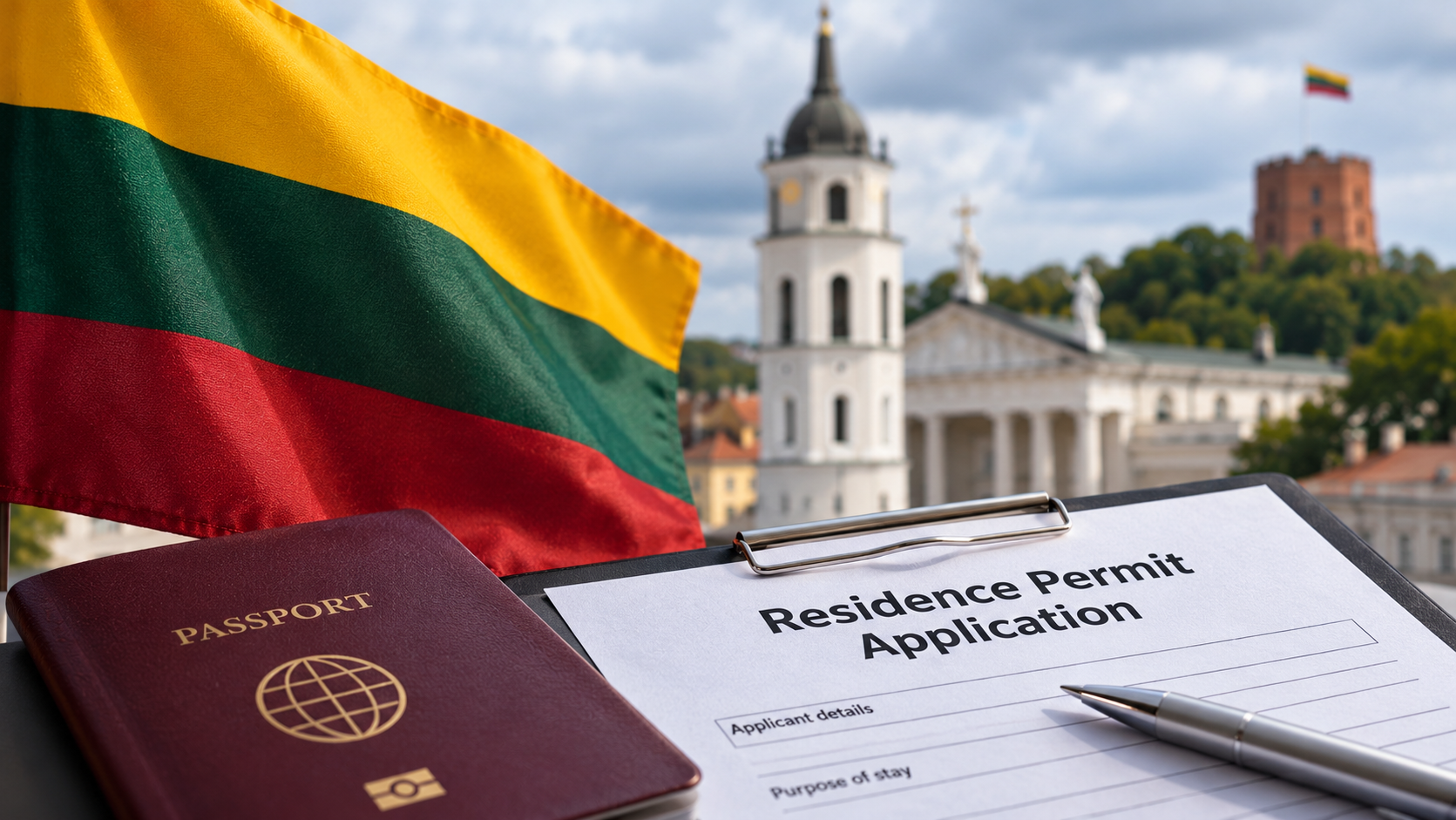
Lithuania has introduced stricter residence permit rules for foreign workers and international students, affecting applicants from Ghana, South Africa, India and several other countries.
The new regulations took effect on November 1, 2026, restricting certain foreigners from applying for residence permits while staying in Lithuania on Schengen visas.
According to a report by Business Insider Africa, the changes could force affected applicants to complete their immigration procedures through authorised application centres abroad.
The restrictions could also increase travel expenses and processing times for people seeking employment or higher education in the European country.
Lithuania’s Migration Department outlined the revised requirements, while an October 7 analysis by Deloitte Lithuania highlighted their potential impact on international recruitment.
What are Lithuania’s new residence permit rules?
Under the revised regulations, foreign nationals holding Schengen visas can no longer apply within Lithuania for certain residence permits based on ordinary employment or bachelor’s degree studies.
The restrictions also affect people holding some national visas issued by other countries.
Previously, eligible applicants could enter Lithuania and begin the residence permit process after securing employment or university admission.
However, the new procedures require affected individuals to submit their applications from outside the country.
According to Lithuania’s Migration Department, the restrictions apply regardless of nationality, although several exemptions remain available.
The changes primarily affect applicants who planned to enter Lithuania on short-term visas before applying for longer-term residence.
Ghanaian workers face additional restrictions
Applicants from Ghana, India, Azerbaijan, Cambodia and Mongolia face additional limitations under Lithuania’s immigration system.
Citizens of these countries generally cannot submit standard employment-based residence permit applications through the available overseas centres.
Consequently, some applicants may need to hold a qualifying visa or residence permit before applying within Lithuania.
Deloitte Lithuania warned in its October 7 analysis that the changes could complicate international recruitment.
The firm said employers may need to reconsider how they recruit and relocate foreign workers.
Ghana has an authorised Lithuanian immigration application centre. However, the centre does not accept every residence permit category.
Therefore, Ghanaian applicants must confirm their eligibility before beginning the application process.
South African applicants also affected
South African nationals planning to work or study in Lithuania may also face changes to their application procedures.
Lithuania provides overseas immigration application services in South Africa.
However, applicants cannot assume that every residence permit category is available through these centres.
Those affected by the new rules may need to apply abroad rather than entering Lithuania on a short-term visa and submitting an application locally.
This could create additional travel and administrative costs.
Nevertheless, the restrictions do not amount to a general ban on South African nationals seeking employment or education in Lithuania.
Instead, they change the procedures certain applicants must follow to obtain legal residence.
Who is exempt from Lithuania’s new rules?
Several categories of foreign nationals may still qualify to apply for residence permits while staying in Lithuania.
According to the Migration Department, these include:
- Foreigners holding valid Lithuanian residence permits.
- Applicants with qualifying Lithuanian national visas.
- People holding eligible residence permits from other EU or Schengen countries.
- Highly skilled workers qualifying for the EU Blue Card.
- Existing workers renewing their permits under applicable procedures.
However, applicants must satisfy the relevant requirements before submitting their documents.
Eligibility depends on their immigration status and the type of residence permit requested.
Therefore, foreign nationals should check whether they qualify for an exemption before making travel arrangements.
Lithuania changes overseas application centres
Lithuania has also revised its network of overseas immigration application centres.
In October 2025, the country expanded its services by opening centres in Ghana, Zimbabwe, Vietnam and Bosnia and Herzegovina.
However, further changes took effect on November 1, 2026.
Lithuania closed application centres in Kazakhstan, Kyrgyzstan, Uzbekistan and Bosnia and Herzegovina.
Eligible applicants from Kazakhstan, Kyrgyzstan and Uzbekistan can now use designated services in Azerbaijan.
Meanwhile, Belarusian nationals seeking employment-based permits may apply through authorised centres in Armenia and Georgia.
These adjustments mean foreign applicants must carefully check where they can submit their documents.
The availability of an application centre does not necessarily mean every residence permit category can be processed there.
How can foreigners apply for residence permits?
Affected applicants must begin the process through Lithuania’s online immigration platform, MIGRIS.
After submitting the required information, eligible applicants can arrange appointments at authorised VFS Global centres abroad.
However, the available services vary depending on nationality, application location and residence permit category.
Employers recruiting international workers must also consider the new requirements before arranging relocation.
For African applicants, particularly those from Ghana and South Africa, the changes highlight the importance of checking immigration procedures before travelling.
Lithuania’s revised regulations do not prevent all foreign nationals from working or studying in the country.
Instead, they introduce stricter requirements governing where and how certain residence permit applications can be submitted.